

Cleopatra VII, the last ruler of ancient Egypt, was not only famous for her intelligence and diplomacy, but also for her style and lavish jewelry.
Her adornments were symbols of power, wealth, and refinement, reflecting the exceptional craftsmanship of ancient Egypt. Cleopatra's jewelry influenced not only her contemporaries but also the history of world jewelry.
The importance of jewelry in ancient Egypt
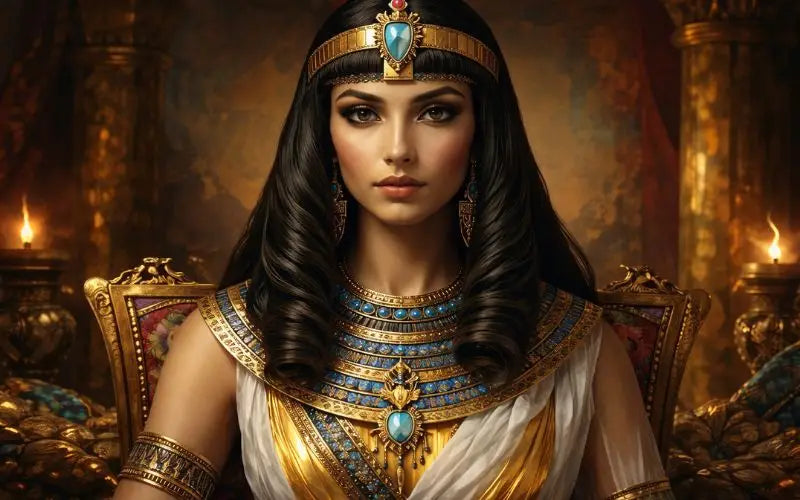
Jewelry in Egypt was not merely ornamental. It held symbolic and religious functions. It served to protect, display social status, and demonstrate a connection with the gods. Precious materials, such as gold, lapis lazuli, or pearls, were used according to precise codes. As a queen, Cleopatra wore jewelry that combined elegance, wealth, and sacred meaning.
-
Gold: symbol of power and eternity, associated with the sun.
-
Lapis lazuli: color of the sky and divine protection.
-
Emeralds and turquoise: worn for fertility and health.
-
Colored glass and carnelian: imitation precious stones, sometimes used in royal jewelry for their color.
Jewelry made it possible to distinguish social classes and reinforce prestige. A queen like Cleopatra used necklaces, diadems, bracelets, and earrings to mark her authority and seduce her political allies, notably Julius Caesar and Mark Antony.
Types of jewelry worn by Cleopatra
Materials used by the queen
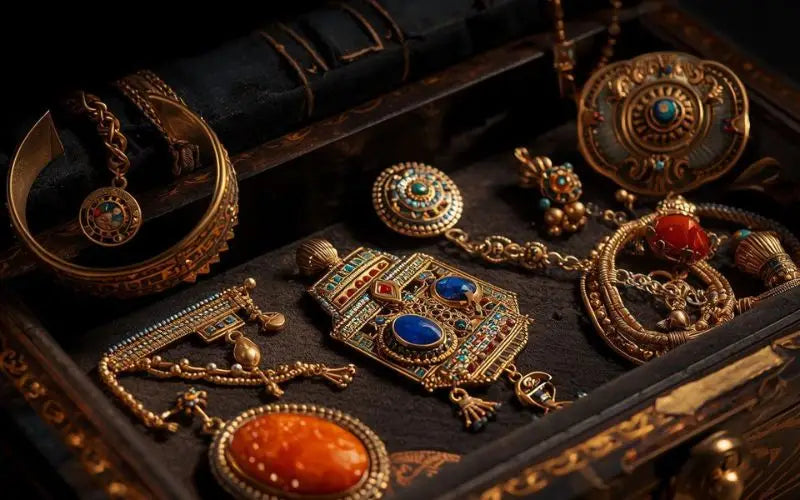
The materials for Cleopatra's jewelry were selected with extreme precision, not only for their material value but also for their symbolic significance. Every color, texture, and material held meaning linked to Egyptian beliefs. The queen used these elements to assert her rank and reinforce her divine image.
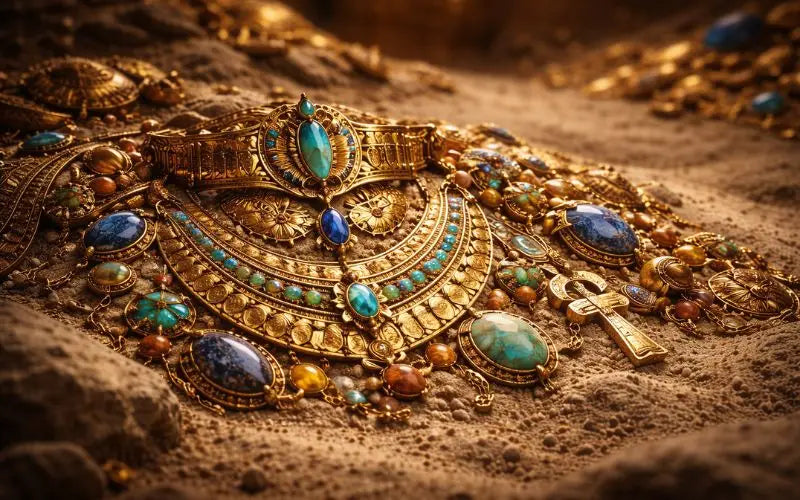
Gold held a central place in Cleopatra's royal jewelry, as it was associated with the sun and eternity. Since pure gold was rare, Egyptian artisans used alloys to obtain different shades and improve the strength of the pieces. These variations made it possible to create jewelry with subtle reflections, suitable for royal necklaces, diadems, and bracelets.
The stones used in Cleopatra's jewelry often came from distant regions, which reinforced their prestige. Lapis lazuli, imported from Afghanistan, was prized for its deep color and celestial symbolism. Turquoise and carnelian were linked to protection, health, and vital energy. The highly sought-after emerald symbolized fertility and prosperity, values essential for a queen.
Egyptian artisans mastered the art of colored glass, used to imitate rare stones. This technique allowed for the production of visually luxurious jewelry while reducing costs or compensating for the rarity of certain stones. Glass was obtained by melting carefully measured mineral powders. These creations served as both secondary adornments and diplomatic gifts.
Manufacturing techniques
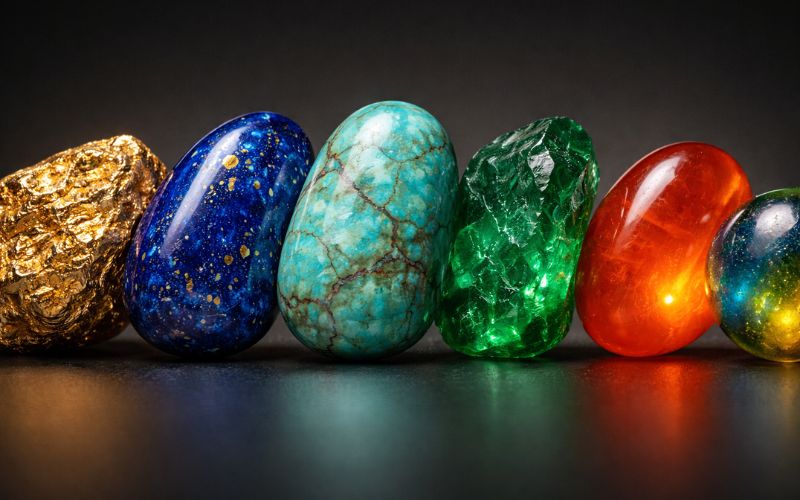
The jewelry worn by Cleopatra was the result of advanced artisanal techniques for the time. Egyptian goldsmiths combined precision, patience, and ancestral know-how. Each piece required meticulous work to ensure strength, aesthetics, and symbolism. These methods have significantly influenced the history of jewelry.
Filigree consisted of interlacing fine gold wires to form delicate and complex patterns. This technique gave the jewelry visual lightness while maintaining its strength. Engraving allowed for the inscribing of hieroglyphics, religious symbols, or protective formulas. These processes were commonly used for royal bracelets, necklaces, and rings.
Inlay consisted of inserting stones or colored enamels into metallic structures. The cloisonné technique separated each stone with fine gold wires, creating precise geometric patterns. This process enhanced the brilliance of the colors and the durability of the jewelry. The result was both decorative and highly symbolic.
Beads of gold, glass, or stone were assembled with care to form imposing necklaces and pectorals. Each element was strung in a precise order to ensure the visual balance of the adornment. This technique offered great flexibility in the length and shape of the jewelry. It also allowed for adapting creations to different official occasions.
Symbolism of Cleopatra's jewelry
Cleopatra's jewelry was charged with profound meanings related to religion and power. They served as both spiritual protection and political affirmation. Every motif, stone, and shape had a specific function. The queen used this symbolism to reinforce her authority and her divine image.
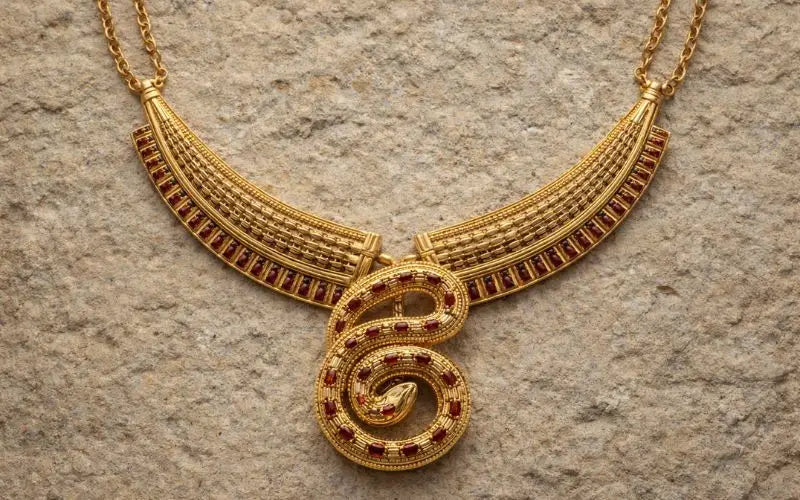
Many pieces of jewelry were designed as protective talismans. Scarabs symbolized rebirth and ensured the protection of the soul. Cobras represented the sovereignty and divine protection granted to the queen. Pectorals engraved with prayers were worn to ward off evil forces.
The voluminous jewelry worn by Cleopatra expressed her wealth and political influence. Royal symbols like the cobra or the vulture affirmed her direct link with the gods. These adornments were worn during official ceremonies to impress dignitaries and subjects. They played a full part in the staging of royal power.
Cleopatra used her jewelry as a strategic tool in her diplomatic relations. The colors, stones, and wealth of the adornments were carefully chosen to impress Julius Caesar and Mark Antony. Jewelry was often matched with royal clothing to strengthen the visual impact. This mastery of appearance reinforced her reputation as a sophisticated ruler.
Egyptian fashion and Cleopatra
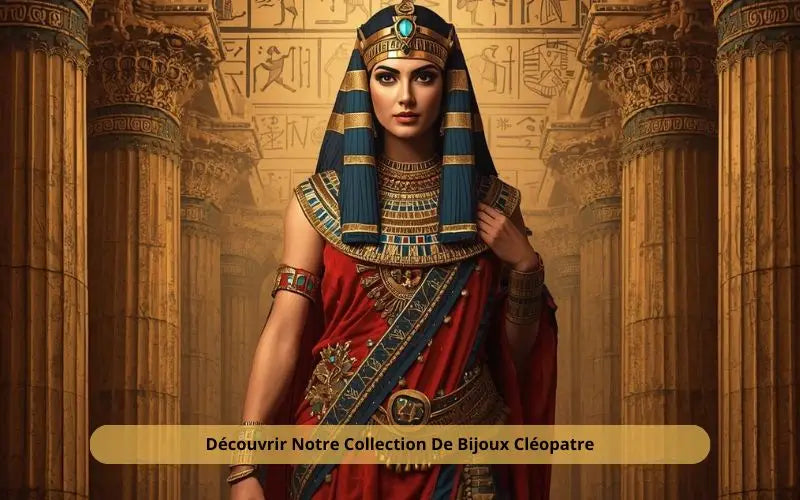
In ancient Egypt, fashion and jewelry played an essential role in the affirmation of power and prestige. Cleopatra used her appearance as a genuine political tool. Jewelry held a central place in her style and complemented her outfits to emphasize her royal silhouette. The harmony between clothing and accessories made it possible to reinforce her image as a powerful and elegant ruler.
The queen generally wore dresses made of fine linen, a light fabric highly appreciated in Egyptian fashion. These clothes could be adorned with gold embroidery or refined motifs. Necklaces, bracelets, and belts were chosen with care to create a harmonious ensemble. Footwear remained simple so as to highlight the wealth and brilliance of the jewelry.
Upon contact with Rome, Cleopatra also integrated certain elements of Roman fashion, such as dangling earrings or more elaborate diadems. This mix of influences reinforced her image as a cosmopolitan queen and helped impress her allies during diplomatic meetings and official ceremonies.
Conservation and archaeological discoveries
The legacy of Cleopatra's jewelry
Cleopatra’s influence goes far beyond her own era and continues to shape modern jewelry. The jewelry associated with the famous Queen of Egypt has become a true aesthetic and symbolic benchmark in the history of fashion and art. They embody luxury, power, and femininity all at once—values that remain fascinating even today.
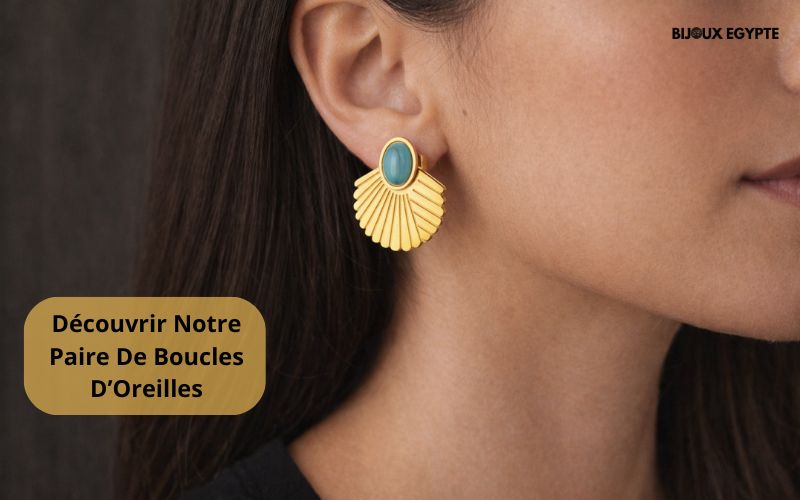
The jewelry attributed to Cleopatra has notably inspired oriental and Mediterranean styles in contemporary jewelry. Animal motifs, such as the snake, the scarab, or the falcon, as well as religious and royal symbols, are regularly reinterpreted by modern designers.
Certain ancient techniques used by Egyptian artisans, such as cloisonné or the inlaying of colored stones, are still present in today's high-end jewelry. This continuity demonstrates the timelessness of the Egyptian aesthetic and the enduring admiration for this ancestral craftsmanship.
Cleopatra’s jewelry is also very present in popular culture. Cinema, literature, and fashion have largely contributed to spreading this image of an elegant and powerful queen. Many collections are inspired by ancient Egypt and draw upon its shapes, colors, and symbols. Thanks to these cultural and artistic references, Cleopatra remains a universal symbol of prestige, beauty, and grandeur today.
FAQ about Cleopatra: The Queen of Egyptian Jewelry
What materials did Cleopatra use for her jewelry?
Cleopatra used gold, lapis lazuli, turquoise, carnelian, and emeralds, combined with colored glass to imitate rare stones. These materials held symbolic and protective value.
Why was jewelry so important to the Egyptians?
Jewelry served to protect, display social status, and represent religious beliefs. Each motif or stone had a specific meaning.
What types of jewelry did Cleopatra wear?
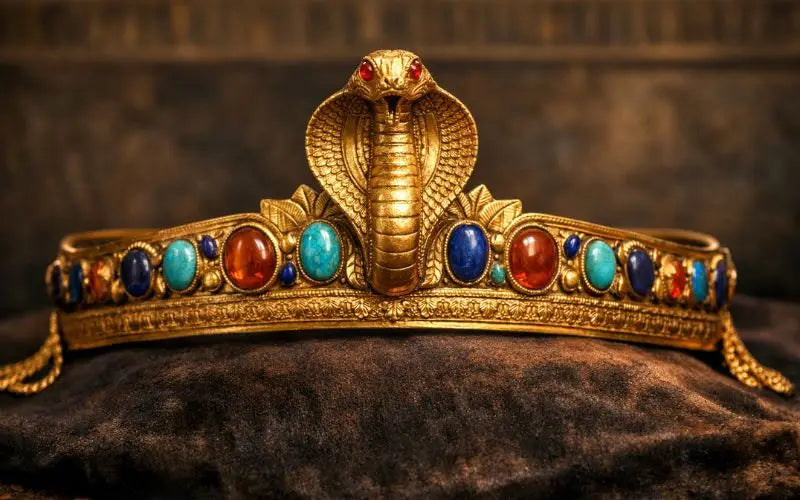
She wore necklaces, pectorals, diadems, bracelets, cuffs, earrings, and rings, often inlaid with precious stones and engraved with hieroglyphs.
Where can we see Cleopatra's jewelry today?
Most have disappeared, but remnants and reconstructions are on display in museums, allowing for the study of the techniques and symbols used.
Is Cleopatra's jewelry still an inspiration today?
Yes, they inspire contemporary jewelry, luxury, and oriental and Mediterranean fashion, by adopting ancient motifs and colors.
Who is Cleopatra?
Cleopatra VII was the last queen of Egypt, born in 69 BC. Hailing from the Greek Ptolemaic dynasty, she was a cultured and strategic ruler. She is known for her political intelligence and her major role in the face of Rome.
Why did Cleopatra leave her mark on history?
Cleopatra left her mark on history because she was the last independent sovereign of ancient Egypt. She used diplomacy and alliances to protect her kingdom. Her figure symbolizes the end of Pharaonic Egypt.
Was Cleopatra a beautiful woman?
Sources indicate that Cleopatra was not necessarily of great physical beauty. Her charm relied primarily on her intelligence, her eloquence, and her charisma.
Who slept with Cleopatra?
Historically, only Julius Caesar and Mark Antony are attested as her lovers. These relationships also served political interests. Other rumors are not confirmed.
What is the cause of Cleopatra's death?
Cleopatra died in 30 BC, probably by suicide. The most widespread version suggests a snake bite. Her death marks the end of independent ancient Egypt.
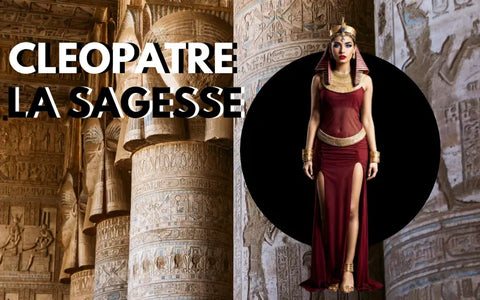
Conclusion on Cleopatra: The Queen of Egyptian Jewelry
Cleopatra's jewelry perfectly illustrates the importance that adornments held in ancient Egypt. Far more than mere decorative accessories, they represented power, spirituality, and royal identity.
Through her imposing necklaces, her diadems adorned with sacred symbols, and her bracelets engraved with religious motifs, Cleopatra asserted her status as a sovereign and her connection to the Egyptian deities. Each stone, each metal, and each shape held a precise meaning, blending protection, prestige, and religious symbolism.
This jewelry also served as a political tool. By perfectly mastering her image and appearance, Cleopatra used her adornments to impress her allies and strengthen her authority. Her meetings with Julius Caesar or Mark Antony show the extent to which her style and sense of spectacle contributed to her diplomatic strategy. Jewelry thus became a way to assert the wealth and power of Egypt in the face of the great powers of the time.
The legacy of these adornments extends far beyond antiquity. The motifs, colors, and techniques inspired by Egypt continue to influence modern jewelry and contemporary fashion. Even today, the image of Cleopatra adorned in sumptuous jewelry symbolizes luxury, femininity, and grandeur. Her adornments remain a fascinating testament to the refinement and exceptional craftsmanship of ancient Egypt.