
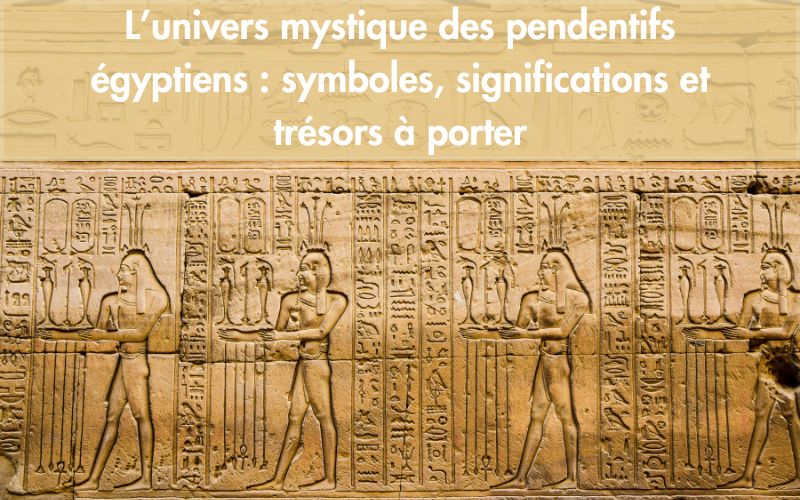
The roots of mystical Egyptian jewelry
Ancient Egypt remains an inexhaustible source of fascination. Pharaohs, priests, and artisans alike perpetuated traditions where every piece of jewelry was not just an ornament, but a true Egyptian amulet, bearing spiritual powers. The idea of wearing an ancient Egyptian pendant made sense: to protect the soul, ensure life after death, or recall a connection to the divine. These objects were crafted with care: noble metals, precious stones, engravings of sacred symbols, and hieroglyphs.
The Ankh cross: eternal life and light
The Ankh cross is undoubtedly the most sought-after Ankh symbol meaning among amulets. It represents life, balance, and the reunion of the visible and invisible worlds. It is often seen in funerary art, carried by gods, or decorating urns and tombs.
Why choose the Ankh cross today
-
As an Egyptian symbol pendant necklace, it allows for a combination of aesthetics and spirituality.
-
It suits all styles: a sober silver version, a luxurious gold version, or one adorned with stones.
-
For those who also see jewelry as a mystical Egyptian piece, it embodies the idea of rebirth, hope, and perpetuity.
The scarab, the Eye of Horus, and other protective powers
Beyond the Ankh, other symbols attract spiritual seekers and history buffs alike.
-
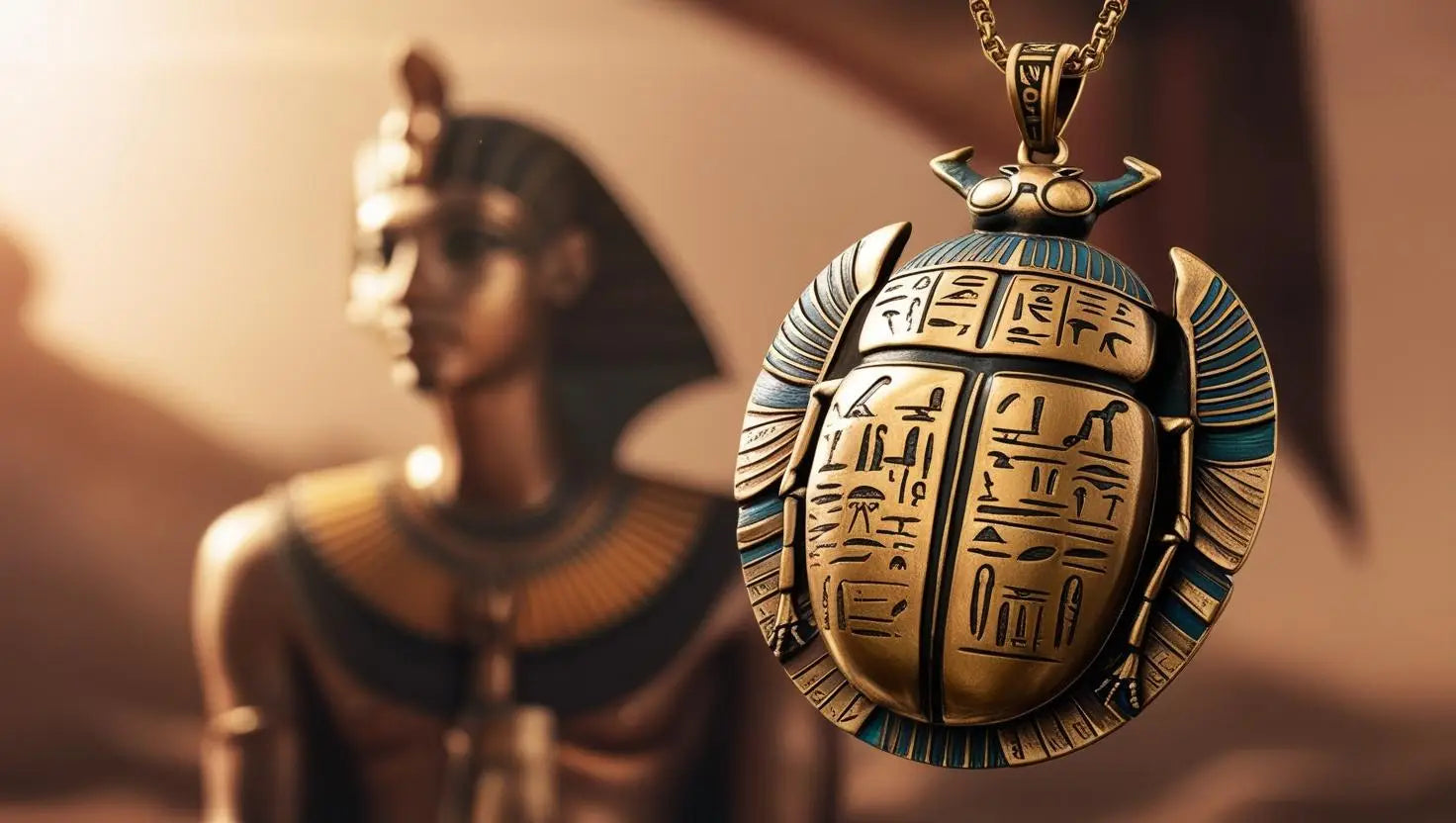
The scarab protection jewelry: associated with the rising sun, a symbol of rebirth and transformation.
-
The Eye of Horus pendant: a symbol of healing, vigilance, and harmony. Highly used as a protective amulet.
-
Deities such as Isis or Osiris, depicted as pendants, all connected to specific functions (fertility, justice, passage to the afterlife).
How to choose your Egyptian gold, silver, or other pendant
The material plays an aesthetic role but also a symbolic one. An Egyptian gold pendant evokes wealth, eternity, and luxury. Silver or stainless steel, on the other hand, can symbolize purity, sobriety, and accessibility. Also consider the size, weight, and the fineness of the engraving: a complex symbol will be more legible on a larger surface.
Criteria for selecting the right pendant
Symbol: choose according to what you are looking for—protection, life, rebirth, spiritual clarity.
Authenticity: prioritize artisans or shops that explain the origins, materials, and manufacturing methods.
Chain length and style: an Egyptian symbol pendant necklace is worn differently depending on whether it is a choker style or a long style.
Care: gold, silver, or other metals react differently to oxidation and humidity; knowing how to maintain them preserves their shine and energetic meaning.
Personal intention: a pendant will be more than just an accessory if you imbue it with an intention—prayer, meditation, protection—this adds value to the Egyptian pendant.
Wearing your Egyptian pendant daily
Worn every day, an ancient Egyptian pendant becomes a symbolic reminder, a subtle presence around the neck. Place it near the heart to symbolize attachment and loyalty to your beliefs. Do not leave it in contact with harsh products; avoid seawater, sweat, and acidic perfumes to prevent tarnishing or damage.
Meaning of colors and stones
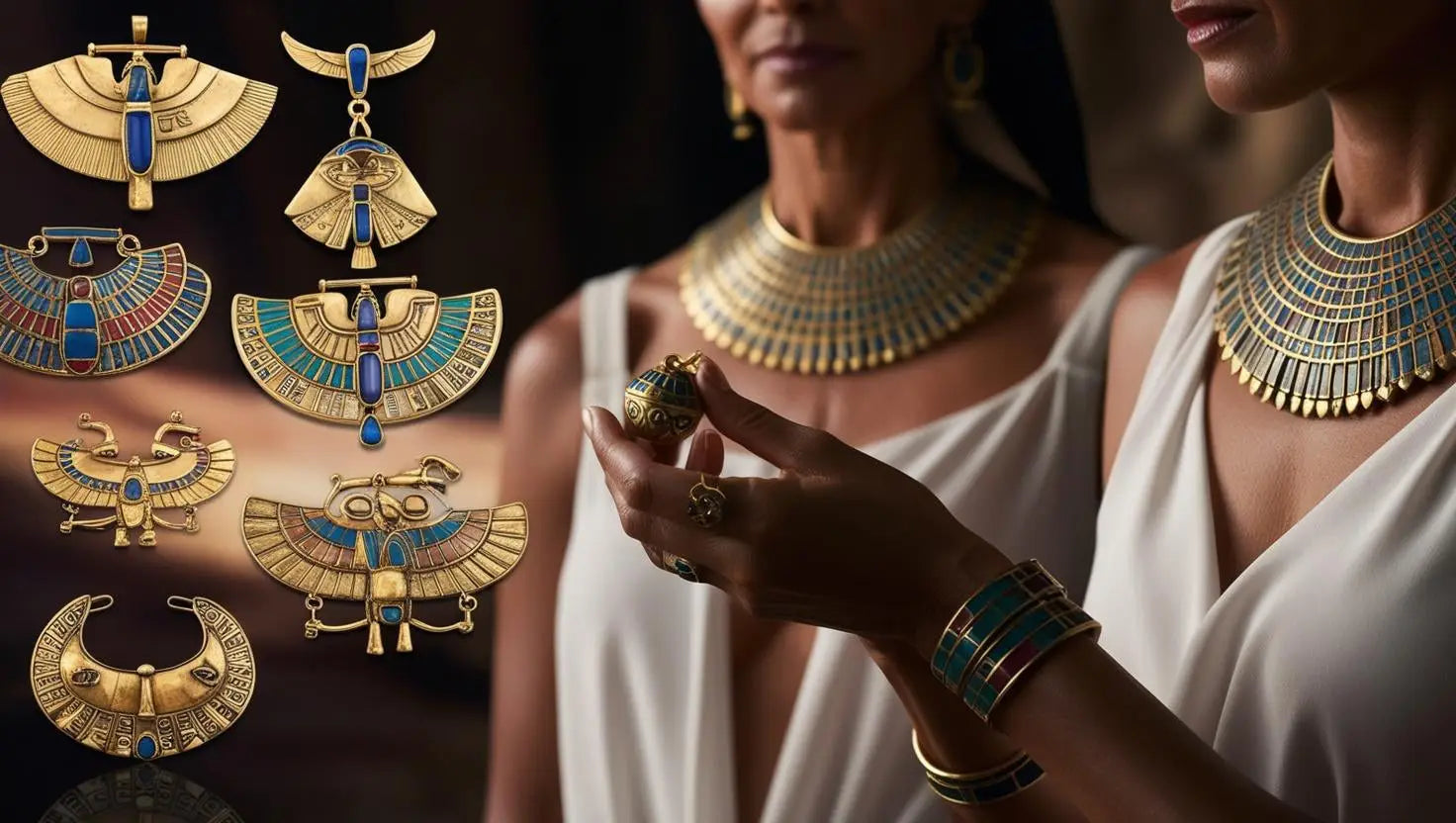
Stones like turquoise, lapis lazuli, red jasper, or coral were highly prized. They symbolized water, the sky, blood, and life. The golden color (gold) evokes the sun and immortality; blue evokes celestial protection. Choosing the right stone or color strengthens the mystical effect and beauty of the jewelry.
Current trends in mystical Egyptian jewelry
In recent years, younger generations have been embracing the ethnic and mystical style. Influences from fashion, cinema, and social media are bringing ancient symbols back into fashion. We see minimalist versions, mixtures of gold metal with natural stones, unisex pendant necklaces, etc.
The symbolic power of the Egyptian pendant necklace
An Egyptian pendant necklace is not just a fashion accessory: it is a direct extension of an ancient spiritual tradition. Worn around the neck, it becomes a visual and emotional landmark, constantly reminding the wearer of the power of the symbols it contains. The beauty of the design blends with an intimate dimension, as each chosen pendant necklace reflects a part of the wearer's identity or personal quest. It is this mix of elegance and mysticism that makes these pieces of jewelry timeless and ever-relevant.
The timeless role of the Egyptian talisman
In ancient Egypt, the talisman served to protect its wearer from negative forces, but also to attract prosperity and balance. Today, this symbolic role endures: many still view their jewelry as a source of positive energy. Whether it takes the form of the Ankh cross, the scarab, or the Eye of Horus, the talisman acts as a link between ancient history and modern daily life. Wearing such an object means embracing both a spiritual tradition and an aesthetic dimension, by giving your jewelry a unique meaning.
Conclusion
Egyptian pendants remain fascinating objects, combining beauty, mystery, and spirituality. Whether you are looking for the Ankh cross for eternal life, scarab protection jewelry, or an ornamental gold or silver pendant, the most important thing is what it means to you. A good talisman, worn with intention, is more than a piece of jewelry: it is a spiritual companion.