

The serpent in the Egyptian imagination and history
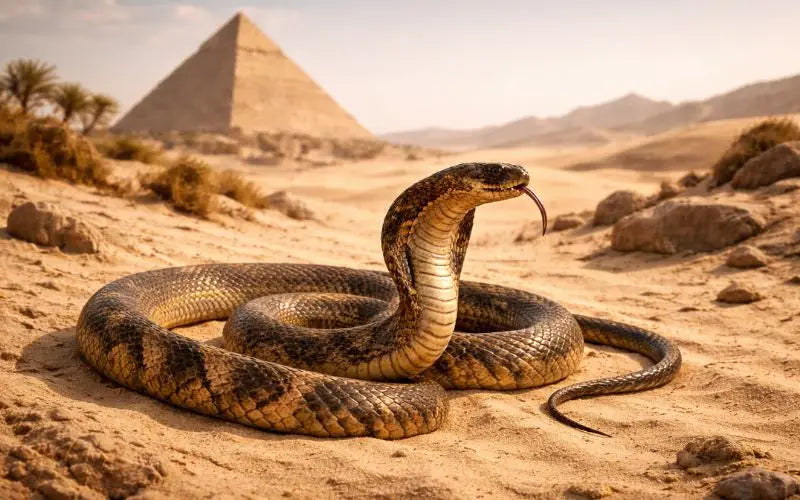
The serpent holds an important place in the mythology and culture of ancient Egypt. It embodies both the threat of chaos and the protection of the cosmic order known as Ma'at. Its role is not limited to religion or royalty: it also appears in art, magic, and funerary rituals. The earliest depictions of serpents in sacred texts and ancient artifacts already demonstrate the richness of its symbolism.
In Egyptian mythology, certain serpents, such as the cobra, are considered divine protectors. They defend the Pharaoh and the kingdom against the forces of evil. This dual nature, both protective and dangerous, reflects the Egyptian view of the world based on the balance between opposing forces.
The first traces of serpent symbolism date back to the beginning of the Egyptian dynasties. We find its presence in amulets, funerary objects, and mythological tales. Over time, its association with protective goddesses like Wadjet reinforced its role as a sacred guardian and a royal symbol.
The shedding of the serpent's skin also reinforces its link to rebirth and regeneration. The Egyptians saw in this natural phenomenon a symbol of eternal life, making the serpent a spiritual guide in the cycle of life, death, and rebirth.
The Uraeus cobra: the serpent of the pharaohs
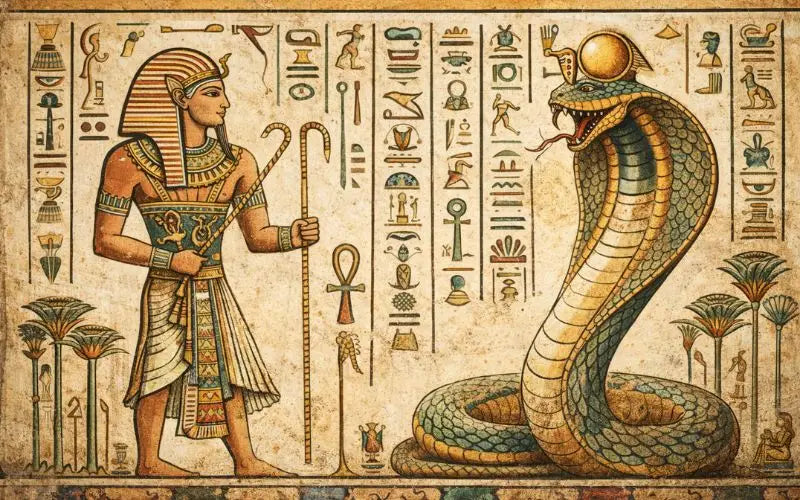
The stylized cobra called Uraeus is the most well-known incarnation of the Egyptian serpent. It is a rearing cobra, often depicted on the brow of pharaohs or gods. This symbol signifies authority, royalty, and divine protection against enemies.
The stylized cobra called the Uraeus is the best-known incarnation of the Egyptian serpent. It is a rearing cobra, often depicted on the brow of pharaohs or gods. This visual symbol signifies authority, royalty, and divine protection against enemies. The Egyptians saw this serpent as a manifestation of the protective goddess Wadjet.
Wearing the Uraeus was not merely decorative: it was a declaration of power. The presence of the serpent indicated that the pharaoh held divine protection and celestial legitimacy to reign. In texts and reliefs, the cobra is described as ready to spit fire at the enemies of the kingdom, which reinforces its protective role. Beyond royalty, this symbol also served to legitimize the social and political order.
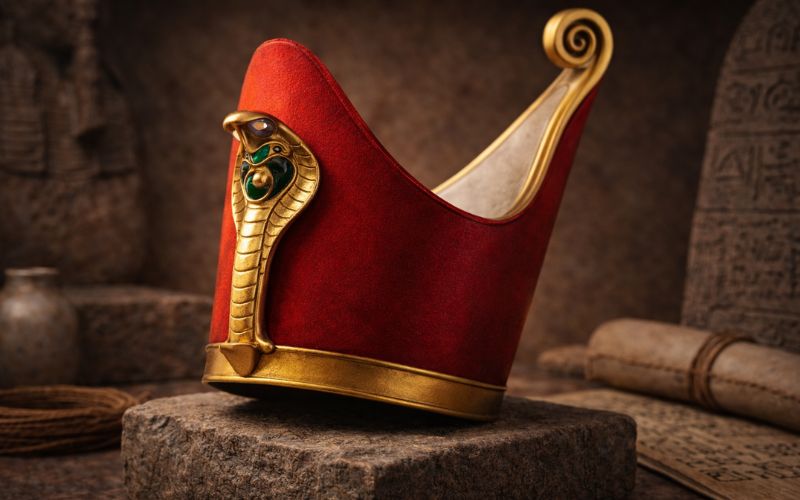
Pharaonic crowns, notably the Red Crown of Lower Egypt, were often adorned with an Uraeus made of precious metal. This serpent was sometimes inlaid with stones or enamel, highlighting its importance. It was strategically placed on the forehead to "illuminate" the king's face with a sacred and protective aura.
Wadjet: the protective serpent goddess
Wadjet is one of the most ancient and venerated goddesses in Egyptian mythology. She is generally depicted as a serpent or a woman with a cobra head. As the patroness of Lower Egypt, she protects the kingdom, the pharaohs, and maintains the normative order of the world. Her serpentine form is directly linked to the Uraeus symbol, which conveys divine protection.
Wadjet is often associated with the Eye of Ra, a symbol of divine power. In this form, she can be seen as a force that destroys enemies, but also as an implacable guardian of the Egyptian world. Religious texts sometimes describe her as a fire-spitter, ready to defend the living and the afterlife. Her presence in art and cult objects shows how essential her protective qualities were.
Beyond Wadjet, other deities or genies adopt the form of serpents. For example, the god Chai, protector of destiny and the home, is sometimes represented as a serpent. These different forms highlight the symbolic flexibility of the serpent in the Egyptian religion.
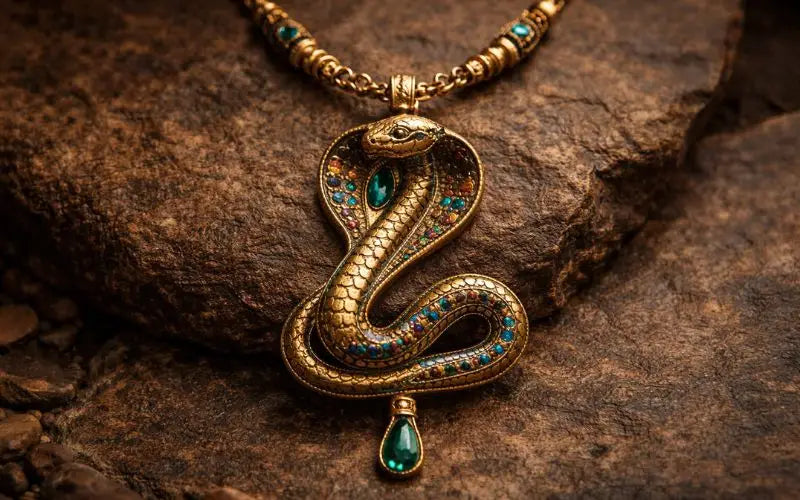
The serpent in Egyptian myths and the cosmos
Serpents in Egyptian rituals and ceremonies
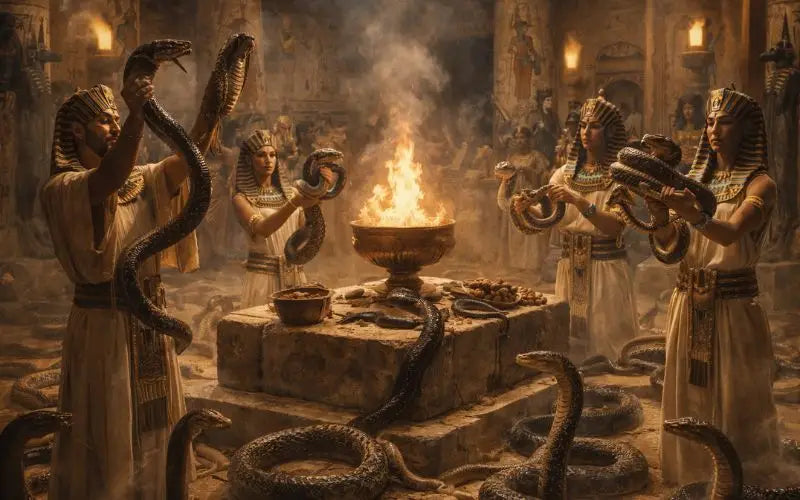
Serpents were not just visual symbols in art or royalty: they played an active role in religious and ceremonial practices. Their presence was intended to channel divine protection and ensure the maintenance of cosmic order. The Egyptians associated these creatures with invisible forces that could repel evil and guide souls.
In funerary rituals, serpents served to protect the deceased against the forces of evil. Serpent amulets were placed in tombs to ensure rebirth in the afterlife. These magical objects also symbolized the eternal cycle of life and death. The presence of the serpent in these rites illustrates the continuity between the world of the living and the world of the dead.
Beyond the tomb, serpents were omnipresent in royal ceremonies. During enthronement, the pharaoh was represented with a serpent on his crown to show his divine legitimacy. This symbol served to remind subjects that the sovereign benefited from the protection of the gods.
Serpents appeared in the form of amulets, statuettes, and cippi in temples and homes. These objects were intended to ward off visible and invisible dangers. They were often engraved with prayers or magical symbols to enhance their effectiveness. Some ritual serpents were worn on the body, while others were placed at entrances to protect a location.
Serpents and medicine in ancient Egypt
Serpents were not only protectors or royal symbols: they also had a role associated with health and healing. Ancient Egyptians saw the bite and the shedding of a serpent's skin as a metaphor for the renewal and regeneration of the body.
Serpents appeared in medical papyri as symbols of healing. It was believed that their venom or form could drive away illness and harmful spirits. Some remedies used images of serpents to activate the curative power of plants or amulets. This shows how the serpent served as a link between magic and medicine.
Deities such as Renenutet or Wadjet were invoked to protect individuals' health. Their representations in serpent form appeared in temples and on amulets. They were considered capable of healing or preventing diseases through their divine power. Priests could also perform medical rituals in their honor.
Serpents were also used in rituals to prevent diseases and curses. Egyptians placed images of serpents at the entrances of their homes or on personal objects. Some rituals included chants or incantations to activate the protection of the serpents.
The serpent in art, customs, and cultures
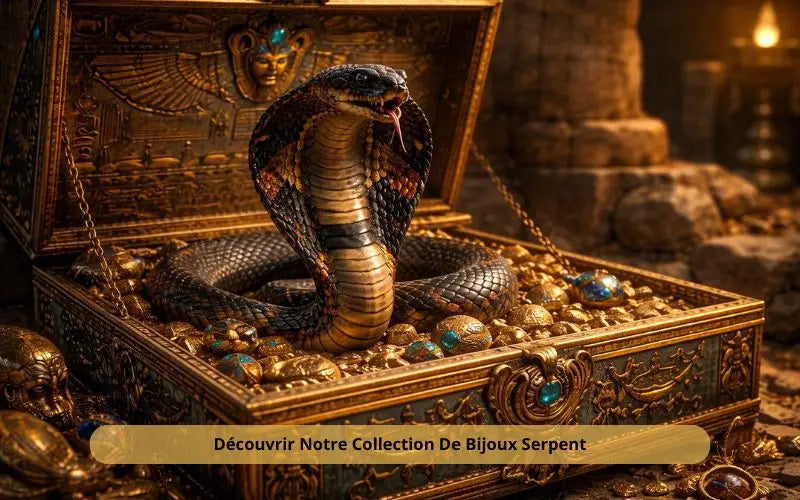
The Egyptian serpent is not limited to a religious or royal symbol. It permeates art, daily life, and concepts of death. Its image appears in temples, amulets, and funerary objects. Through these depictions, it symbolizes protection, divine power, and the link between the world of the living and the world beyond.
In Egyptian art, the serpent is omnipresent. It can be found engraved on temple walls, painted on sarcophagi, or sculpted on sacred objects. Friezes of stylized cobras placed at the entrance of sanctuaries often served as symbolic protection against evil forces. These representations recalled the serpent's role as a guardian of sacred spaces.
In daily life, Egyptians also used the serpent as a protective symbol. Several objects and practices attest to this presence:
-
serpent amulets worn for protection against evil
-
symbols engraved on funerary objects
-
representations placed in tombs to accompany the deceased
The shedding of the serpent's skin reinforced its association with rebirth and eternity. This symbolism appears in numerous traditions. For example, in ancient Greece, the serpent surrounding the staff of Asclepius symbolizes healing. These parallels show that the serpent is a universal symbol of protection and renewal.
FAQ on The Egyptian Serpent: Symbol of Power and Protection
Snakes occupy a special place in the imagination and spirituality of ancient Egypt. Present in art, religious texts, and ritual objects, they symbolize both protection, power, and the cosmic forces that govern the universe. For the ancient Egyptians, these creatures were not limited to simple animals: they were considered manifestations of the divine capable of influencing the world of the living and that of the dead.
In mythology and religious beliefs, the serpent appears in various forms and possesses multiple meanings. It can represent royal protection, the rebirth linked to the cycle of life, or even the forces of chaos against which the gods must fight. This symbolic richness explains why snakes are omnipresent in temples, amulets, pharaohs' headdresses, and mythological tales.
The Egyptians also associated the serpent with magic, medicine, and daily protection. Its image was used to ward off evil, protect individuals, and accompany the deceased into the afterlife. This diversity of interpretations makes the serpent a central symbol in Egyptian culture.
The following FAQ brings together the most frequent questions to better understand the symbolism of the Egyptian serpent and its importance in the beliefs and society of ancient Egypt. It helps you understand the symbolism of the Egyptian serpent and its role in the lives and beliefs of the pharaohs.
What is the Uraeus in ancient Egypt?
The Uraeus is an upright cobra representing the protective goddess Wadjet, often placed on the crowns of pharaohs as a symbol of royal power and protection against enemies.
Why did pharaohs wear a serpent on their forehead?
Pharaohs wore this symbol to show their divine legitimacy, benefit from the protection of Wadjet, and assert their authority over all of Egypt.
Does the serpent symbolize rebirth?
Yes, the serpent that sheds its skin represents regeneration and eternity, linked to Egyptian funerary beliefs regarding life after death.
Was the serpent always positive?
No, certain serpentine figures, such as Apep, embody chaos and the destructive forces against which gods and men must struggle.
Which amulets represented the serpent?
Snake-shaped amulets were worn for personal protection and against physical and spiritual dangers in daily life.
Was the serpent associated with other deities?
Yes, beyond Wadjet, other spirits and deities could adopt a serpent form to symbolize protection and destiny.
Could the cobra breathe fire according to the Egyptians?
In some mythical representations, the cobra is described as breathing fire on enemies, reinforcing its divine protective function.
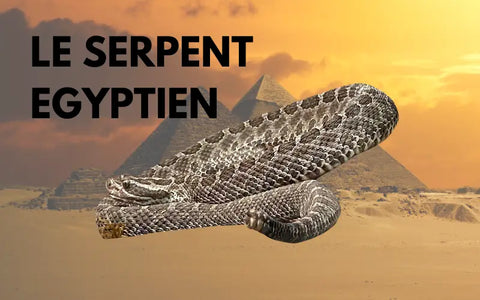
Conclusion on The Egyptian Serpent: Symbol of Power and Protection
The serpent occupies a central place in the symbolism of ancient Egypt. Through myths, art, and religious rituals, it appears as a powerful symbol that embodies both divine protection, royal authority, and the cycle of life. Its presence on the pharaohs' crowns, notably with the Uraeus, illustrates the sacred legitimacy of power and the protection granted by deities such as Wadjet.
But the symbolism of the serpent is not limited to royalty. In Egyptian religion and cosmology, it also represents the forces that structure the universe. Certain serpents, like Mehen, protect the cosmic order and accompany the god Ra on his nocturnal journey. Others, like Apep, conversely embody the chaos and threats that weigh upon the balance of the world.
This duality makes the serpent a particularly rich symbol. Its ability to shed its skin also reinforced its association with rebirth, regeneration, and eternal life in funerary beliefs. Thus, the Egyptian serpent does not represent just a sacred animal, but a true cosmic symbol connecting power, protection, and renewal in the ancient Egyptians' worldview.