

Internal architecture designed with exceptional precision
The interior of the Egyptian pyramids reveals an organization far more complex than their external appearance suggests.
Behind the perfectly aligned limestone blocks are hidden ascending corridors, monumental galleries, burial chambers, and relieving spaces designed to distribute colossal loads.
The Great Pyramid of Khufu represents the most accomplished example of this precision engineering. Every passage seems to have been planned even before the first stone was laid.
The builders demonstrated an advanced knowledge of geometry and astronomy. The nearly perfect alignment with the cardinal points proves the use of precise celestial observations.
The internal structures do not merely respond to technical constraints: they also translate a coherent religious vision.
The layout of the chambers and galleries shows that the pyramid was not a simple tomb. It was designed as a symbolic journey guiding the pharaoh's soul toward eternity. This architectural complexity constitutes one of the greatest mysteries of Antiquity.
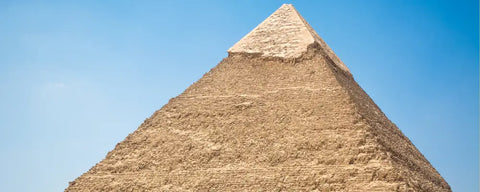
The King’s Chamber and its mysterious conduits
The King's Chamber is located at the heart of the Great Pyramid and impresses with its monumental austerity.
Built of red granite, it houses a massive sarcophagus carved from a single block of stone. Two narrow conduits lead from its walls and cross the structure to the outside. Their exact function remains a subject of debate among researchers.
Some specialists believe they served for ventilation during construction. Others believe they had an astronomical function, pointing toward stars associated with the god Osiris.
These conduits could symbolize a celestial path allowing the royal soul to reach divine immortality.
The Grand Gallery: an engineering masterpiece
The Grand Gallery is a spectacular ascending passage measuring more than eight meters in height. Its corbelled vault distributes the weight of the millions of tons of stone located above.
This technical feat demonstrates a remarkable mastery of mechanical constraints.
Archaeologists also believe that this gallery played a logistical role during construction. It would have allowed the heavy granite blocks to be hoisted using an ingenious counterweight system.
Its impressive architecture remains one of the most fascinating elements of the internal Secrets of the pyramid.
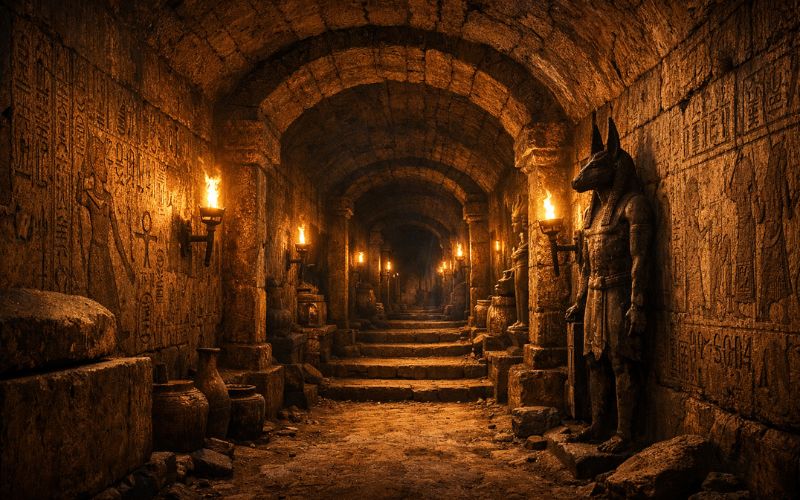
Secret chambers revealed by modern technologies
For centuries, exploration of the pyramids relied primarily on mechanical excavations, direct soundings, and openings that were sometimes risky for the stability of the structures.
These methods, though effective for their time, carried a real risk of deterioration to the internal corridors and ancient walls.
Today, technological advances allow us to study the interior of monuments without altering their integrity. In 2017, the ScanPyramids project marked a major turning point by announcing the discovery of a vast cavity located above the Grand Gallery, thanks to muography.
This scientific approach uses cosmic particles called muons to identify variations in density through the stone.
The detected cavity, nicknamed the “Big Void,” extends over approximately thirty meters in length. Its significant volume intrigues the scientific community, as no known structure corresponds exactly to this space.
Some hypotheses suggest a structural element intended to balance internal forces, while others imagine a still-unknown function linked to the internal organization of the monument.
This discovery demonstrates that pyramid exploration is entering a new era, where technology allows us to expand knowledge without compromising heritage conservation.
How muography works
Muography relies on observing the passage of cosmic particles through stone. Detectors placed inside measure the amount of muons passing through the limestone blocks. The denser the material, the fewer particles pass through.
This technique offers several major advantages:
-
No degradation of structures
-
Precise analysis of internal volumes
-
Detailed three-dimensional mapping
-
Continuous study without drilling
Thanks to this scientific innovation, exploration of the internal Secrets is progressing significantly.
Zones that remain inaccessible
Despite these technological advances, some parts remain unexplored. Passages are sometimes too narrow for a human to enter. Other zones have been sealed since antiquity for unknown reasons.
Egyptian authorities also limit access to preserve the monuments. Several detected cavities have not yet been physically probed. These closed spaces feed the idea that other mysteries are waiting to be revealed.
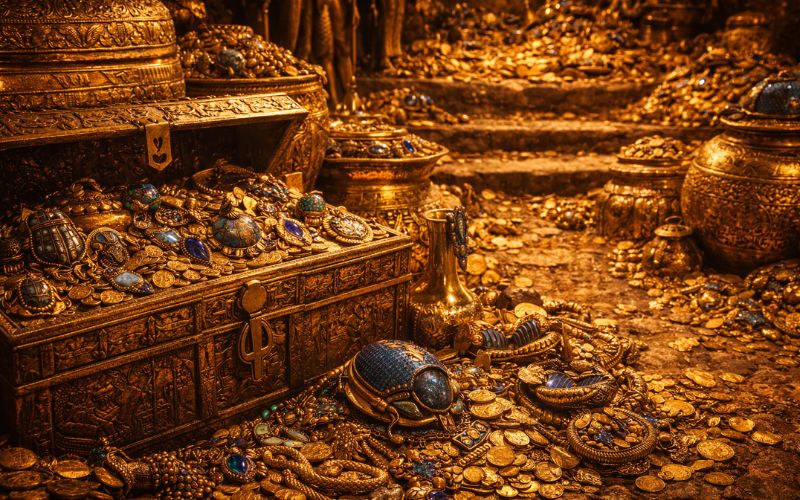
Lost funerary treasures and ancient looting
Originally, the pyramids were designed as true funerary complexes containing considerable wealth intended to ensure the pharaoh a prosperous existence in the afterlife.
The internal chambers housed refined jewelry, protective amulets, sacred statues, and precious furniture carefully selected. Each object possessed a strong symbolic dimension, linked to divine protection, rebirth, and the continuity of royal power after death.
The accumulation of these goods also reflected the sovereign's economic and political power.
However, the majority of the pyramids were looted very early on, sometimes only decades after their construction.
Intruders forced through sealed corridors in search of gold, silver, and precious stones that could be easily resold. Even today, archaeologists identify traces of these ancient break-ins: displaced blocks, dug-out galleries, fractured sarcophagi.
Despite these major losses, some less imposing or more isolated pyramids have retained partial elements of their funerary furniture. These remains help us better understand the importance placed on burial rituals and the spiritual value of the lost treasures.
Found symbolic objects
Archaeological excavations conducted over the decades have uncovered various particularly significant funerary artifacts.
Even when the chambers had been looted, some forgotten or hidden objects remained intact. These discoveries illustrate the cultural, artistic, and religious richness of ancient Egypt, as well as the care taken in royal burial rites.
Notably, these include:
-
Amulets representing the Eye of Horus, a symbol of protection and regeneration
-
Protective statuettes placed around the sarcophagus
-
Canopic jars intended to preserve mummified organs
These elements demonstrate that the pyramid was conceived as an eternal dwelling intended to ensure the spiritual survival of the sovereign.
Sacred texts carved into stone
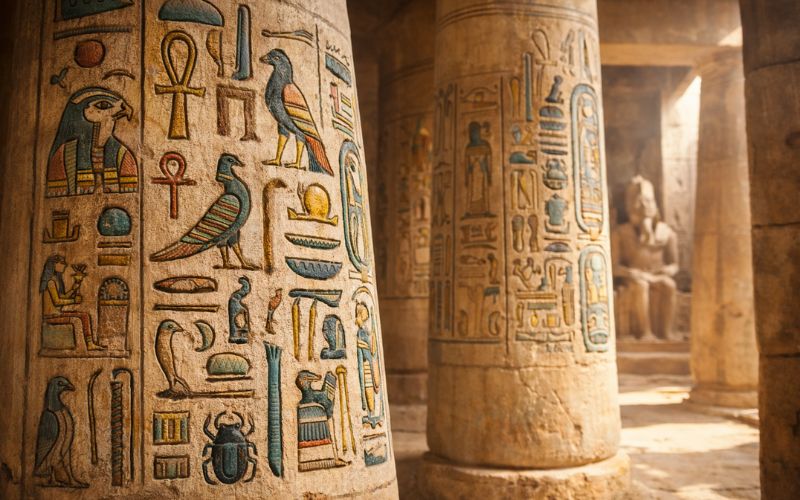
Some pyramids built from the 5th and 6th dynasties onward contain a set of religious inscriptions known as the Pyramid Texts. Meticulously carved onto the limestone walls of the burial chambers, these hieroglyphs constitute the oldest preserved religious corpus in human history.
Their presence marks a major evolution in royal funerary practices, where the sacred word becomes a central element of the apparatus of eternity. These formulas were carefully selected and adapted for each sovereign.
The purpose of these texts was to ensure the pharaoh's symbolic resurrection and his ascension to the divine sphere. They describe a structured universe populated by deities, celestial gateways, and spiritual trials.
They contain invocations, hymns, and ritual declarations affirming the transformation of the king into a divine being. The writing carved into the stone guaranteed the permanence of the sacred words and their magical efficacy.
The inscriptions are therefore neither decorative nor anecdotal. They embody an elaborate conception of survival after death and represent one of the most significant religious secrets discovered inside the Egyptian pyramids.
The spiritual role of hieroglyphs
The hieroglyphs of the Pyramid Texts fulfilled several essential functions within the framework of royal funerary rituals.
Carved directly onto the walls of the chambers, they formed a set of sacred formulas intended to accompany the sovereign in his passage to the afterlife. These inscriptions were not decorative but constituted a true ritual guide for the royal soul.
Their role was to:
-
Protect the mummified body
-
Facilitate the pharaoh's rebirth
-
Enable union with the gods
-
Guarantee celestial immortality
These texts constitute a major source for understanding Egyptian funerary religion and the ancient conception of eternity.

Enigmatic tunnels and passages
The Egyptian pyramids house a complex network of corridors, descending galleries, and hidden passages that have intrigued researchers for centuries. Some corridors appear to stop abruptly against a massive wall, while others lead to narrow, hard-to-access spaces.
This labyrinthine configuration is not a coincidence: it reflects a precise plan integrated from the very design of the monument. However, the exact function of many of these passages remains uncertain.
Egyptologists believe that some corridors may have served to transport blocks during construction before being sealed. Other hypotheses suggest a ritual dimension, where the internal route would symbolically represent the pharaoh's initiatory journey to the afterlife.
The presence of sliding blocks and sophisticated locking systems reinforces the idea of an architecture designed to protect the burial chamber.
This internal organization accentuates the aura of mystery surrounding the pyramids, true sacred labyrinths designed with a clearly defined religious and strategic intent.
Main hypotheses of researchers
Several theories coexist regarding these complex internal passages, which have been studied by Egyptologists for generations. None have been definitively confirmed to date, as archaeological evidence remains partial and sometimes ambiguous.
Researchers cross-reference architectural, religious, and technical data to propose different interpretations.
Hypotheses include:
-
Temporary ventilation systems
-
Sophisticated anti-theft devices
-
Precise astronomical symbolism
-
Structural relief spaces
These different interpretations show that the secrets of the pyramids are not yet fully elucidated and continue to spark scientific debate.

FAQ on the Hidden Secrets Inside the Egyptian Pyramids
The hidden secrets inside the Egyptian pyramids generate constant interest among the general public and archaeology enthusiasts alike.
Each year, new research, documentaries, and publications renew curiosity around these millennial monuments. Internet users seek to understand what the pyramids really contain, what recent discoveries have been made, and what science still does not know.
The most frequent questions concern the existence of secret chambers, the presence of treasures, site accessibility, and the meaning of the inscriptions found inside.
This fascination is explained by the unique combination of architectural prowess, historical mystery, and spiritual dimension.
The pyramids are not mere ancient constructions: they represent a major cultural heritage and a universal symbol of human ingenuity.
The following questions group together the most common inquiries from readers wishing to deepen their understanding of internal structures, scientific discoveries, and the mysteries still unresolved related to these iconic monuments of ancient Egypt.
Are there still secret chambers in the Great Pyramid?
Yes, cavities were detected using muography in 2017. Their precise function remains unknown. Scientific research continues to understand their exact role.
Can one visit the interior of the pyramids?
Some chambers are accessible to the public, particularly in the Great Pyramid. However, several areas remain closed for conservation reasons.
Did the pyramids really contain treasures?
Yes, they housed precious and symbolic objects. However, the majority were looted in antiquity.
How were the hieroglyphs deciphered?
Decipherment was made possible thanks to the Rosetta Stone in the 19th century. It allowed for the understanding of hieroglyphic writing.
Do the pyramids still hide secrets?
Yes, several areas remain unexplored. Modern technologies could reveal new discoveries in the coming years.
How were the pyramids built?
The pyramids were built with limestone and granite blocks transported from nearby quarries. Researchers believe that ramps, sledges, and a highly structured logistical organization were used. The workforce was composed of skilled laborers, not slaves as long believed.
What is the largest pyramid in Egypt?
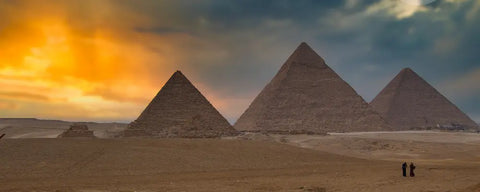
The Great Pyramid of Khufu, located in Giza, is the largest in Egypt. Originally, it measured about 146 meters in height. It remains one of the Seven Wonders of the Ancient World still visible today.
How many pyramids are there in Egypt?
There are more than a hundred pyramids in Egypt. The majority are located on the west bank of the Nile. Not all are as monumental as those of Giza.
Who built the pyramids?
The pyramids were built under the authority of the pharaohs of the Old Kingdom. Teams of specialized workers, craftsmen, and engineers participated in the work. Archaeological discoveries show that they lived in organized villages near the construction sites.
Why are the pyramids triangular in shape?
The pyramidal shape symbolized the sun's rays in Egyptian religion. It also represented ascension to the sky and immortality. This structure also ensured great architectural stability.
Conclusion on the Hidden Secrets Inside the Egyptian Pyramids
The hidden secrets inside the Egyptian pyramids reveal much more than simple architectural prowess: they testify to a civilization deeply structured around spirituality, royal power, and the quest for eternity.
By exploring the internal chambers, hidden passages, sacred texts, and recent scientific discoveries, we understand that these monuments were conceived as true symbolic mechanisms intended to accompany the pharaoh into the afterlife.
Each corridor, each inscription, and each empty space detected by modern technologies participates in a coherent vision of the world and of death.
While many material treasures have disappeared over the centuries, the intellectual and religious riches remain through the vestiges found and the inscriptions carved into the stone. Technological advances, such as muography, show that exploration is far from complete.
Thus, the pyramids continue to fuel research and the collective imagination. They remain a universal symbol of human genius and a living mystery whose answers still lie buried under millions of stone blocks.