
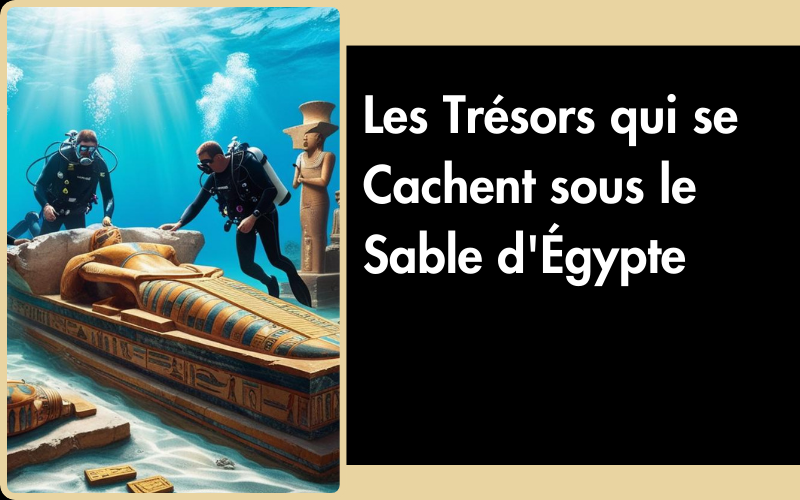
Les Trésors qui se Cachent sous le Sable d'Égypte

The Treasures Hidden Beneath the Sands of Egypt

The Egyptian desert still conceals many treasures from ancient Egypt. Mysterious pyramids, lost tombs, and sunken cities continue to fascinate researchers. Despite major discoveries, many archaeological sites remain buried and could reveal new historical secrets.

Valentine's Day Gift Idea Reading The Treasures Hidden Beneath the Sands of Egypt 13 minutes Next Cleopatra's Lost Treasure: Myth or Reality?

For thousands of years, the Egyptian desert has fascinated historians and archaeologists. Beneath its dunes still lie countless treasures from ancient Egypt. Tombs, temples, and lost cities bear witness to an exceptional civilization whose many secrets remain buried.

Hieroglyphic Papyrus

Great archaeological discoveries beneath the sand

Egypt is one of the most fascinating archaeological territories in the world. Since the 19th century, explorers and scientists have discovered countless treasures buried beneath the desert sand. These discoveries have allowed for a better understanding of Egyptian civilization, its religious beliefs, and its funerary practices. The desert acts as a natural shield, preserving ancient monuments and objects for thousands of years. Thanks to this phenomenon, some artifacts have been found in an exceptional state of preservation.

Archaeologists often work for decades before unveiling a major site. Excavations make it possible to discover temples, monumental statues, jewelry, and papyri. Each artifact offers a precious glimpse into the daily lives of the ancient Egyptians. Researchers also analyze hieroglyphic inscriptions to reconstruct the history of the pharaohs and their dynasties.

Today, explorations continue throughout the country. Scientists use modern technologies to locate new treasures hidden beneath the dunes. This research shows that the history of ancient Egypt is still far from revealing all its secrets.


The discovery of Tutankhamun's tomb

The discovery of Tutankhamun's tomb in 1922 remains one of the most significant archaeological events in history. Archaeologist Howard Carter uncovered a nearly intact tomb containing thousands of precious objects. Among these treasures were statues, gold jewelry, and the famous funerary mask of the young pharaoh. The tomb contained more than five thousand objects intended to accompany the sovereign into the afterlife. The frescoes painted on the walls recounted his journey to the realm of the gods, offering a unique glimpse into the funerary rituals of ancient Egypt.

Temples buried beneath the desert

Many Egyptian temples were found buried beneath the sand for centuries. The desert protected these monuments from destruction and erosion. When archaeologists clear these sites, they often find remarkably preserved sculptures and inscriptions. These temples were major religious centers where priests paid homage to the gods of ancient Egypt.

Excavations regularly reveal new treasures linked to religious practices. Statues of deities, sacred altars, and ritual offerings are found there. These discoveries provide a better understanding of the spiritual beliefs of the ancient Egyptians and the importance of worship in their society.

Tutankhamun Tomb

The Pyramids of Giza and their hidden mysteries

The Pyramids of Giza are among the most famous monuments in the ancient world. Built more than four thousand years ago, they continue to fascinate researchers and historians. Beneath their gigantic stone blocks could lie treasures and secret passages still unknown. Despite decades of exploration, some areas of the pyramids remain completely inaccessible.

The Great Pyramid of Khufu is particularly mysterious. Scientists recently discovered cavities inside the structure using modern technology. These spaces could be additional burial chambers or hidden corridors. Archaeologists hope that these zones contain precious artifacts linked to the pharaoh's funerary rituals.

The pyramids are not just monumental tombs. They also represent an impressive architectural feat that continues to intrigue engineers and historians. Their extremely precise orientation relative to the cardinal points testifies to an advanced mastery of astronomy. The stone blocks used for their construction sometimes weigh several tons, which still raises questions about the methods employed by the builders.

Researchers today believe that the pyramids could still hide several treasures and historical clues capable of providing new information on the political, religious, and scientific organization of Egyptian civilization.

Pharaoh Leather Bracelet

Cavities discovered in the Pyramid of Khufu

Scientists have used muon imaging to explore the interior of the Pyramid of Khufu. This technology allows for the detection of empty spaces hidden behind stone blocks. The results revealed a large cavity located above the Grand Gallery. This discovery has sparked immense interest in the scientific community.

Archaeologists believe that this cavity could contain objects or structures related to funerary rituals. If this hypothesis is confirmed, it could reveal new treasures that have remained intact for millennia. Future explorations may allow access to this mysterious zone and provide more insight into the pyramid's secrets.

Secret passages of the pyramids

Egyptian pyramids were built with a complex network of corridors and chambers. Some passages are visible, but others might still be concealed within the structures. Archaeologists believe these hidden corridors were used to protect royal treasures from looters.

Several theories suggest the existence of additional chambers containing precious artifacts. The Egyptians placed great importance on protecting funerary objects. The secret passages were therefore designed to hide the pharaohs' wealth and preserve their possessions for eternity.

Pyramid Sand Egypt

The lost tombs of the pharaohs

Many pharaohs were buried in monumental tombs filled with treasures destined for their life in the afterlife. However, some royal burials remain unfound. Archaeologists believe that several important tombs could still be hidden beneath the desert sand. These discoveries could transform our understanding of Egyptian history and reveal new information about certain dynasties that are still poorly understood.

Royal tombs generally contained jewelry, statues, and ritual objects. The walls were decorated with frescoes depicting religious and mythological scenes. These paintings were intended to guide the pharaoh on his journey to the afterlife. Hieroglyphic texts inscribed on the walls also recounted the sovereign's feats and invoked the protection of the Egyptian deities.

Each new tomb discovery brings precious information about the lives of Egyptian sovereigns. Researchers still hope to discover intact burials containing exceptional treasures. Some tombs may have been intentionally concealed to escape the frequent looting of ancient times.

Archaeological excavations therefore continue in several regions of Egypt, particularly in the Valley of the Kings and in areas of the desert that are still little explored. This research could lead to the recovery of forgotten royal tombs and enrich our knowledge of Egyptian civilization.

The mysterious tomb of Cleopatra

The tomb of Cleopatra is one of the greatest archaeological mysteries in history. The famous queen of Egypt was said to have been buried with Mark Antony in a sumptuous mausoleum. Yet, no archaeologist has yet found the exact location of this burial site.

If this tomb were discovered, it could contain exceptional treasures. Historians believe the mausoleum could house precious objects related to the Ptolemaic dynasty. Excavations near Alexandria continue to fuel the hope of one day finding this legendary site.

Royal tombs still unfound

Some burials mentioned in ancient texts have never been discovered. Archaeologists believe they could be in unexplored areas of the Valley of the Kings.

These tombs could belong to:

  • pharaohs whose burials were lost

  • powerful queens of ancient Egypt

  • princes and heirs buried in secret

If these tombs are discovered, they could reveal historical treasures of inestimable value.

Silver Pharaoh Head Ring

The sunken cities of the Mediterranean

Not all the riches of ancient Egypt are found in the desert. Some ancient cities have disappeared beneath the waters of the Mediterranean Sea. These sunken cities contain incredibly well-preserved treasures. Underwater excavations have uncovered giant statues, temples, and everyday objects that bear witness to the cultural and commercial wealth of these ancient port cities.

Archaeologists use advanced diving technologies to explore these submerged sites. Discoveries made underwater offer a unique glimpse into the commercial and religious life of ancient Egypt. Underwater explorations also make it possible to recover entire urban structures, such as docks, roads, and public buildings that were once at the heart of economic activity.

These cities were once important economic centers. They served as ports for trade between Egypt and other Mediterranean civilizations. Merchants traded spices, precious metals, textiles, and many other products from distant regions there.

Today, their ruins lie under several meters of water, preserving many historical treasures. Excavations continue to reveal fascinating objects that allow us to better understand the trade networks and cultural influences that linked Egypt to other peoples of antiquity.

Heracleion the lost city

Heracleion was a major port of ancient Egypt located near Alexandria. This prosperous city played an essential role in maritime trade between Egypt and other Mediterranean civilizations. It disappeared under the sea more than a thousand years ago following natural disasters and land subsidence. Underwater excavations have revealed colossal statues, submerged temples, and various urban vestiges.

Archaeologists have also recovered gold coins, ship anchors, and ancient inscriptions. These treasures offer a fascinating glimpse into life in this ancient city.

Canopus and its submerged temples

Canopus was an important religious center dedicated to the god Osiris. The city attracted many pilgrims who came to pay homage to Egyptian deities and participate in sacred ceremonies. This place was renowned for its majestic sanctuaries and religious festivals that brought together faithful from different regions of the Mediterranean world.

Underwater excavations have led to the discovery of:

  • sacred statues

  • temple columns

  • ritual objects

These discoveries constitute true archaeological treasures and allow researchers today to better understand the religious practices and spiritual traditions of ancient Egypt.

Marine Egypt Discovery

FAQ about The Treasures Hidden Beneath the Sands of Egypt

Before answering the most frequently asked questions about treasures buried beneath the sands of Egypt, it is important to understand why this subject fascinates historians, archaeologists, and history enthusiasts so much. For centuries, ancient Egypt has captured the world’s attention thanks to its spectacular monuments, monumental pyramids, and the numerous archaeological discoveries that have marked history. Despite these explorations, a large part of this civilization remains hidden under desert dunes or at the bottom of the Mediterranean Sea.

Modern technological advancements now allow us to locate new potential sites and analyze buried structures without damaging the remains. Each new discovery provides valuable information on the daily life, religion, and political organization of ancient Egypt. Archaeological excavations therefore continue to fuel public curiosity and gradually reveal the secrets of this millennial civilization.

Many questions come up regularly among internet users when they are interested in the hidden treasures of Egypt. How many sites remain to be discovered? What are the most famous artifacts found so far? And why does the desert preserve these ancient objects so well? The following FAQ answers the most searched questions to help better understand the archaeological mysteries that still surround ancient Egypt.

Egypt Hieroglyphs

How many treasures are still buried in Egypt?

Archaeologists estimate that a large part of Egyptian historical sites remains buried under the sand. Modern technologies now make it possible to identify new, promising areas. Some estimates suggest that thousands of archaeological sites are yet to be discovered.

What is the most famous treasure of Egypt?

Tutankhamun's treasure is considered the most famous discovery of ancient Egypt. His tomb contained more than five thousand precious objects, including the gold funerary mask. This discovery revolutionized archaeology.

Why are objects so well preserved in the desert?

The dry desert climate slows the degradation of materials. The sand protects objects from moisture and oxygen. This combination allows treasures to be preserved for thousands of years.

Are there still unknown pyramids?

Yes, some archaeologists believe that several pyramids might still be buried under the sand. Anomalies have been detected thanks to satellite imagery. These discoveries could lead to new excavations.

Do the sunken cities still contain treasures?

Yes, submerged cities like Heracleion and Canopus still contain many artifacts. Underwater explorations continue to reveal statues, ritual objects, and ancient coins.

Who discovered Tutankhamun's tomb?

Tutankhamun's tomb was discovered in 1922 by British archaeologist Howard Carter in the Valley of the Kings. This exceptional discovery revealed thousands of precious objects and profoundly marked the history of archaeology.

Where are most of the treasures of ancient Egypt located today?

The majority of discovered treasures are kept in museums, notably at the Grand Egyptian Museum near the Giza pyramids and the Egyptian Museum in Cairo. Some objects are also exhibited in international museums.

Were pharaohs' tombs often looted?

Yes, many tombs were looted in antiquity by thieves seeking gold and precious items. This is why archaeologists rarely find intact burials like that of Tutankhamun.

Why were pharaohs buried with treasures?

Pharaohs were buried with precious objects because the Egyptians believed in the afterlife. Jewelry, statues, and ritual objects were meant to accompany the sovereign on his journey to the beyond.

Do archaeologists still discover treasures today?

Yes, new archaeological discoveries are regularly announced in Egypt. Thanks to modern technology and continuous excavations, researchers are still uncovering tombs, temples, and ancient objects.

Egypt Discovery

Conclusion on The Treasures Hidden Beneath the Sands of Egypt

The treasures hidden beneath the sands of Egypt represent an exceptional historical wealth that continues to fascinate the whole world. Despite more than two centuries of archaeological excavations, a large part of the Egyptian civilization remains buried under the dunes of the desert or at the bottom of the Mediterranean Sea. The pyramids, royal tombs, sunken cities, and buried temples bear witness to the immense heritage left by the ancient Egyptians.

The discoveries made so far have already profoundly transformed our understanding of this civilization. Precious objects, monumental statues, and ancient papyri have allowed us to better understand the religion, politics, and daily life of the pharaohs and their people. However, archaeologists believe that many sites remain to be discovered, which means that the history of ancient Egypt is far from having revealed all its secrets.

Thanks to modern technologies like satellite imagery, underground scanners, or underwater excavations, researchers can now explore areas that were once inaccessible. These tools significantly increase the chances of discovering new treasures.

Thus, there could still be remains hidden beneath the sands of Egypt capable of revealing new pages of human history and enriching our knowledge of the past.


FREE SHIPPING

We offer you free delivery and shipping.