

The Egyptians mummified their dead because they had a profound belief in the survival of the soul after death. To them, physical disappearance was not an end, but a passage to a new existence.
Mummification guaranteed the deceased the possibility of being reborn in the afterlife. Preserving the body was therefore a religious, spiritual, and cosmic necessity.
A fundamental belief in life after death
The civilization of ancient Egypt was based on an extremely structured spiritual vision of existence. Death represented a transition to the realm of Osiris, god of the dead and of resurrection.
The Egyptians believed that human beings were composed of several spiritual elements, including the ka and the ba. These entities needed a physical support to continue existing. This conception gave deep meaning to funerary rites and the organization of necropolises along the Nile.
Without preservation of the body, the soul risked eternal wandering. Mummification thus became a sacred act intended to preserve the identity of the deceased.
It allowed the individual to continue their existence in the divine world. This belief explains why tombs were designed as true eternal dwellings.
Decorated walls, offerings, and funerary inscriptions were part of this meticulous preparation for the afterlife, guaranteeing the deceased protection, recognition, and continuity in the cosmic order established by the gods.
The ka and the ba: understanding the Egyptian soul
The ka represented the vital force transmitted at birth. The ba embodied the personality and spiritual mobility of the deceased.
After death, the ba could travel between the world of the living and that of the dead. However, it needed to return regularly to the preserved body. Without an intact vessel, the spiritual balance was broken.
Mummification therefore ensured stability between these two dimensions of the soul.
Judgment in the afterlife
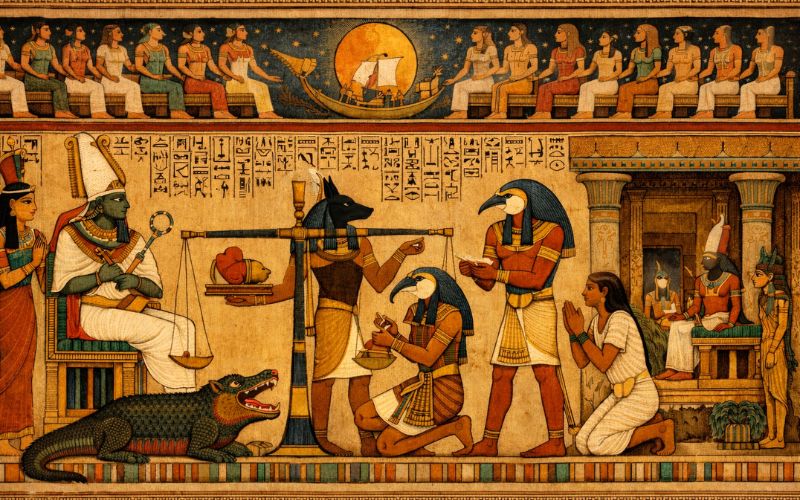
Before gaining immortality, the deceased had to undergo the judgment of Osiris. Their heart was weighed against the feather of Maat, symbol of truth.
If the heart was pure, the soul accessed the realm of the gods. This stage made the preservation of the heart in the mummified body indispensable.
Mummification thus prepared the deceased for this decisive trial.
The body as a condition for resurrection
In Egyptian thought, the body was not a simple material shell. It constituted the anchor point of eternal identity and the indispensable support for the return to life in the afterlife.
Decomposition represented a direct threat to accessing immortality. Preserving the body meant preserving the possibility of rebirth and maintaining the cosmic order desired by the gods. This conviction gave every funerary gesture a sacred and irreversible dimension.
Resurrection presumed a recognizable physical form. Facial features had to be maintained so that the soul could find its support and settle back into it permanently.
This is why funerary artisans took extreme care with each step of the body treatment. Mummification thus became a bridge between earthly life and eternity, guaranteeing a continuity of existence beyond time.
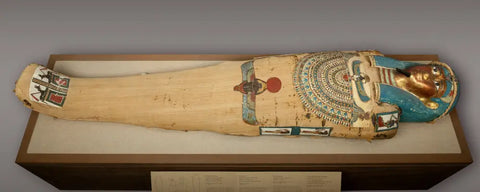
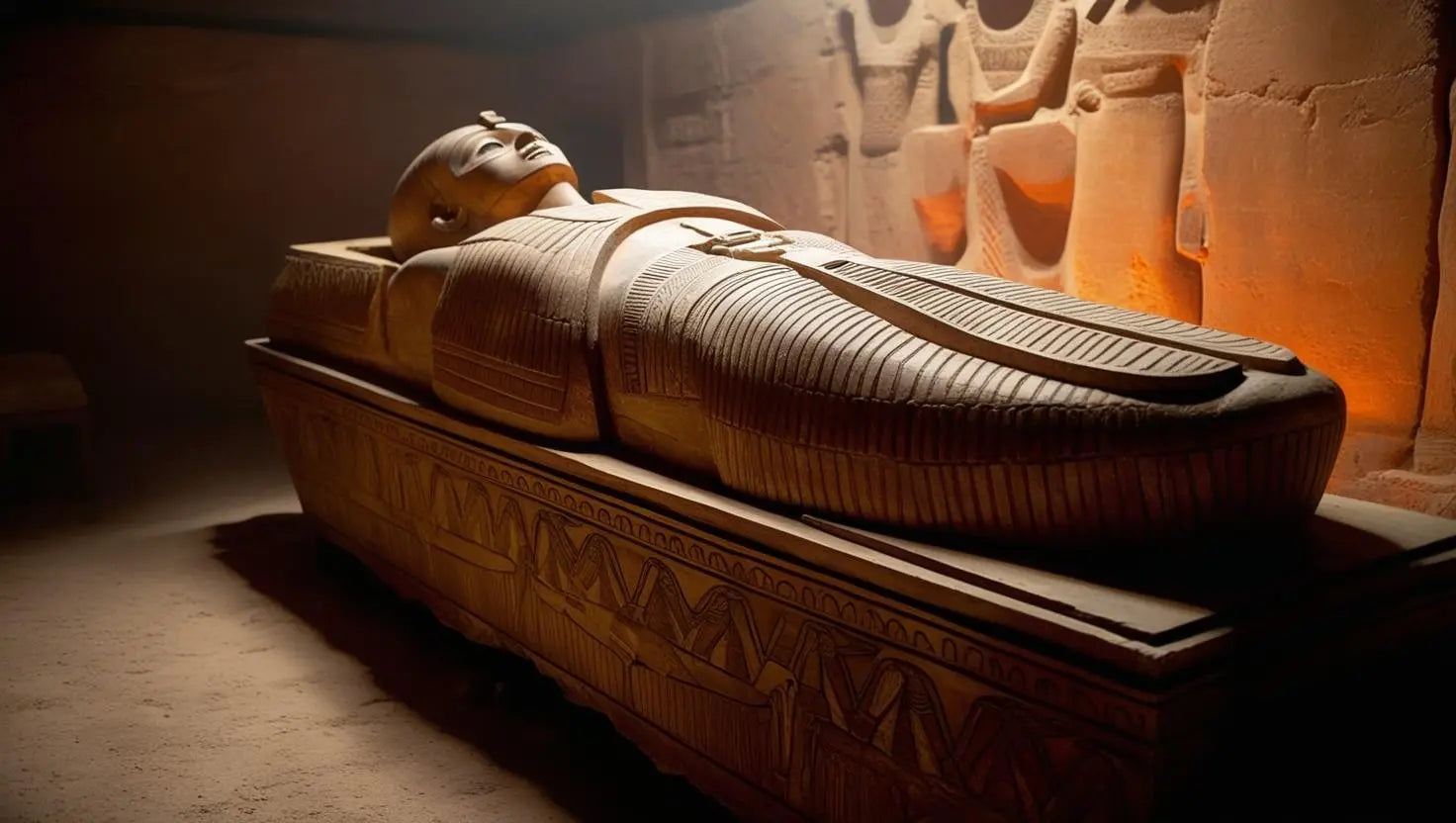
This vision explains the importance of decorated sarcophagi and richly ornamented funerary masks. They guaranteed continuity of appearance, even if time slightly altered the body.
Physical preservation was therefore inseparable from spiritual survival and the stability of identity in the other world.
Why was the heart preserved?
The heart was considered the seat of intelligence and memory. Unlike the brain, it was not removed during embalming.
The Egyptians believed that it testified to the deeds of the deceased during judgment. Keeping it intact increased the chances of obtaining eternal life.
This decision illustrates the symbolic importance given to internal organs.
The brain removed, a religious choice
Mummification techniques and their symbolism
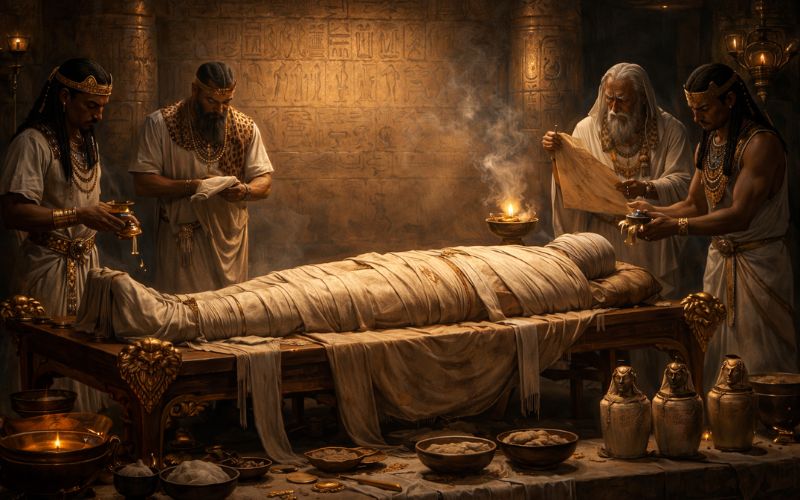
The mummification process lasted about seventy days and followed an extremely codified protocol. Each step had a ritual, symbolic, and technical dimension, rooted in a millenary tradition.
The embalmer-priests first purified the body with water from the Nile, a sacred river associated with life and renewal. Next, they removed the internal organs, with the exception of the heart, following precise movements handed down through religious training.
The body was then covered with natron to eliminate all moisture and stop natural decomposition processes. This desiccation prevented tissue decay and ensured long-lasting preservation.
After several weeks, the embalmers applied perfumed resins with antiseptic and protective properties. Finally, the deceased was wrapped in multiple linen bandages carefully layered.
These gestures had strong symbolic value and contributed to transforming the body into a sacred entity. They represented rebirth, purification, and divine protection. Each bandage was placed with specific prayers and ritual invocations.
Mummification was therefore a structured sacred ritual, going far beyond simple material preservation.
The main stages of embalming
- Purification of the body
- Removal of internal organs
- Desiccation with natron
- Application of resins
- Wrapping in bandages
Each phase reinforced the spiritual protection of the deceased and followed a precise order established by religious tradition. No step could be neglected without compromising the quality of the funerary ritual.
The methodical sequence of operations ensured not only long-lasting preservation, but also a complete preparation of the deceased for their passage to the afterlife.
The role of the embalmer-priests
Funerary rituals and the Book of the Dead
Mummification was not enough to guarantee immortality. It had to be accompanied by precise rituals and sacred texts carefully selected according to the status of the deceased.
The Book of the Dead contained formulas intended to guide the soul in the underworld and allow it to cross the different stages of its journey.
These texts were often placed in the tomb in the form of illustrated papyri, personalized with the name of the deceased in order to reinforce their symbolic effectiveness.
The prayers protected the deceased against demons, unfavorable judgments, and the invisible traps of the afterlife.
The priests performed specific ceremonies, such as the Opening of the Mouth, before the tomb or inside the funerary sanctuary. This rite symbolically allowed the deceased to breathe, see, and speak in the other world.
The combination of rituals and mummification formed a coherent and structured whole. One without the other was considered insufficient to ensure eternal fullness.
This complementarity shows the overall importance given to the spiritual preparation of the passage to eternity.
The Opening of the Mouth
This ceremony consisted of touching the mouth and eyes of the mummy with sacred instruments specially consecrated by the priests.
It symbolically restored the deceased's sensory faculties, which were indispensable for their future existence. The rite marked the restoration of speech, sight, and breath in the afterlife.
Without this solemn step, the soul risked being deprived of its essential capacities and unable to participate fully in eternal life.
Protective amulets
Funerary objects: ensuring eternal life
Egyptian tombs contained a multitude of objects intended to accompany the deceased in their posthumous existence. These goods guaranteed a continuity of comfort and stability in the afterlife, in accordance with the religious beliefs of the time.
The Egyptians believed that life after death resembled earthly life, with its material needs and daily activities. It was therefore necessary to provide food, clothing, furniture, tools, and sometimes even miniature boats for traveling in the other world.
Among the most common objects were statuettes called ushabtis, arranged in numbers varying according to the family's wealth.
They were supposed to work in place of the deceased and fulfill the obligations imposed in the afterlife. Canopic jars preserved the removed organs, ensuring the symbolic completeness of the individual.
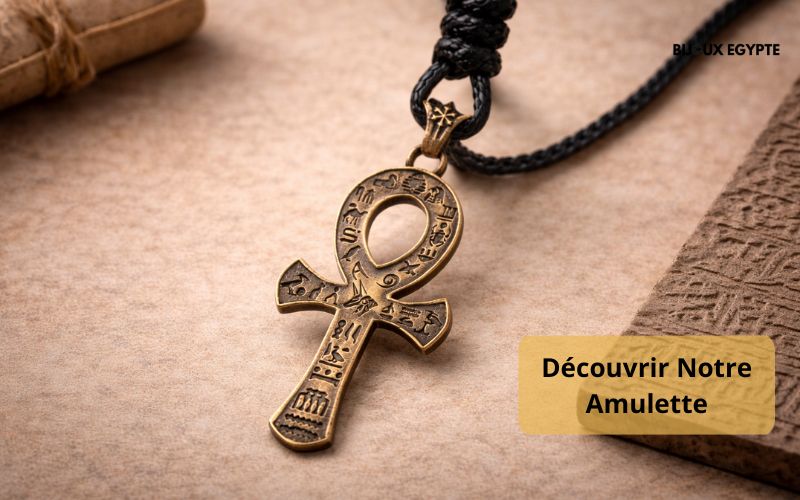
Jewelry, necklaces, and amulets symbolized wealth, divine protection, and the continuity of social status.
The abundance and quality of goods depended on the rank held in society. The more important a person was, the more complete and elaborate their funerary equipment was. This practice reflects the social hierarchy and the importance placed on the material preparation for eternity.
Canopic jars
Canopic jars contained the liver, lungs, stomach, and intestines removed during the body's treatment.
Each container was protected by a specific god represented on its lid, ensuring constant divine protection. Their presence in the tomb ensured the symbolic preservation of vital functions.
They played an essential complementary role, maintaining spiritual balance and the unity of the being in eternity.
Ushabtis
Mummification and social status in ancient Egypt
Mummification was not the same for all inhabitants of ancient Egypt.
Pharaohs benefited from particularly elaborate techniques and monumental tombs designed to last through the centuries.
Administrative, military, or religious elites also received advanced care, proportional to their wealth and position.
Conversely, modest classes had access to simplified processes, often faster and less expensive, adapted to their financial means.
Despite these differences in treatment, the fundamental goal remained the same: to ensure the soul's survival and allow access to the afterlife.
The variations mainly concerned the quality of materials used, the duration of the process, and the richness of the funerary furniture.
This distinction clearly reflects the hierarchical and structured organization of Egyptian society, where each individual occupied a defined place in the social order.
Pharaohs were considered beings invested with a sacred dimension. Their mummification aimed to preserve their exceptional nature and their cosmic role.
Pyramids and royal tombs illustrate this prestigious dimension. Funerary practice was therefore intimately linked to the social structure and the representation of power.
Pharaohs and divine immortality
The pharaoh was the intermediary between the gods and men, invested with a sacred mission throughout his life. His mummification had to be performed with absolute precision to ensure the continuity of the cosmic order after his death.
Immense treasures, royal insignia, and ritual objects accompanied his body. This funerary magnificence highlighted his unique status and affirmed his power even into eternity.
The working classes
FAQ: Why did the Egyptians mummify their dead?
The question of mummification has intrigued historians, archaeologists, and enthusiasts of ancient Egypt for centuries.
Understanding why the Egyptians mummified their dead requires examining their religious beliefs, their vision of the soul, and their conception of eternity.
Many questions come up regularly: the duration of the process, social differences, the role of sacred texts, and even the significance of organ removal.
This FAQ on why the Egyptians mummified their dead gathers the most frequently asked questions to shed light on the essential points of this fascinating funerary practice.
It clarifies common misconceptions, provides concise explanations, and helps better understand the spiritual and cultural stakes associated with body preservation.
Through these short and precise answers, you will be able to deepen your understanding of the rituals, beliefs, and profound motivations that shaped one of the most iconic funerary traditions in human history.
Why did the Egyptians mummify bodies?
They mummified bodies to allow the soul to survive in the afterlife. The preservation of the body guaranteed resurrection. Without mummification, the soul risked wandering. This practice was therefore essential for immortality.
How long did mummification take?
The process lasted about seventy days. This duration included desiccation with natron and the rituals. Each step had to be respected scrupulously. Time ensured optimal preservation.
Were all Egyptians mummified?
No, quality varied according to social status. The elites benefited from advanced techniques. The poorest had simplified procedures. However, the belief in the afterlife concerned the whole of society.
What was the role of the Book of the Dead?
The Book of the Dead contained magic spells. It guided the soul through the underworld. It protected the deceased against dangers. It increased their chances of attaining immortality.
Why were organs removed?
Organs were removed to prevent decomposition. They were kept in canopic jars. This practice improved the preservation of the body. It reinforced the spiritual dimension of the ritual.
Conclusion: Why did the Egyptians mummify their dead?
In short, the Egyptians mummified their dead because they considered death not as an end, but as a transformation toward another form of existence.
The preservation of the body was essential to allow the soul, composed notably of the ka and the ba, to continue existing in the afterlife. Without an intact physical shell, spiritual balance was threatened and access to immortality compromised.
Mummification therefore responded to a profound religious logic, founded on resurrection, judgment in the other world, and the need to maintain the identity of the deceased.
It was accompanied by rituals, prayers, and funerary objects intended to ensure protection and continuity. Each gesture performed by the priests had a precise symbolic meaning, inscribed in a coherent vision of the universe.
Thus, if the Egyptians mummified their dead, it was above all to guarantee the eternal survival of the individual and preserve the cosmic order established by the gods.
Mummification was much more than a technique: it embodied the hope of eternal life and the certainty that existence continued beyond death.