For millennia, jewelry has held a central place in Egyptian civilization. Egyptian jewelry was not mere ornamentation, but served as true social, religious, and symbolic markers.
The debate between gold color and silver color spans both ancient history and modern usage.
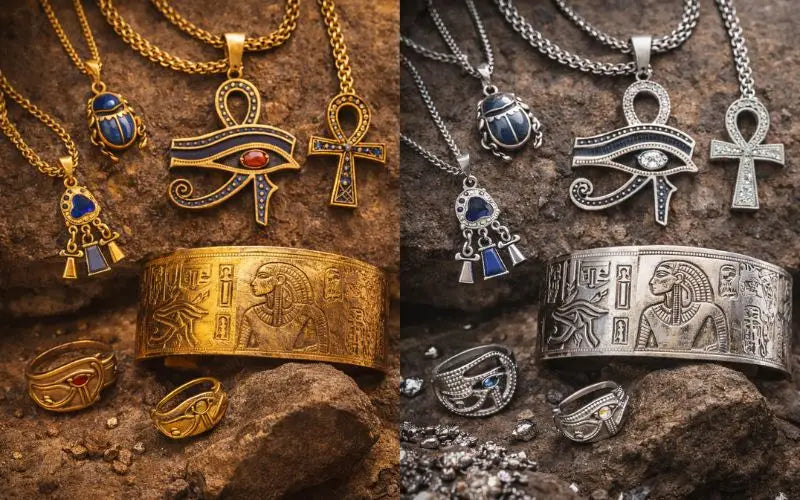
The symbolism of the color gold in Egyptian jewelry
In ancient Egypt, gold occupied a central place in the design of jewelry and in religious and social symbolism. This precious metal was closely associated with divinity, royal power, and the concept of eternity. The Egyptians viewed gold as the "flesh of the gods," a perfect and incorruptible material that symbolically brought the wearer closer to the divine world. Its luminous color recalled the sun, the source of life and renewal, which reinforced its link with immortality and spiritual protection.
Gold was also used to assert prestige and authority, particularly in the royal sphere. The pharaohs, considered living gods, wore numerous gold adornments to manifest their status and power. Crowns, pectorals, and golden bracelets thus became visible symbols of sovereignty and wealth. In Egyptian society, this jewelry also helped to highlight the person wearing it, as the luster of the metal naturally drew the eye and enhanced the image of prestige.
Finally, gold played an important role in beliefs related to the afterlife. Associated with the sun and its eternal cycle, it represented rebirth and the continuity of life after death. This is why many gold pieces of jewelry were placed on mummies to protect the deceased and symbolically accompany them on their journey toward eternity.
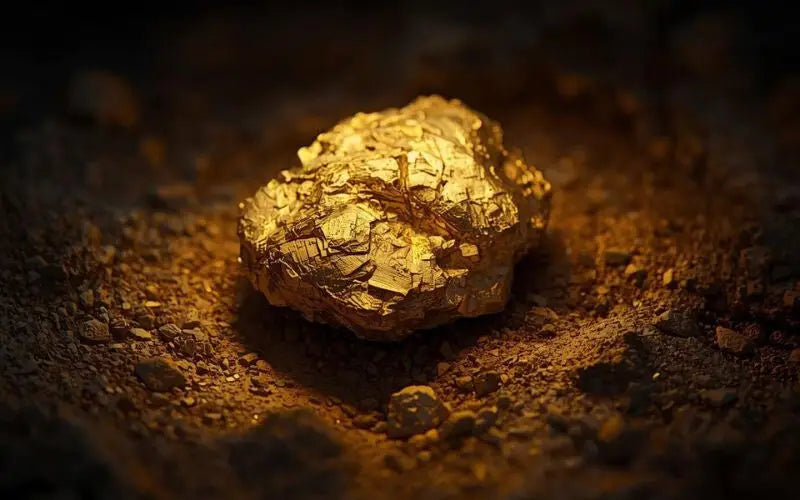
The symbolism of the color silver in Egyptian jewelry
In Egyptian jewelry, silver possessed a specific symbolism linked to the moon, balance, and natural cycles. Unlike gold, which was associated with the sun and power, silver evoked more of a sense of serenity, the regulation of time, and cosmic harmony. Its clear and luminous color recalled moonlight, which reinforced its connection with the night, mystery, and regeneration. In Egyptian thought, this complementarity between gold and silver represented the balance between two opposing yet essential forces in the order of the world.
Silver was also considered a precious and relatively rare metal in ancient Egypt. Often obtained through trade with other regions, it remained less common than gold and was generally reserved for the elites or for specific types of adornments. Possessing silver jewelry therefore testified not only to a certain social prestige but also to access to extensive trade networks.
Beyond its material value, silver also held a strong symbolic dimension related to purity and protection. Its hue evoked clear water and cold light, elements associated with purification and the warding off of negative influences. Silver-colored jewelry could thus be perceived as protective objects capable of providing purity and clarity. In the art of Egyptian adornment, silver therefore perfectly complemented gold, creating a symbolic duality between solar light and lunar light.

Social differences between gold and silver jewelry
In ancient Egypt, the choice between gold and silver jewelry often reflected social status and position within society.
Gold, considered the most prestigious metal, was primarily worn by royalty, priests, and the elites. It symbolized wealth, authority, and power, while reinforcing the divine image of the pharaoh and high dignitaries. Golden adornments, such as pectorals, crowns, or bracelets, thus served to clearly display the wearer's social rank. Egyptian jewelry therefore became a true marker of prestige and allowed others to identify an individual's place in the social hierarchy.
Silver, though precious, held a slightly different position. Rarer during certain periods of ancient Egypt, it was sometimes reserved for specific uses or for certain members of the administrative elite. Its more limited circulation made it a distinctive metal, often associated with special adornments or important occasions. However, access to precious metals remained largely reserved for the upper classes.
For the working classes, jewelry primarily had a symbolic and protective function. Artisans fashioned ornaments from alloys, stones, or less expensive materials in order to reproduce the appearance of prestigious adornments. Even without genuine gold or silver, these pieces of jewelry retained high cultural and spiritual value, as they represented the divine protection, personal identity, and religious beliefs of those who wore them.
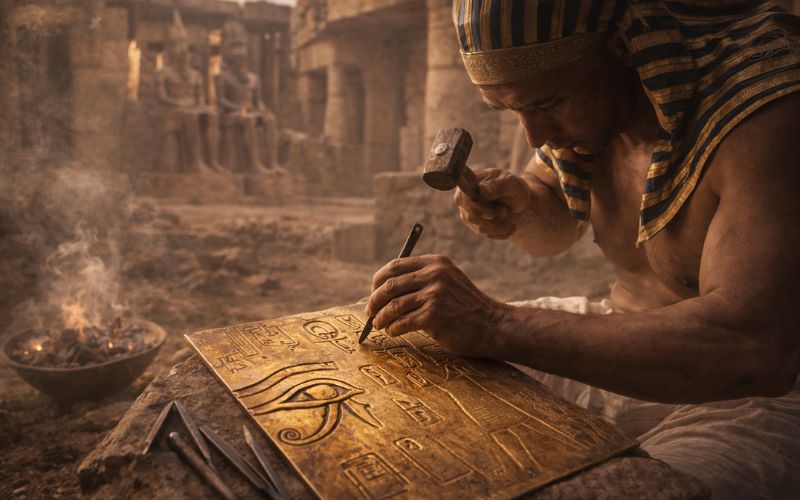
Manufacturing techniques for Egyptian jewelry
Egyptian jewelry bears witness to particularly advanced craftsmanship, developed over centuries by highly skilled artisans. Whether made of gold or silver, this jewelry was crafted with great precision to create pieces that were simultaneously aesthetic, symbolic, and durable.
Ancient Egyptian artisans mastered various metalworking techniques, notably hammering, casting, and the meticulous shaping of precious materials. Gold, the preferred metal in Egyptian jewelry, was often transformed into very thin sheets that could then be molded to create complex and decorative shapes. Its malleability allowed artisans to express great creativity in motifs and details.
Silver, being rarer and sometimes more difficult to obtain, was worked with a slightly different approach. Artisans generally favored more sober and balanced shapes in order to highlight the natural luminosity of the metal. Each manufacturing step required great technical mastery, from the preparation of the raw metal to the final assembly of the jewelry piece.
The pieces could then be enriched with colored stones or decorative symbols that reinforced their cultural and spiritual dimension. Through this combination of technical precision and artistic sense, Egyptian artisans created remarkable silver and gold jewelry, capable of enduring for centuries and still inspiring modern jewelry making today.
The stones and colors associated with gold and silver
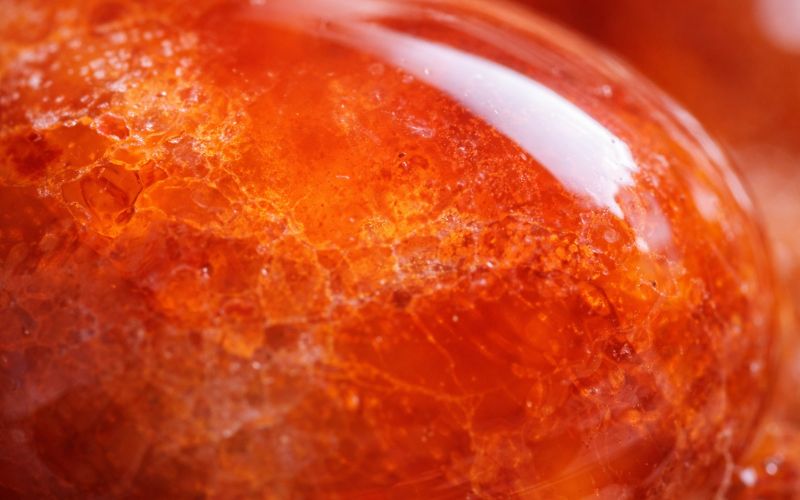
In Egyptian jewelry, gold and silver were enhanced by stones with symbolic colors. Gold was associated with solar stones like lapis lazuli, carnelian, or turquoise, evoking life, the sky, and power. Silver, linked to the moon, was paired with clear stones like rock crystal or quartz, reinforcing a symbolism of purity and balance.
The choice of colors was not merely aesthetic: it was part of a true symbolic logic. Egyptian artisans selected stones based on their hue, their luminosity, and their cultural significance.
The contrasts between metal and stones also made it possible to highlight the forms of the jewelry and draw the eye to certain details. These combinations created harmonious visual compositions that reinforced the identity of each piece. Colors played an essential role in the balance of the adornment, giving the jewelry a dimension that was both artistic and symbolic.
Thanks to these carefully chosen combinations, Egyptian jewelry became true objects of representation, capable of expressing ideas, beliefs, and a vision of the world through their shapes and colors.
Stones linked to gold
Gold jewelry was often associated with warm and solar stones. Common ones included:
-
Lapis lazuli
-
Carnelian
-
Turquoise
These stones occupied an important place in ancient Egyptian jewelry due to their intense colors and strong symbolism. Lapis lazuli evoked the sky and the divine dimension, carnelian represented vitality and strength, while turquoise was associated with protection and renewal.
The combination of these stones with gold reinforced the prestigious character of the adornments. Together, they formed jewelry rich in meaning, capable of transmitting beliefs and cultural values.
Stones linked to silver
Silver was instead associated with clear or translucent stones. These choices accentuated its connection to the moon. Common stones included:
-
Rock crystal
-
Alabaster
-
Certain forms of quartz
These stones were appreciated for their luminous appearance and their ability to reflect light in a soft manner. In Egyptian symbolism, they evoked purity, clarity, and balance.
Paired with silver, they highlighted the fineness of the metal and created more discreet and harmonious adornments. Together, they gave rise to elegant jewelry that expressed a soothing aesthetic and a certain ideal of harmony.
Egyptian gold and silver jewelry in religious rituals
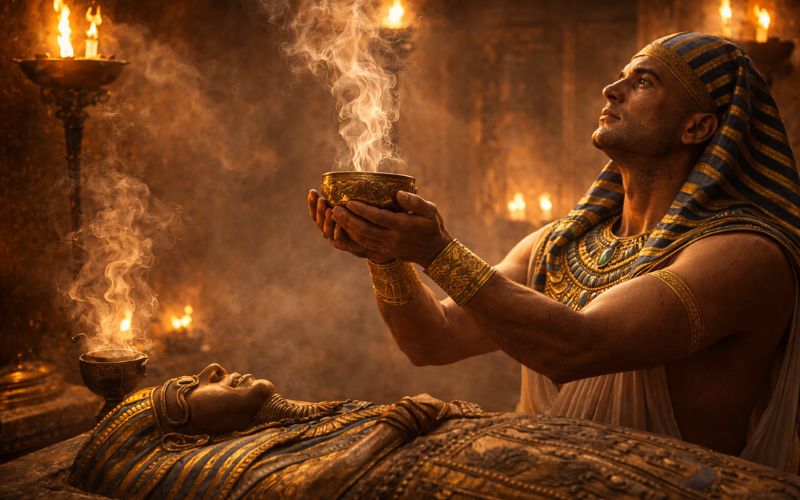
In ancient Egypt, gold jewelry and silver jewelry occupied an important place in religious rituals and spiritual practices. These precious metals were not only used for their beauty, but also for their strong symbolic value. Gold was often associated with eternity, solar light, and divine favor, while silver evoked protection, purification, and certain forces linked to the invisible world. Together, they formed a symbolic complementarity that reinforced the sacred dimension of ceremonies and offerings.
In temples, priests and worshippers frequently used precious objects to honor the gods and express their devotion. Gold jewelry could be offered to deities in order to attract their benevolence and bear witness to the believers' gratitude. Silver, meanwhile, was sometimes used in particular rituals related to protection or healing. These objects contributed to creating a solemn and sacred atmosphere, where each element possessed a spiritual meaning.
Jewelry also played an essential role in funerary practices. Gold was often placed on mummies to ensure the eternity of the deceased and to accompany them in their passage to the afterlife. Silver could be used in the form of protective amulets intended to ward off the dangers of the invisible world. Thus, the combination of these two metals reflected a religious vision where each material contributed to the balance between protection, spirituality, and immortality.
How to choose between gold-colored or silver-colored Egyptian jewelry
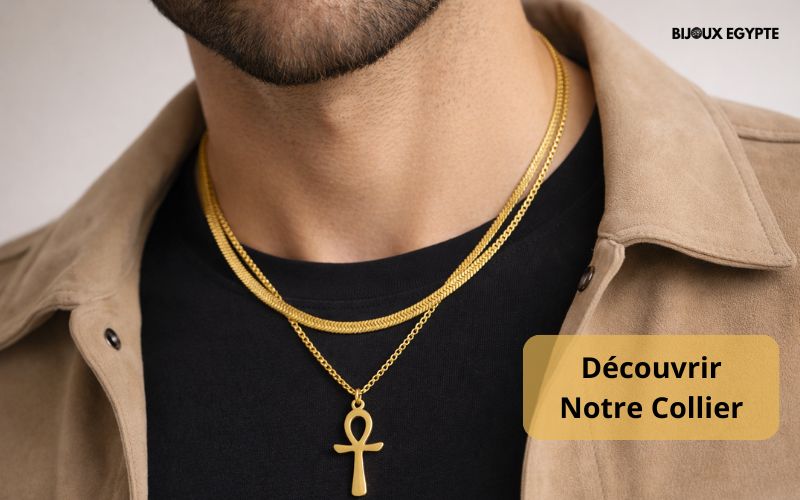
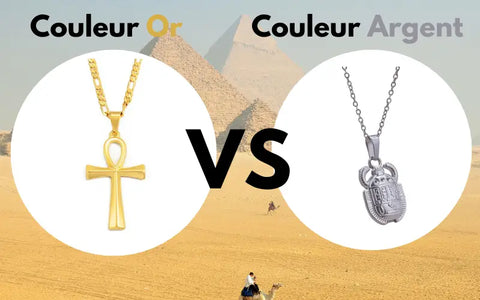
The choice between gold-colored or silver-colored Egyptian jewelry depends at once on the symbolism sought, personal style, and the daily use of the piece. In the legacy of ancient Egypt, gold is often associated with power, the sun, and brilliance. Its luminous color naturally attracts the eye and evokes authority, success, and energy.
Wearing gold-colored Egyptian jewelry can therefore be a way to assert a strong personality or to highlight an outfit with a more visible and prestigious accessory. Silver, for its part, refers to a softer symbolism linked to the moon, protection, and intuition. Its clear and discreet shade brings a more sober and balanced elegance, often appreciated for a daily or minimalist style.
Beyond symbolism, the choice can also depend on aesthetics and how the jewelry integrates with an outfit. Gold generally creates a warmer and more assertive effect, while silver easily matches many clothing styles thanks to its neutrality.
Jewelry inspired by ancient Egypt exists today in many shapes and finishes, which allows these ancient symbols to be adapted to modern tastes. Ultimately, choosing between gold and silver comes down primarily to finding the balance between personal significance, style, and aesthetic preference.
FAQ on Gold-Colored Vs Silver-Colored Egyptian Jewelry: The Great Debate
Egyptian gold and silver jewelry still fascinates today due to its symbolic richness and its importance in the civilization of ancient Egypt. Much more than mere ornaments, these pieces of jewelry represented a true expression of the culture, beliefs, and social organization of the time.
Each metal possessed a particular significance and participated in the transmission of ideas linked to power, spirituality, and protection. The Egyptians placed great importance on the colors, materials, and shapes of the jewelry they wore, as each element could convey a precise message.
Over time, these adornments have continued to attract the interest of historians, archaeology enthusiasts, and jewelry lovers. Their unique aesthetic, symbolic motifs, and the story they tell still raise many questions. Between gold associated with the sun and silver linked to the moon, these precious metals have fueled a debate that spans centuries. Even today, jewelry inspired by ancient Egypt remains popular and continues to intrigue.
To better understand the significance of these metals, their place in Egyptian society, and their current influence, this FAQ gathers the most frequent questions on the subject. It allows for an exploration of the essential aspects of these iconic pieces of jewelry and sheds light on their role in history and contemporary use.
Why was gold so important in ancient Egypt?
Gold symbolized divinity and eternity. It was associated with the sun and the gods. Its durability made it a sacred metal.
Was silver less precious than gold?
Not always. Silver was sometimes rarer than gold. Its value depended on the context and commercial exchanges.
Were Egyptian jewels worn by everyone?
Yes, all social classes wore jewelry. Materials varied according to status. The symbolism remained essential.
Can we wear Egyptian jewelry today?
Yes, they are very popular. They exist in modern versions. They retain their strong symbolic significance.
Gold or silver: which to choose for an Egyptian jewel?
It depends on the symbolism sought. Gold evokes power, silver, protection. The choice is personal.
Did Egyptian jewels have a magical function?
Yes, many served as talismans. They protected against negative forces. Their color reinforced their power.
Are the patterns different depending on the metal?
The patterns are often similar. The color of the metal changes their interpretation. Gold and silver alter the message.
Conclusion on Gold-Colored Vs Silver-Colored Egyptian Jewelry: The Great Debate
The debate between gold-colored and silver-colored Egyptian jewelry is not just a matter of aesthetics. It is rooted in a civilization where every color, every metal, and every shape held profound meaning. Gold embodied solar power, eternity, and divinity, while silver represented the moon, protection, and purity. These two metals thus played complementary roles in the ancient Egyptians' worldview.
Rather than being in opposition, gold and silver contributed to a symbolic balance between two essential forces: light and night, authority and harmony, radiance and serenity. Jewelry thus reflected the social status, spiritual beliefs, and cultural values of Egyptian society simultaneously. This duality explains why these two metals remain at the heart of the imagination surrounding ancient Egypt even today.
In the modern world, the choice between gold-colored or silver-colored Egyptian jewelry depends primarily on personal style and the desired symbolism. Gold attracts with its radiance and visual strength, while silver appeals with its softness and elegance. Ultimately, there is no real winner in this debate: each metal possesses its own significance and allows for the continuation of the symbolic legacy of ancient Egyptian jewelry.