

The gods of ancient Egypt continue to spark fascination and curiosity around the world. Despite the disappearance of their official cults, their symbolic and spiritual legacy remains very much present.
Between history, mythology, and the contemporary search for meaning, these deities still occupy a special place in the collective imagination, prompting us to wonder how their influence persists today and how are Egyptian gods worshipped today?
Even now, their symbols, stories, and attributes continue to inspire cultural, artistic, and spiritual practices through various forms of expression.
A modern survival of the Egyptian gods
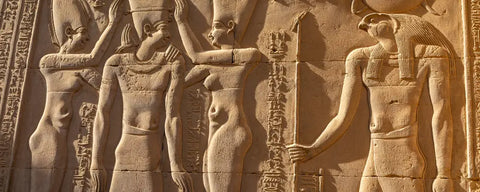
Neo-paganism and the rebirth of the Egyptian cult
Neo-paganism currently constitutes one of the main frameworks in which Egyptian gods are worshipped. This modern spiritual movement draws on ancient religions to recreate practices adapted to the contemporary world.
Groups draw direct inspiration from rites attested in the temples of Karnak or Philae, while taking into account current historical knowledge.
These practitioners seek to honor the deities through structured rituals, prayers, and symbolic offerings. The goal is not to replicate antiquity exactly, but to preserve its spiritual and philosophical essence.
This approach is based on reconstruction, the study of archaeological sources, and modern interpretation of sacred texts.
Egyptian neo-paganism is also part of an identity-based and cultural approach. It answers a quest for meaning, a need for personalized spirituality, and a desire to reconnect with pre-Christian traditions.
Communities exchange via specialized forums, organize meetings, and publish independent research. Thus, this rebirth of the Egyptian cult is not merely a matter of historical nostalgia, but a genuine structured spiritual movement, anchored in contemporary reflection on the sacred and the transmission of ancient traditions.
The main invoked deities
Certain figures dominate modern practices and structure the contemporary veneration of Egyptian gods:
-
Isis: associated with magic, motherhood, and spiritual protection
-
Anubis: guide of souls and guardian of thresholds
-
Bastet: protective energy and inner balance
-
Osiris: rebirth, transformation, and life after death
These deities are chosen for their strong symbolic dimension and their ability to address current spiritual concerns.
They embody universal archetypes linked to healing, justice, protection, and personal renewal, which explains their enduring popularity in neo-pagan practices.
Rituals adapted to the contemporary world

Domestic altars and private shrines
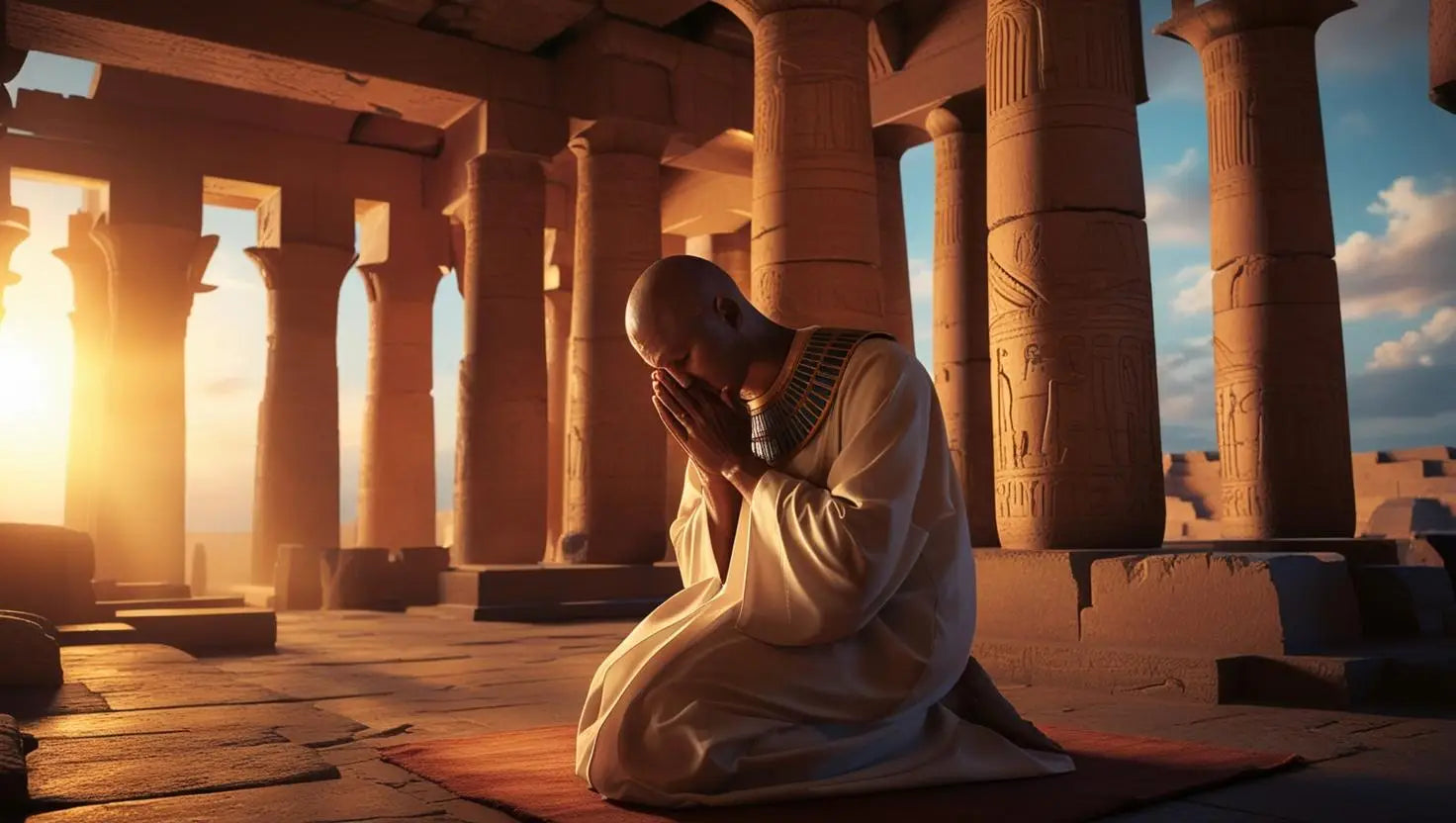
Today, the veneration of Egyptian gods takes place primarily in an intimate and personal setting. Domestic altars represent the most widespread form of contemporary practice, as they allow for establishing a regular relationship with the chosen deity without depending on an official religious structure.
These sacred spaces symbolically recreate the atmosphere of ancient temples while adapting to modern realities. They provide a spiritual anchor within the home, fostering focus and the continuity of practices.
The installation of a private shrine often stems from a thoughtful process, blending historical research and personal intuition.
Practitioners pay particular attention to orientation, natural light, and the harmony of the elements present. The goal is to create an environment conducive to contemplation and symbolic connection with divine forces.
This form of worship illustrates the evolution of religious practices, now centered on the individual rather than the community. It also reflects a desire for spiritual reappropriation, where everyone can structure their relationship with the sacred according to their sensibility and daily rhythm.
Typical composition of a modern altar
It generally includes:
-
A representation of the deity
-
A white or gold candle
-
Natural incense
-
A cup of water or milk
-
Protective amulets
Each element possesses a symbolic dimension inherited from ancient practices and contributes to the spiritual balance of the whole. The statue or image serves as a central point of focus, while the candlelight evokes the divine presence.
Incense scents create an atmosphere conducive to contemplation. Liquid offerings recall ancient ritual traditions. The arrangement of these objects is never left to chance: it reflects the practitioner's intention and their respect for the cult of Egyptian gods.
An individualized practice
Unlike the official ceremonies of ancient Egypt, modern veneration is based on a personal and freely constructed approach. It favors meditation, introspection, and an intimate bond with the chosen deity.
Each practitioner adapts their rituals to their schedule, sensitivity, and spiritual needs. This evolution testifies to a shift of the sacred toward the private space, where the religious experience becomes interior rather than collective.
The relationship with the divine thus fits into a personal dynamic, centered on inner transformation and the search for harmony.

The importance of amulets and protective symbols
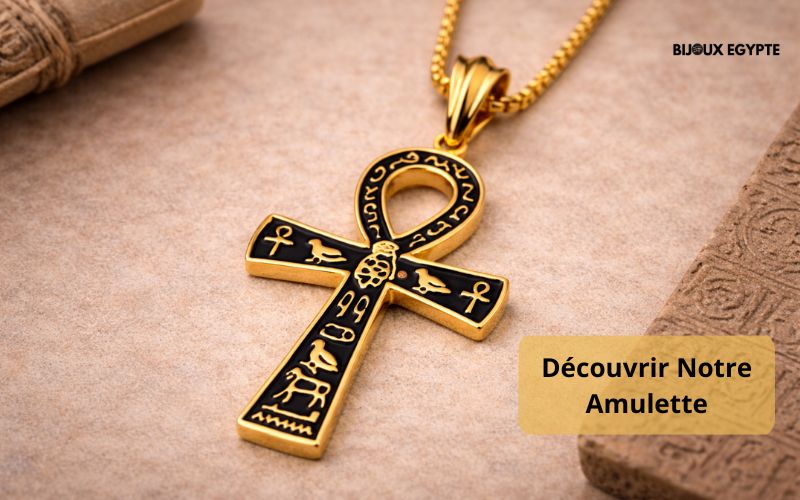
The most frequently used symbols
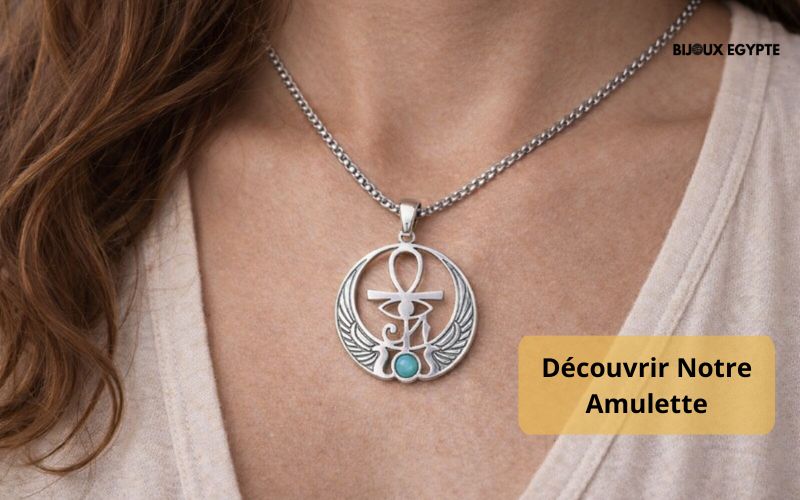
These amulets are sometimes consecrated through specific rituals before being worn, in order to reinforce their symbolic dimension.
Some practitioners believe that the intention set during this consecration amplifies their spiritual reach.
Even today, these symbols of the Egyptian gods are chosen for their evocative strength and their ability to represent deep values such as protection, resilience, and permanence.
- The Ankh: symbol of eternal life and the continuity of existence beyond death
- The Eye of Horus: protection, vigilance, and regained harmony
- The scarab: rebirth, transformation, and the perpetual cycle of life
- The Djed pillar: stability, solidity, and inner balance
Rituals inspired by the Book of the Dead
The Book of the Dead remains a major source of inspiration in the modern understanding of Egyptian gods and their vision of the afterlife.
Although it was originally a collection of funerary formulas intended to accompany the deceased on their passage to the other world, its content is now reread from a symbolic and introspective angle.
The texts, rich in images and invocations, offer dense spiritual material that still fascinates researchers and contemporary practitioners.
Some devotees recite symbolic passages to accompany rituals of personal transformation or inner reflection.
The famous scene of the weighing of the heart before Maat is often interpreted as a metaphor for moral judgment and ethical balance. This reinterpretation allows elements of the ancient cult to be integrated into a modern approach to spiritual development.
The formulas thus become aids for meditation, fostering self-awareness and individual responsibility. Through this modern appropriation, the text continues to exert a lasting influence, demonstrating the ability of Egyptian religious writings to traverse the centuries and adapt to contemporary sensibilities.
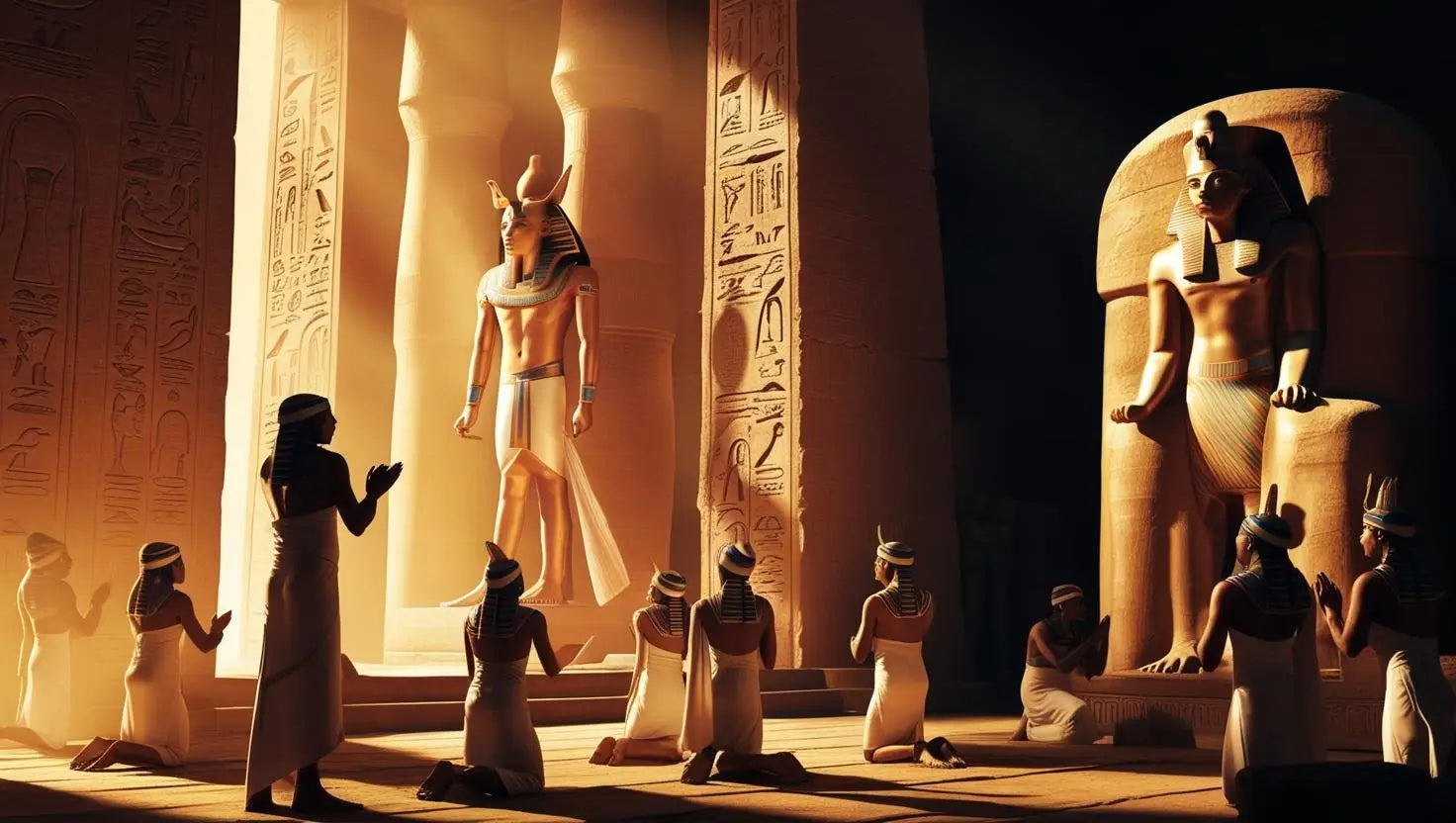
Modern temples and neo-Egyptian associations
Even though the majority of ancient temples like the Temple of Abu Simbel are now tourist and heritage sites, some enthusiasts have undertaken to recreate spaces dedicated to the Egyptian gods within a contemporary framework.
These initiatives do not seek to compete with established religions, but to offer a place for spiritual expression inspired by antiquity. The groups involved often function as associations, with a structured organization and a calendar of regular activities.
These associations organize collective ceremonies, frequently linked to natural cycles such as equinoxes or solstices.
They rely on historical, archaeological, and philological research to ensure a certain coherence in their practices. The goal is to offer an approach that is respectful of ancient sources while taking modern realities into account.
This collective dynamic allows practitioners to share their knowledge, discuss texts, and strengthen their sense of belonging.
Although these initiatives remain in the minority, they testify to a lasting interest in the Egyptian cult and a clear desire to keep this tradition alive in a form adapted to the 21st century.
Historical reconstruction
Some communities engage in a process of historical reconstruction in order to get as close as possible to the religious practices of ancient Egypt.
This approach relies on the study of archaeological sources, inscriptions, and reliefs found in temples.
The objective is to understand ritual gestures, the organization of ceremonies, and the symbolism associated with the various deities.
Reconstruction does not claim to reproduce every detail faithfully, but seeks to restore the original spirit of the Egyptian cult within a coherent and respectful contemporary framework.
In this perspective, some communities adopt:
- Clothing inspired by antiquity
- Chants reconstructed from ancient sources
- Ritual calendars based on the Nile and agricultural seasons
Egyptian gods and modern astrology
Influence on contemporary funerary practices
The idea of life after death, central to the Egyptian religion, continues to influence certain modern conceptions related to passage and the memory of the deceased. In ancient Egypt, death was not perceived as an end, but as a transition toward another form of existence.
This spiritual vision still holds a particular resonance today for those interested in ancient traditions. The figure of Osiris, symbol of rebirth and regeneration, remains associated with this notion of transformation after physical disappearance.
Some elements derived from Egyptian symbolism are reinterpreted in contemporary contexts, particularly during tributes or commemorations. They serve to express the idea of continuity, light, and passage toward a higher dimension.
This influence does not correspond to a faithful reproduction of ancient rites, but rather to a philosophical and spiritual inspiration. The cult of the dead, as practiced in antiquity, thus gives way to a symbolic appropriation centered on hope and transcendence.
This persistence demonstrates the timeless strength of Egyptian funerary representations in the modern collective imagination.
FAQ on How are the Egyptian gods worshipped today?
The question of how Egyptian gods are worshipped today raises numerous questions, both on the historical and spiritual levels.
Between cultural fascination, neo-pagan practices, and symbolic reinterpretations, the subject brings up essential points related to legitimacy, authenticity, and contemporary forms of worship.
Many seek to understand whether these traditions have really survived, how they manifest, and who perpetuates them in the modern world.
Faced with the diversity of current approaches, it is important to provide clear and structured answers.
Beliefs inspired by ancient Egypt take on varied forms today, some of which are little known to the general public. This FAQ section aims to shed light on the main questions of internet users, by providing precise, concise, and accessible information.
It allows for a better understanding of contemporary realities related to the veneration of Egyptian deities, while distinguishing historical facts from modern practices.
Are the Egyptian gods still officially worshipped?
No, there is no institutional religion comparable to that of antiquity. Current veneration mainly falls under neo-pagan or individual practices.
Who worships the Egyptian gods today?
Mainly followers of neo-paganism, enthusiasts of esotericism, and groups of historical reconstruction.
Can one practice an Egyptian cult alone?
Yes. The majority of current practitioners set up a home altar and perform personal rituals.
Do amulets have religious value?
For some believers, yes. They symbolize protection and connection to ancient deities.
Do modern temples exist?
A few private sanctuaries exist, but they remain rare and unofficial.
Conclusion on How are the Egyptian gods worshipped today?
The question "How are the Egyptian gods worshipped today?" reveals a complex and nuanced reality. While the official cult of ancient Egypt has been gone for centuries, its spiritual legacy continues to exist in forms adapted to the contemporary world.
Through neo-paganism, home altars, historical reconstructions, or esoteric practices, these deities retain a strong symbolic place in the collective imagination.
Modern veneration does not faithfully reproduce ancient rites, but it reinterprets their fundamental principles: protection, rebirth, justice, and balance.
Figures like Isis, Osiris, or Anubis embody timeless archetypes that still respond to current concerns. This capacity for adaptation explains the persistence of their influence.
Thus, the Egyptian gods are no longer honored in great monumental temples, but in private spaces, specialized communities, or personal quests for meaning.
Their presence in contemporary spirituality demonstrates that ancient myths do not disappear: they evolve, transform, and continue to inspire modern generations.