

The role of archaeologists in Egyptian heritage
Egypt, land of the pharaohs and pyramids, is home to a heritage of inestimable richness that has fascinated civilizations since antiquity. From iconic monuments like the pyramids of Giza to the majestic temples of Luxor, and the necropolises of the Nile Valley, every site bears witness to exceptional architectural, artistic, and religious craftsmanship.
However, preserving this ancient legacy presents a constant challenge in the face of natural threats, the passage of time, and human pressure.
At the heart of this mission are the archaeologists. Their role is not limited to the spectacular discovery of tombs or precious objects. They study, document, analyze, and interpret remains in order to reconstruct the past with scientific rigor.
Their expertise helps protect fragile sites, ensure the conservation of artifacts, and guarantee that interventions respect the historical integrity of the locations.
Beyond research, archaeologists also participate in the promotion of heritage by collaborating with museums, cultural institutions, and educational programs.
Through their work, they transmit an essential collective memory, making them the true guardians of a history that belongs to all of humanity.
The discovery of ancient remains
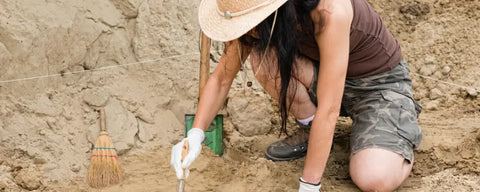
The work of archaeologists in Egypt begins well before the first strike of a pickaxe. It is based on in-depth research, the study of ancient sources, and landscape analysis to identify areas likely to hold remains.
Thanks to the country's dry and arid climate, many objects, tombs, and monuments have been preserved in remarkable condition, offering researchers privileged access to evidence sometimes over four millennia old.
Identifying sites now requires a rigorous scientific approach. Archaeologists use advanced technological tools to locate structures buried under the sand, detect soil anomalies, or map as-yet-unexplored areas.
These methods allow for precise intervention and limit invasive excavations, thus protecting remains even before they are brought to light.
Each discovery provides new information on the political organization, religious beliefs, economy, or daily life of Ancient Egypt.
The remains brought to light continually enrich our understanding of the pharaohs and their subjects, revealing the complexity of a civilization whose influence endures even today.
The conservation of discovered treasures
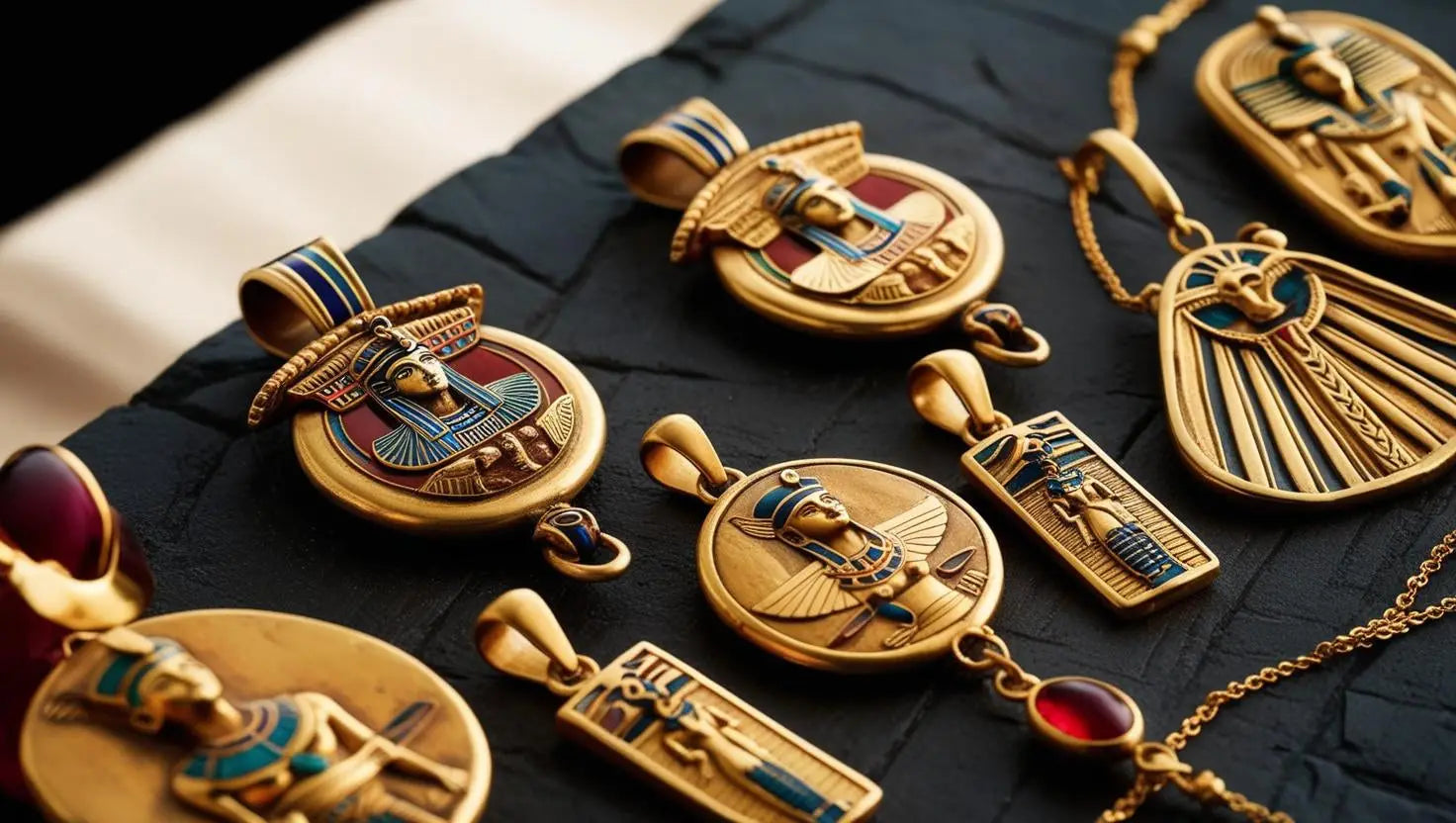
Discovering a relic is only the first step; its preservation represents an equally crucial challenge. Once brought to light, ancient objects become particularly vulnerable.
Temperature fluctuations, exposure to air and humidity, as well as human handling can accelerate their deterioration.
In a country like Egypt, where weather conditions are extreme, conservation requires specialized technical expertise and rigorous protocols.
Archaeologists work closely with conservators, chemists, and materials specialists to stabilize fragile artifacts. Each intervention aims to preserve the authenticity of the object while ensuring its durability.
Some treasures are transferred to suitable institutions, such as the Grand Egyptian Museum, where they benefit from optimal conservation conditions and advanced security measures.
Other remains are left at their original site to preserve their historical context, a fundamental element for scientific interpretation.
Conservation, therefore, does not consist only of protecting an object, but of maintaining the link between the remain and the history it tells, thus ensuring its transmission to future generations.
Awareness and education: a key role for the future
Technologies in the service of conservation
The use of modern technologies is a valuable asset for archaeologists. For example, 3D scans allow for the creation of digital copies of threatened objects and sites.
These reproductions can be used for research, all while avoiding the exposure of original artifacts to risks. Furthermore, drones facilitate the exploration and monitoring of large archaeological sites.
Training future Egyptian archaeologists
The longevity of the preservation of Egyptian heritage depends largely on the training of new archaeologists. It is essential that younger generations be trained in both traditional excavation techniques and new technologies.
Education and training programs are necessary to ensure that Egyptian researchers are prepared to meet future challenges.
International cooperation in conservation
Egypt cannot conserve its heritage alone. International collaborations with universities, museums, and institutions like UNESCO are crucial for the preservation of sites.
These partnerships make it possible to share knowledge and resources, while strengthening conservation efforts on a global scale.
The impact of tourism on archaeological sites
Tourism is both a blessing and a challenge for Egypt. Although tourism generates significant revenue for the country, it can also put certain archaeological sites at risk.
A massive influx of visitors, if poorly managed, can lead to degradation. This is why sustainable tourism management is a major issue for archaeologists. They advocate for strategies that allow for the reconciliation of preservation and economic development.
Involving local communities in preservation
Archaeologists do not work solely with foreign experts. They collaborate closely with local communities, who play a key role in protecting the sites.
Raising local populations' awareness of the importance of their heritage and encouraging them to protect the remains constitutes an essential approach to ensuring sustainable preservation.
Inhabitants of regions near archaeological sites must be active partners in this mission.

Climatic and environmental challenges
The preservation of Egyptian heritage is now facing growing environmental issues. While the arid climate has long favored the conservation of remains, recent climatic variations are altering this fragile balance.
More frequent sandstorms, unusual periods of humidity, and air pollution are accelerating the erosion of stones and the degradation of carved reliefs.
In certain regions, rising groundwater also constitutes a serious threat to the foundations of temples and funerary monuments.
Water infiltration weakens structures and alters the pigments of wall decorations. Faced with these risks, archaeologists work with geologists and environmental specialists to monitor the evolution of sites and implement adaptation strategies.
Drainage systems, protective barriers, and long-term climate studies are being gradually integrated into conservation plans. Anticipation is becoming a priority: it is no longer just about restoring, but about preventing future degradation.
This environmental dimension reinforces the complexity of the archaeologist's profession, which is now committed to the sustainable and scientific management of sites in the face of global climate change.

Ethics and protection against antiquities trafficking
The protection of Egyptian heritage concerns not only visible sites, but also objects threatened by looting and the international trafficking of antiquities.
Since the 19th century, many pieces have left Egyptian territory illegally, fueling an underground market that remains active. This reality requires archaeologists to maintain increased vigilance and close collaboration with national and international authorities.
Professional ethics play a central role in their work. Every discovery must be precisely documented, recorded, and protected against any attempt at misappropriation.
Archaeologists also participate in the identification of objects illegally offered for sale on the art market, thereby contributing to their restitution whenever possible.
Awareness-raising plays a decisive role in the fight against trafficking. Informing the public about the consequences of looting helps to reduce demand and promote the legitimacy of legally held collections.
Preserving heritage therefore implies a strong moral responsibility: to defend a country's cultural integrity and prevent the irreversible dispersal of its history.

Digital archaeology and virtual memory
The rise of digital technology is profoundly transforming how Egyptian heritage is studied and shared. Archaeology is no longer limited to physical excavation sites: it now extends into virtual environments.
Digital reconstructions allow for the restoration of lost or damaged monuments, offering an immersive vision of their original appearance.
Online databases facilitate access to scientific archives, old photographs, and architectural surveys. This digitization guarantees additional backup in the event of degradation or disaster.
It also allows researchers around the world to collaborate remotely, thus accelerating scientific progress.
For the general public, these innovations open up new educational perspectives. Virtual visits and interactive modeling make sites more accessible, especially for those who cannot travel to Egypt.
Digital archaeology does not replace physical conservation, but it complements and strengthens the transmission of heritage, ensuring a lasting memory beyond material and geographical constraints.

FAQ on the role of archaeologists
The preservation of Egyptian heritage raises many questions. Between spectacular excavations, delicate restorations, and issues related to tourism, the work of archaeologists is often perceived through impressive, but sometimes misunderstood, images.
Yet their mission goes far beyond publicized discoveries. It involves constant scientific rigor, close international collaboration, and a deep commitment to the transmission of knowledge.
In a country where traces of the past still regularly emerge from the sand, every intervention requires ethical and technical reflection.
Archaeologists must reconcile research, conservation, and respect for local communities, while adapting to contemporary challenges such as climate change or increasing urbanization. Their role evolves with technologies, working methods, and societal expectations.
Understanding their responsibilities makes it easier to measure the scale of the task: protecting fragile remains while allowing the public to access them, and preserving the authenticity of sites while fostering cultural and economic development.
The following questions provide essential clarifications on this mission, which is complex and decisive for the future of Egyptian heritage.
Conclusion on the role of archaeologists
Egyptian heritage represents one of the world's most precious and iconic cultural legacies. From monumental pyramids to decorated tombs, from majestic temples to everyday objects, every vestige tells a part of the history of a civilization that continues to fascinate humanity.
Yet this exceptional wealth remains fragile. Time, climatic conditions, urbanization, and tourist pressure are all challenges that demand constant vigilance.
In this context, archaeologists occupy a central place. Their mission is not limited to uncovering buried treasures; it consists of understanding, protecting, and transmitting.
Through rigorous scientific methods, the support of modern technology, and international cooperation, they ensure the safeguarding of heritage whose value extends beyond the borders of Egypt.
However, preservation cannot rely solely on specialists. It also involves institutions, visitors, and local communities, whose engagement is indispensable.
By combining research, education, and responsible management, it becomes possible to reconcile protection and promotion.
Thus, archaeologists appear as the guardians of a universal memory, ensuring that Egypt's millenary history continues to enlighten present and future generations.