
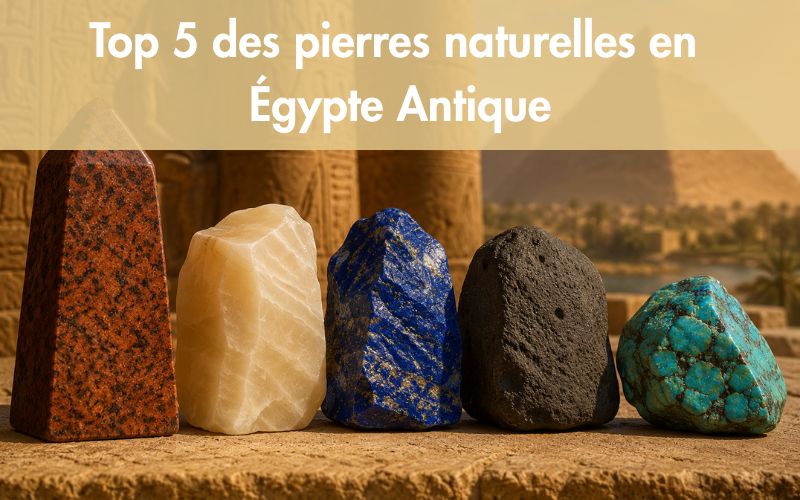
Ancient Egypt left behind monuments and treasures that continue to fascinate. Behind these achievements lies the use of natural stones, which were much more than simple materials: they represented power, religious beliefs, and the idea of eternity at the heart of Egyptian civilization.
Even today, these materials attract history enthusiasts and mineral lovers, who can sometimes find them in a natural stone shop. Discover the 5 most iconic stones of ancient Egypt and their role in the monuments, sacred objects, and traditions of this civilization.
Red granite: the stone of eternal monuments
Red granite is one of the most iconic stones of ancient Egypt. Mainly quarried in Aswan, it was reserved for prestigious constructions and works intended to last through the centuries. Its density and exceptional resistance made it a material particularly sought after by sovereigns, who saw in it a way to ensure their reign would endure.
The Egyptians used this stone to create giant obelisks, monumental statues, and certain royal sarcophagi. Its extraction, carving, and transport required considerable human and technical resources, which further reinforced its status as a noble and prestigious material.
The red color of the granite also held a strong symbolic dimension. It evoked power, the sun, divine energy, and the authority of the pharaohs. Using this stone in monuments helped convey an image of strength and permanence.
Even today, numerous granite vestiges bear witness to the remarkable craftsmanship of Egyptian builders. Its exceptional solidity has allowed these monuments to remain visible for millennia, perfectly embodying the Egyptian vision of eternity.

Alabaster: the luminous stone of sacred temples
Alabaster held a unique place in the traditions of ancient Egypt due to its soft texture and slightly translucent appearance. Unlike the granite used for monumental construction, this stone was mainly intended for refined objects used in religious ceremonies and sacred spaces. Its ability to subtly diffuse light helped create a special atmosphere in the temples.
Egyptian artisans worked alabaster with great precision to craft vases, sacred vessels, and numerous decorative elements. This stone was also used to produce lamps and certain funerary objects intended for the elite.
Alabaster possessed a strong symbolic dimension and was associated with spiritual purity. Priests considered this material to be an intermediary between the earthly world and the deities. Possessing objects made of alabaster was also a sign of social prestige and testified to the high status of its owner.
This stone was found in many creations such as ritual vases, funerary objects, religious decorations, sacred lamps, and certain pieces of prestigious furniture. Alabaster perfectly illustrates the importance placed on beauty and symbolism in Egyptian civilization.

Lapis lazuli: the blue stone of the gods
Lapis lazuli is certainly the most famous decorative stone of ancient Egypt. Its deep blue immediately evoked the sky, infinity, and the divine world, which gave it exceptional spiritual value. Unlike other materials used locally, this stone was imported from distant regions, which reinforced its prestige and made it a symbol of wealth reserved for the elite.
Egyptian artisans used lapis lazuli to craft refined jewelry, protective amulets, and ornaments intended for sovereigns. Its presence in royal objects often signaled a direct connection with the sacred and with power. The pharaohs considered this stone a symbol of protection, rebirth, and a link to the deities.
Lapis lazuli also appeared in funerary objects to accompany the deceased to the afterlife and ensure their symbolic transition to eternal life. It was found in many prestigious creations such as royal necklaces, funerary masks, ceremonial bracelets, protective amulets, and various sacred decorations. Even today, this stone remains one of the major symbols of the artistic refinement of ancient Egypt.

Basalt: the black stone of power
Basalt possesses a dark appearance that gave it a special symbolic dimension in Egyptian civilization. This volcanic rock was chosen as much for its exceptional resistance as for its meaning related to fertility and renewal. Contrary to some modern interpretations, the color black was not associated with death in ancient Egypt, but rather with the richness of the Nile's lands and the permanent cycle of rebirth.
The Egyptians used basalt to craft statues, sarcophagi, and certain floor coverings in religious and ceremonial spaces. Its robustness allowed for the durable preservation of objects intended for sacred rites and funerary practices.
Working with basalt required great technical mastery. Despite its hardness, specialized artisans managed to achieve precise surfaces and particularly meticulous finishes. This ability testifies to the advanced level reached by Egyptian builders and sculptors.

Turquoise: the protective stone of the desert
Turquoise held an essential place among the precious stones used in ancient Egypt. Extracted mainly from the Sinai Peninsula, it was recognized for its unique color and for the many meanings the Egyptians attributed to it. This stone represented protection, prosperity, and renewal, which explained its presence in many everyday objects and religious practices.
The Egyptians regularly incorporated turquoise into their jewelry to benefit from its supposed virtues. It also appeared in amulets worn daily to attract protection and ward off negative influences. This stone also accompanied certain objects placed in tombs to symbolically ensure the safety of the deceased in the afterlife.
Artisans frequently combined turquoise with gold to accentuate its prestige and highlight its vibrant color. This stone was found in many creations such as jewelry, talismans, royal decorations, funerary objects, and various religious ornaments. Thanks to its close link with Egyptian beliefs, turquoise became one of the major symbols of the decorative art of ancient Egypt.

Comparative table of the 5 natural stones in ancient Egypt
Before moving on to the most frequently asked questions, here is a summary of the main natural stones used in ancient Egypt, their origin, their uses, and their symbolism.
| Natural stone | Main origin | Use in ancient Egypt | Symbolism |
|---|---|---|---|
| Red granite | Aswan quarries | Obelisks, monumental statues, royal sarcophagi | Power, authority, eternity |
| Alabaster | Egypt | Ritual vases, sacred objects, prestigious furniture | Purity, light, spirituality |
| Lapis lazuli | Imported from distant regions | Royal jewelry, amulets, funerary objects | Divinity, protection, eternal life |
| Basalt | Egypt | Statues, sarcophagi, ceremonial flooring | Renewal, fertility, permanence |
| Turquoise | Sinai Peninsula | Jewelry, talismans, religious objects | Protection, prosperity, renewal |
This table allows for a quick comparison of the characteristics of each stone and a better understanding of their importance in the beliefs and achievements of ancient Egypt. To delve deeper into the subject and discover the spiritual dimension attributed to these materials by the ancient Egyptians, you can also consult our article: the forgotten powers of stones in ancient Egypt, to learn more about their symbolism, their uses, and their place in the traditions of this civilization.
FAQ on the top 5 natural stones in ancient Egypt
Before answering the most searched questions on the subject, it is useful to understand that natural stones were not just decorative materials in ancient Egypt. They were part of the Egyptians' worldview, their religious beliefs, and their way of conceiving eternity. Each stone possessed its own identity that determined its use in monuments, jewelry, or funerary objects.
The choice of a material depended as much on its availability as on its symbolic value. Some stones were reserved for the elite, while others accompanied daily religious practices.
Even today, archaeological research helps us better understand their importance in this fascinating civilization.

What was the most used stone in ancient Egypt?
Granite was among the most used stones due to its great resistance. It was mainly used for monuments, statues, and royal sarcophagi.
Why was lapis lazuli so precious?
Lapis lazuli was rare because it was imported from distant regions. Its blue color symbolized the gods, the sky, and eternity.
Did stones have religious significance?
Yes, stones often possessed spiritual value and were associated with religious rites and beliefs about the afterlife.
Where did the stones used in ancient Egypt come from?
Some stones were extracted directly in Egypt, such as Aswan granite or Sinai turquoise. Others, like lapis lazuli, were imported from more distant regions, which increased their value and prestige.
Which stone was reserved for the pharaohs?
Red granite was among the stones most associated with royal power due to its solidity and its use in obelisks, monumental statues, and certain sarcophagi intended for the Egyptian elite.

Conclusion on the top 5 natural stones in ancient Egypt
Natural stones held a central place in ancient Egypt and reflected much more than simple architectural or artisanal skill. Each material was selected for its properties, but also for the symbolism it carried within Egyptian society.
Red granite expressed the power and permanence of royal authority, alabaster created a sacred atmosphere in religious spaces, lapis lazuli embodied the connection with the divine world, basalt represented renewal, and turquoise symbolized protection.
Through these five iconic stones, we discover a civilization where materials participated fully in the beliefs, rites, and representation of power. Monuments, funerary objects, jewelry, or ceremonial elements: each use served a precise intention and helped convey values deeply rooted in Egyptian culture.
Understanding the role of these natural stones allows us to better grasp the worldview of the ancient Egyptians, founded on the balance between prestige, spirituality, and the quest for eternity.