
Bastet is an iconic goddess of Egyptian mythology associated with the sacred cat. A symbol of protection, motherhood, and harmony, Bastet was widely worshipped in ancient Egypt. Her cult reflects the importance of the cat in Egyptian religion and culture.
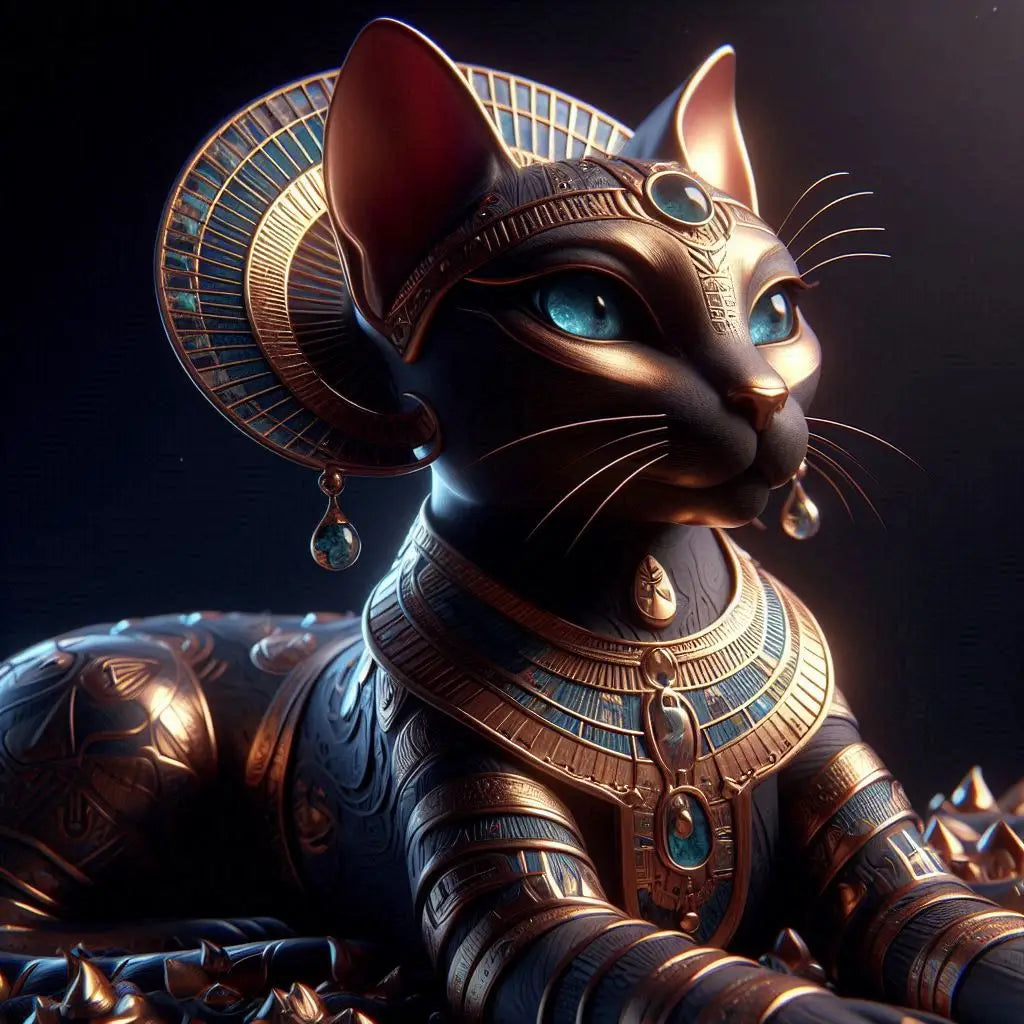
The origins of Bastet in Egyptian mythology
Bastet is one of the oldest goddesses in Egyptian mythology and her origins date back to the early dynasties of ancient Egypt. Early in her history, she was depicted as a fierce lioness, a symbol of power and protection. This image corresponded to a warrior deity capable of defending the kingdom against the forces of chaos and protecting the cosmic order.
Over time, the depiction of Bastet evolved. The formidable lioness gradually gave way to the gentler figure of the domestic cat. This transformation reflects the cultural shifts in Egyptian society, which increasingly valued the cat's protective role in the home. Bastet thus became the goddess associated with the protection of the home, family, and motherhood.
In some religious traditions, Bastet is also considered a daughter of the sun god Ra. In this role, she participates in protecting the sun against the forces of chaos. This solar dimension reinforces the idea that Bastet possesses a divine power capable of maintaining the world's balance.
The transformation of the lioness into a protective cat
Over the centuries, the image of Bastet softened and became closer to that of the domestic cat. This evolution shows the importance of the cat in the daily life of the Egyptians. The cat symbolizes vigilance, grace, and the protection of the home against pests and dangers.
However, Bastet retained a portion of the power inherited from her lioness form. This duality between gentleness and strength explains why she is both a protective goddess and a deity capable of repelling the forces of evil.
Bastet and the sun god Ra
In some religious traditions, Bastet is associated with the god Ra, the god of the sun. She is sometimes described as his daughter or as a manifestation of his protective power.
In this role, she helps defend the sun against the serpent Apophis, the incarnation of chaos. This association reinforces Bastet's cosmic dimension. She is not only the protector of the home but also a guardian of universal order.
The sacred cat in Egyptian civilization
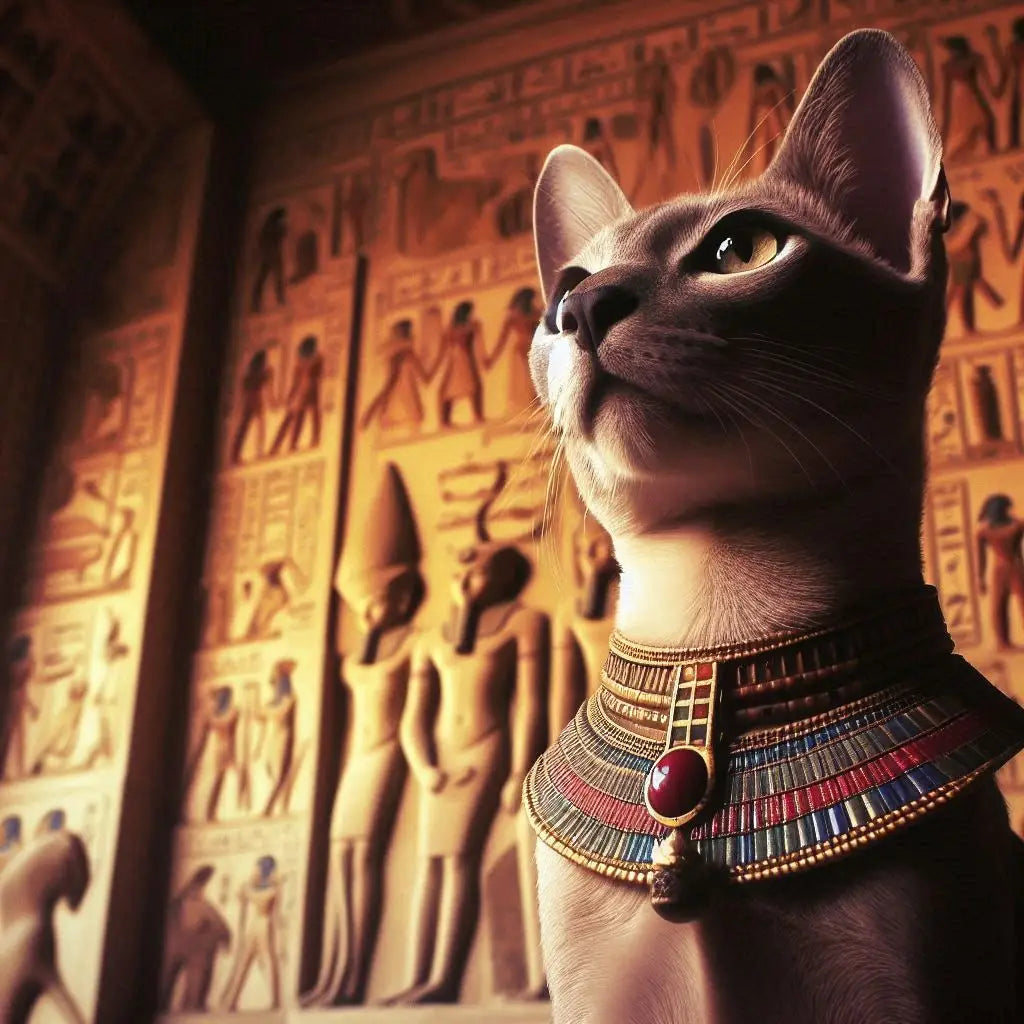
In ancient Egypt, the cat held an exceptional place in society and religion. This animal was admired for its ability to protect food stores against rodents and snakes. The Egyptians saw its vigilant behavior as a symbol of divine protection. Gradually, the cat became associated with the goddess Bastet and acquired sacred status.
Egyptian households often welcomed cats, which were treated with great respect. Owning a cat was considered a blessing from Bastet. The animal was perceived as a guardian of the home capable of warding off dangers and bringing prosperity and harmony.
Temples dedicated to Bastet also housed sacred cats cared for by the priests. These animals were protected and fed as living manifestations of the goddess. Statues and amulets representing cats were also made to serve as protective talismans.
The relationship between Bastet and the cat shows the importance of this animal in Egyptian culture. It was not just a domestic companion, but also a powerful religious symbol that embodied protection and balance.
Why cats were sacred
Several reasons explain the sacred status of the cat in ancient Egypt. First, it protected harvests and food supplies by hunting rodents. Furthermore, its calm and vigilant behavior evoked balance and wisdom.
Finally, it was directly associated with the goddess Bastet, which reinforced its religious importance. The Egyptians therefore considered the cat an animal that was protective and beneficial to society.
The cat as protector of the home
In Egyptian homes, the cat played an essential role in protecting the household. By hunting pests, it protected food resources and contributed to the safety of the family.
The Egyptians saw this behavior as a manifestation of Bastet's protection. Thus, the presence of a cat in a house was perceived as a sign of divine blessing and prosperity.

The cult of Bastet and her temples
The cult of Bastet was one of the most popular in ancient Egypt. The Egyptians saw in this deity a benevolent protector capable of bringing health, fertility, and prosperity. Temples dedicated to Bastet were important religious centers where the faithful came to pray, leave offerings, and ask for the goddess's protection.
The main center of Bastet's cult was in the city of Bubastis, located in the Nile Delta. This sanctuary attracted numerous pilgrims from all over the country. Archaeological excavations have revealed the existence of many statues, amulets, and cat mummies, testifying to the importance of the cult in this region.
In the temples, the priests maintained sacred cats that were considered incarnations of the goddess. The faithful also offered bronze figurines representing Bastet to obtain her blessings.
The cult of Bastet shows the importance of religion in the daily life of the Egyptians. The temples were not only places of prayer but also cultural and spiritual centers where the community gathered to honor the goddess.
Bubastis, the sacred city of Bastet
Bubastis was the main religious center dedicated to Bastet. This city housed an immense temple surrounded by gardens and sacred pools. Pilgrims traveled there to pray to the goddess and participate in religious ceremonies.
Archaeological excavations have revealed thousands of cat mummies in this region, proof of the importance of the cult of Bastet in Egyptian society.
Offerings and religious rituals
The faithful paid homage to Bastet by offering her various sacred objects intended to obtain her protection and blessings. In the temples dedicated to the goddess, pilgrims regularly deposited symbolic gifts to show their devotion and strengthen their bond with the deity.
-
bronze statuettes representing the goddess
-
protective amulets
-
perfumes and incense
-
cat figurines
These offerings expressed the faith of the believers and their hope of obtaining the protection, fertility, and harmony associated with Bastet.

Festivals dedicated to Bastet
Celebrations dedicated to Bastet were among the most impressive religious events in ancient Egypt. These festivities attracted thousands of pilgrims each year from various regions of the country to honor the goddess and participate in sacred rituals organized in the city of Bubastis. According to accounts by the Greek historian Herodotus, these gatherings were particularly lively and marked by an atmosphere of collective joy.
The faithful often reached the sacred city by sailing the Nile aboard decorated boats. During the journey, participants sang, played music, and celebrated the goddess in a festive atmosphere. This river procession was an integral part of the tradition and symbolized the people's devotion to Bastet. It also represented a way to bring different communities together around a shared faith.
Once they arrived at Bubastis, the pilgrims participated in religious ceremonies in the main temple. Priests organized sacred rituals, and the faithful left offerings as a sign of respect. These celebrations were also an opportunity to share meals, dance, and strengthen social bonds. They perfectly reflected the spirit of conviviality, harmony, and joy associated with Bastet in Egyptian culture.

Religious processions
Processions were an integral part of the celebrations in honor of Bastet and formed a central moment of the religious festivities. The faithful carried sacred statues of the goddess through the city or along the temples while singing hymns dedicated to her glory.
Music, tambourines, and sistra accompanied these ceremonies, while participants danced to honor the deity. These rituals symbolized the Egyptian people's gratitude toward Bastet and strengthened their confidence in her divine protection.
A popular festival
Festivals dedicated to Bastet brought together people from all social classes of ancient Egypt. Families, priests, merchants, and pilgrims participated together in the religious ceremonies, songs, and banquets organized to honor the goddess.
This collective participation strengthened the feeling of unity and community. The popularity of these festivities shows that Bastet was not only a religious deity, but also a cultural figure deeply integrated into daily life and Egyptian traditions.

The symbols and powers of Bastet
Bastet embodies several essential values in the religion of ancient Egypt. This goddess symbolizes both gentleness, protection, and a form of discreet but formidable power. This duality perfectly reflects the nature of the cat, an animal capable of being calm, elegant, and affectionate, but also very protective when it needs to defend its territory or its family. In Egyptian thought, this combination of grace and strength made Bastet an ideal guardian of the home and domestic harmony.
In Egyptian iconography, Bastet is often represented holding a sistrum, a sacred musical instrument used in many religious ceremonies. This object symbolizes joy, festivities, and the musical dimension associated with the goddess. She is also sometimes seen with a basket or accompanied by kittens, recalling her role as protector of motherhood, children, and family life.
Amulets representing Bastet were very popular in Egyptian society. The faithful wore them to protect themselves against diseases, malevolent spirits, and invisible dangers. These talismans were also placed in houses to attract divine protection and to preserve peace, security, and the balance of the home.
The symbolic qualities of Bastet
Several important qualities are associated with the goddess Bastet in Egyptian mythology. These attributes reflect her role as a benevolent protector and explain why she was so respected by the Egyptians.
-
protection against forces of evil and invisible dangers
-
fertility and motherhood, especially for women and children
-
harmony and balance in family life
-
joy, music, and festivities in religious celebrations
These different characteristics make Bastet a deity close to humans, capable of bringing protection, prosperity, and serenity into daily life.
Bastet in Egyptian art
Artists of ancient Egypt created numerous representations of Bastet in the form of statues, amulets, reliefs, or even wall paintings in temples and tombs. These works generally show the goddess with a cat's head or in the form of a seated cat, a symbol of vigilance and protection.
These representations bear witness to Bastet's great popularity in Egyptian culture. Today, these archaeological artifacts allow for a better understanding of her religious role and her importance in the art of ancient Egypt.

FAQ about Bastet the Egyptian Cat Goddess: Symbol of Protection
Before discovering the answers to the most frequently asked questions about Bastet, it is useful to understand why this goddess occupies such an important place in Egyptian mythology. In ancient Egypt, religion was an integral part of daily life, and each deity possessed a precise role linked to protection, nature, or the balance of the world. Bastet, often represented in the form of a woman with a cat's head or a sacred cat, symbolizes the protection of the home, motherhood, and family harmony.
Her cult developed throughout the country, notably in the city of Bubastis where her main temple was located. Egyptians considered the cat a sacred animal directly linked to this protective goddess. This relationship explains why cats were respected, protected, and sometimes mummified.
The following questions allow for a better understanding of Bastet's role, the importance of the cat in Egyptian civilization, and the place of this goddess in the religion and culture of ancient Egypt.
Who is Bastet in Egyptian mythology?
Bastet is an important goddess of Egyptian mythology associated with the cat, the protection of the home, and motherhood. She was worshipped throughout the country and particularly in the city of Bubastis. Her cult testifies to the importance of the cat in Egyptian culture.
Why were cats sacred?
Cats were sacred because they were linked to the goddess Bastet and protected crops against rodents. Egyptians saw in this animal a symbol of vigilance and protection.
Where was Bastet's main temple located?
Bastet's main temple was located in the city of Bubastis in the Nile Delta. This sanctuary attracted pilgrims from all over Egypt.
Was Bastet a warrior goddess?
Originally, Bastet was represented as a lioness, which gave her a warrior aspect. Over time, she became the cat goddess associated with the protection of the home.
Why did Egyptians mummify cats?
Cats were mummified because they were considered sacred animals linked to Bastet. This religious practice honored the goddess and guaranteed spiritual protection.
Conclusion on Bastet the Egyptian Cat Goddess: Symbol of Protection
Bastet occupies an essential place in Egyptian mythology and remains one of the most fascinating deities of ancient Egypt. Through her image as a woman with a cat's head or a sacred cat, she symbolizes the protection of the home, motherhood, and family harmony. This goddess also reflects the particular relationship that Egyptians maintained with the cat, an animal respected for its grace, its vigilance, and its ability to protect houses against pests.
The cult of Bastet was particularly important in the city of Bubastis, where many faithful traveled to participate in the religious ceremonies and the great festivals organized in her honor. The temples, amulets, and statues found by archaeologists testify to the popularity and influence of this goddess in Egyptian society.
Through rituals, offerings, and artistic representations, Bastet embodied both divine protection and the joy of living. Even today, this deity continues to fascinate history and mythology enthusiasts. She reminds us of the importance of beliefs in ancient Egypt and the central role that sacred animals, like the cat, occupied in the spirituality and culture of this civilization.