
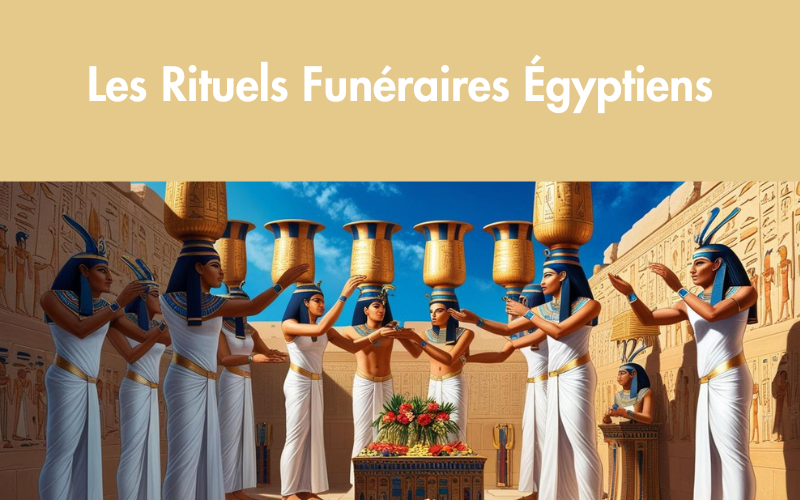
Egyptian funerary rituals reflect the deep spiritual vision that the ancient Egyptians had of death and the afterlife. For them, dying did not mean disappearing, but rather beginning a journey toward eternal life.
Through mummification, tombs, and sacred texts, these rites guided the soul and ensured its protection in the world of the dead.

The Vision of Death in Egyptian Religion
In the civilization of ancient Egypt, death represented a transformation into another form of existence. The Egyptians believed that the human being was composed of several spiritual elements, notably the ka, the ba, and the akh. For these elements to survive after death, the body had to be preserved and the funerary rites correctly performed. Egyptian religion was also based on the concept of Maat, a principle of balance and justice that governed the universe.
When a person died, their soul had to undertake a complex journey in the afterlife. This path involved several spiritual tests before reaching eternal life. Funerary rituals were therefore intended to help the deceased pass these stages safely. The tombs, amulets, and religious texts were designed to offer protection and guidance.
These beliefs explain why the Egyptians devoted so much effort to their funerary practices. The tombs were considered eternal homes intended to house the soul. Every detail of the ritual had a precise religious significance and contributed to preparing the deceased for life after death.
The different components of the soul
In Egyptian religion, the human soul was not a single entity but a collection of spiritual elements. The ka represented the vital energy that animated each individual. The ba, often depicted as a bird with a human head, symbolized the personality and could travel between the world of the living and that of the dead.
The akh corresponded to the immortal spiritual form that joined the realm of the gods. Finally, the ren, or name, guaranteed the memory of the deceased. Preserving the body and pronouncing the name were therefore essential to maintaining eternal existence.

Mummification: Preserving the Body for Eternity
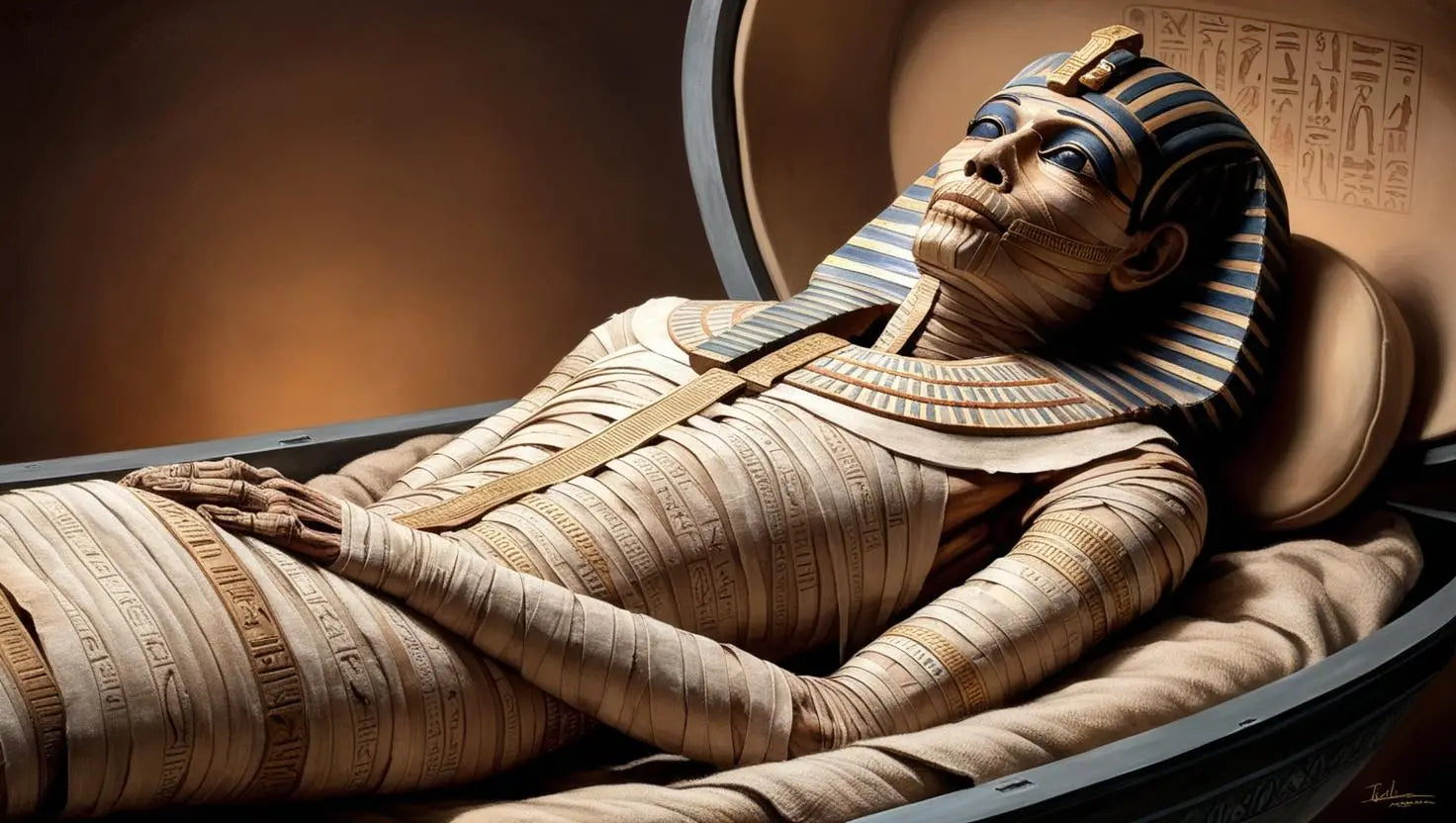
Mummification constitutes one of the most famous aspects of the funerary rituals of ancient Egypt. This complex process aimed to preserve the body so that the soul could continue to exist after death. The Egyptians believed that the soul needed to recognize its body to survive in the afterlife. Mummification was therefore essential to guarantee the spiritual rebirth of the deceased.
The ritual was carried out by specialized priests who mastered the techniques of body preservation. The internal organs were removed and placed in canopic jars protected by deities. The body was then covered in natron, a natural salt that helped eliminate moisture and halt decomposition. This step could last several weeks.
Once dehydrated, the body was wrapped in numerous linen bandages. Sacred amulets were sometimes placed between the bandages to ensure the spiritual protection of the deceased. Mummification did not just represent a medical technique, but a deeply symbolic religious act intended to prepare the individual for eternal life.
The main stages of mummification
Mummification followed a precise protocol that could last about seventy days. The body was first purified using water and scented oils to prepare it for the sacred ritual. Then, the priests removed the internal organs, except for the heart, which was considered the center of consciousness and morality.
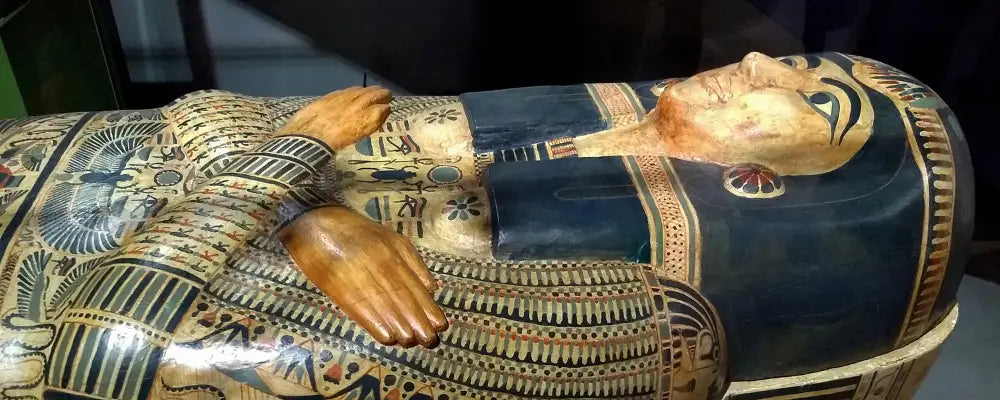
The body was then covered in natron for several weeks to eliminate all moisture. After this phase, the priests wrapped the mummy in linen bandages, sometimes inserting protective amulets. Finally, the body was placed in a decorated sarcophagus.
Tombs and Funerary Architecture
Tombs occupied a fundamental place in the funerary rituals of ancient Egypt. They were considered eternal homes intended to house the soul of the deceased. The Egyptians believed that the soul needed a stable place to which it could return after its journey in the afterlife. For this reason, burial sites were built with great care and often decorated with religious symbols.
Over the centuries, funerary architecture evolved from simple graves to spectacular monuments. The pyramids, built for the pharaohs of the Old Kingdom, represent the most impressive example of these constructions. Later, sovereigns were buried in tombs carved into the rock, notably in the famous Valley of the Kings.
The walls of the tombs were often covered in paintings and hieroglyphic inscriptions. These images depicted the daily life of the deceased, their activities, and their possessions. They had an important symbolic function, as the Egyptians believed that these representations could come to life in the afterlife.
The tombs also contained precious objects, statues, and furniture intended to accompany the deceased in their eternal existence.
The main types of Egyptian tombs
Several types of tombs were built throughout the history of ancient Egypt. Mastabas were rectangular tombs used during the early dynasties. The pyramids, famous funerary monuments, were erected for the pharaohs to symbolize their ascent to the gods.
Later, sovereigns were buried in tombs carved into the rock, notably in the Valley of the Kings. Nobles and high-ranking officials also possessed burial sites decorated with religious frescoes. These monuments testify to the importance placed on death and eternity.
Offerings and Funerary Objects
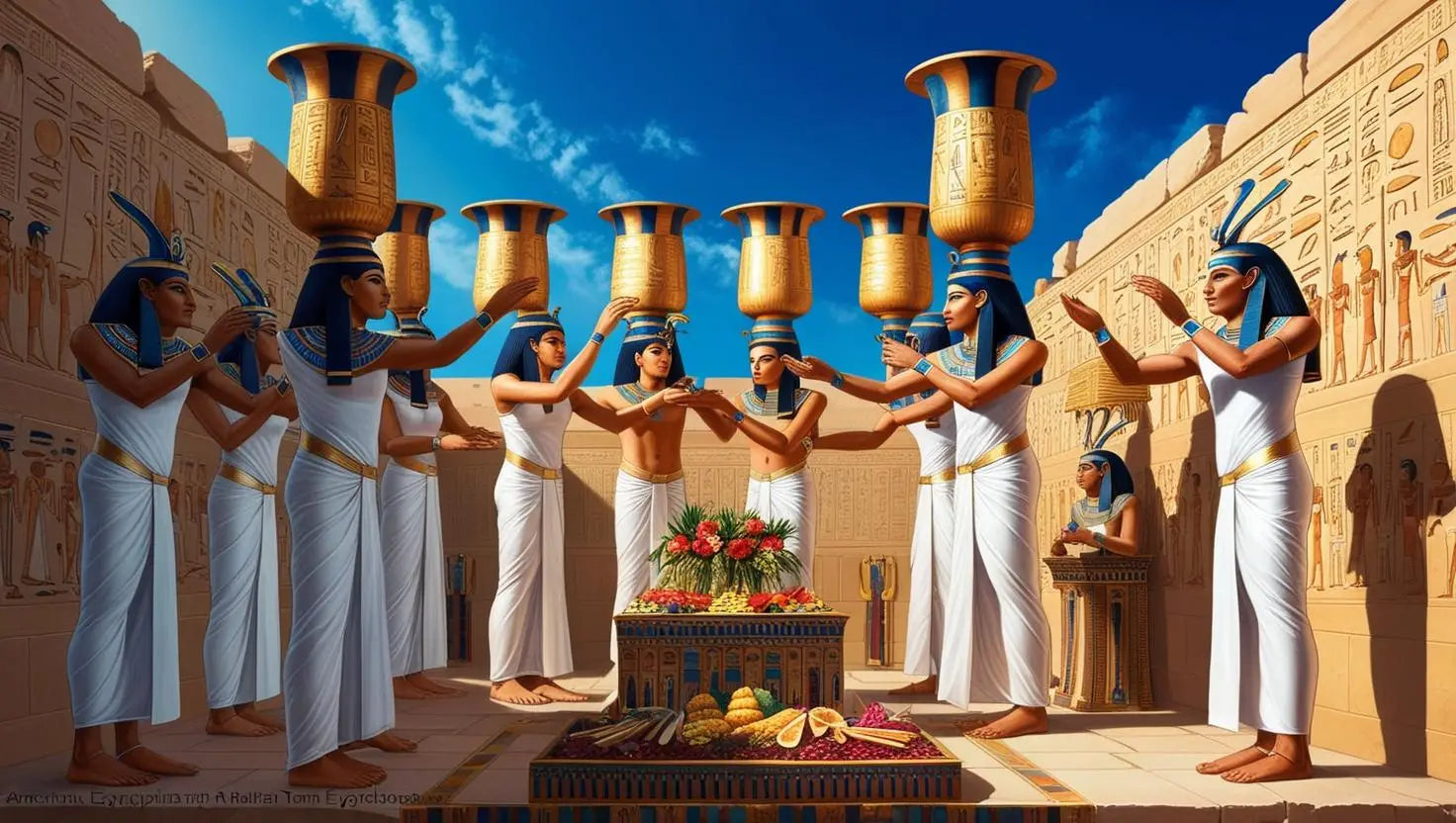
Funerary offerings constituted an essential element of Egyptian funerary rituals. The ancient Egyptians believed that life in the afterlife resembled earthly life. For this reason, the deceased needed to have food, objects, and spiritual protections to continue their existence.
The tombs were often filled with provisions such as bread, beer, fruits, and meat. These foods were intended for the ka, the vital energy of the deceased, which continued to exist after death. Family members and priests could also regularly bring new offerings to maintain the link between the living and the dead.
The funerary objects also included furniture, clothing, jewelry, and tools. These items symbolized the needs of the deceased in the afterlife. Among the most characteristic objects are the shabtis, small figurines representing servants charged with performing daily tasks in place of the deceased.
The amulets and talismans also occupied an important place. They were supposed to protect the soul against evil forces and ensure a safe journey into the world of the dead.
Symbolic objects in tombs
Funerary objects possessed important religious significance in Egyptian culture. The Ankh, symbol of eternal life, was often used as a protective amulet. The sacred scarab represented rebirth and the cycle of life.
The shabtis were placed in tombs to serve the deceased in the afterlife. The amulets placed in the mummy's bandages protected the soul against spiritual dangers. These objects reflect the richness of the religious beliefs linked to death and eternal life in ancient Egypt.
The Book of the Dead: The Deceased's Spiritual Guide
The Book of the Dead is one of the most famous religious texts of ancient Egypt. It is a collection of magic spells, prayers, and instructions intended to help the soul of the deceased in its journey to the afterlife. Each copy was generally personalized for the deceased and placed in the tomb or sarcophagus.
These texts explained how to overcome obstacles in the world of the dead and how to protect oneself against dangerous creatures. The Book of the Dead also contained prayers allowing the deceased to address the deities and prove their spiritual purity.
The illustrations that accompanied these texts often depicted mythological scenes, protective gods, and the famous judgment of Osiris. These images had an important symbolic and religious function.
Thanks to this spiritual guide, the soul could find its way in the afterlife and access an eternal existence. The Book of the Dead constitutes an essential source today for understanding the religion and beliefs of ancient Egypt.
The religious functions of the Book of the Dead
The Book of the Dead fulfilled several essential roles in funerary rituals. It first served as a guide to help the soul traverse the world of the dead and pass through the various spiritual gates.
The magic spells it contained helped to ward off dangers and obtain the protection of the deities. The text also helped the deceased answer questions asked during the final judgment. Finally, it prepared the soul to join the realm of Osiris and access eternal life.

The Judgment of Osiris and the Weighing of the Heart
In Egyptian religion, the decisive moment of the journey into the afterlife was the judgment of Osiris. After crossing the world of the dead, the soul had to appear before this god to be evaluated. This ritual determined whether the person could attain eternal life.
During this symbolic ceremony, the heart of the deceased was placed on a scale opposite the feather of Maat, symbol of truth and justice. If the heart was as light as the feather, it meant that the person had lived according to the principles of order and morality. The soul could then join the realm of Osiris.
If the heart was too heavy, it was devoured by a monster called Ammit. In that case, the soul disappeared forever. This scene represents the importance of morality and justice in Egyptian culture.
The judgment of Osiris symbolizes the idea that every individual had to answer for their actions. Earthly life therefore determined the soul's eternal destiny.
The deities of the tribunal of the afterlife
The judgment of the deceased involved several important deities. Osiris, god of the dead, presided over the tribunal and decided the final fate of the soul. Anubis, the jackal-headed god, guided the deceased and oversaw the weighing of the heart.
Thoth, god of writing and wisdom, recorded the result of the judgment. Finally, the creature Ammit waited near the scale to devour impure souls. This divine tribunal symbolized the cosmic justice that governed the universe according to the principles of Maat.

FAQ on Egyptian Funerary Rituals
Egyptian funerary rituals still spark many questions today. The civilization of ancient Egypt placed capital importance on death and the passage into the afterlife. Every ceremony, every symbol, and every object present in the tombs possessed a precise religious significance. Understanding these practices helps one better grasp the spiritual vision of the ancient Egyptians and their conception of eternal life.
Over the centuries, archaeologists have discovered thousands of tombs, papyri, and funerary objects that testify to the richness of these traditions. These discoveries have allowed for a better understanding of the role of mummification, the importance of sacred texts like the Book of the Dead, as well as the beliefs related to the judgment of the soul in the afterlife. However, these rituals sometimes remain complex and can raise numerous questions.
The following FAQ gathers the most frequent questions concerning the funerary rites of ancient Egypt. It helps clarify certain essential aspects of these religious practices and better understand how the ancient Egyptians perceived death, the soul, and eternal life.
Why did the Egyptians practice mummification?
Mummification allowed for the preservation of the body so that the soul could continue to exist in the afterlife. The Egyptians believed that the ka had to recognize its body to survive. This ritual therefore guaranteed the continuity of life after death.
What is the Book of the Dead?
The Book of the Dead is a collection of religious texts containing prayers and magic spells intended to guide the soul in the world of the dead and help it pass spiritual trials.
What does the judgment of Osiris represent?
The judgment of Osiris symbolizes the moral evaluation of the deceased. Their heart is compared to the feather of Maat in order to determine if they deserve to attain eternal life.
Why were the tombs decorated?
The decorations in the tombs had a magical function. The scenes of daily life represented on the walls were supposed to repeat in the afterlife to ensure the continuity of the deceased's existence.
Who was the god Anubis?
Anubis was the god associated with mummification and the world of the dead. He guided souls into the afterlife and protected mummies.
Were funerary rituals reserved for pharaohs?
No, rituals existed for all social classes. However, pharaohs and the elite benefited from more elaborate ceremonies and richer tombs.
Conclusion on Egyptian Funerary Rituals
Egyptian funerary rituals illustrate the unique vision the ancient Egyptians had of death and spirituality. For them, death represented a transition to a new existence in the afterlife. Funerary ceremonies, mummification, tombs, and religious texts had the objective of ensuring the soul's survival and preparing the deceased for their judgment.
These practices show how central religion was in Egyptian society. Each step of the ritual possessed a symbolic meaning intended to protect the soul and ensure its passage to eternal life. Funerary monuments, sacred objects, and religious manuscripts still testify today to this deep belief in immortality.
Funerary rituals also contributed to the cultural and artistic richness of ancient Egypt. The pyramids, decorated tombs, and sacred texts continue to fascinate researchers and the general public.
By studying these traditions, it becomes possible to better understand the religious thought and worldview of the ancient Egyptians, for whom eternity was a reality accessible through sacred rites.