

The obelisk is one of the most iconic symbols of ancient Egypt. Standing tall towards the sky, this monumental structure represented both the power of the pharaohs and a connection to the divine. Throughout its history, the obelisk reveals the importance of religion and power in Egyptian civilization.
The origin of obelisks in ancient Egypt
The first obelisks appeared in ancient Egypt during the Old Kingdom, but their popularity reached its peak during the New Kingdom. These monuments were carved from a single block of red granite sourced from the quarries of Aswan. Their construction was a remarkable technical feat, requiring advanced mastery of sculpture and engineering. Egyptian artisans crafted these gigantic structures using rudimentary tools but with great precision.
The obelisk was primarily a religious monument linked to sun worship. Its vertical shape symbolized a sunbeam frozen in stone. The Egyptians believed this monument captured divine light and diffused it into sacred temples. Obelisks were often installed in pairs at the entrance of sanctuaries to mark the importance of the site.
Beyond their religious dimension, these monuments also served to glorify the pharaohs. The hieroglyphic inscriptions carved on their faces recounted the sovereign’s exploits and his privileged link with the gods. The obelisk thus became an enduring testament to royal power.
Materials and construction techniques
Building an obelisk required impressive technical knowledge for the time. The Egyptians primarily used red granite extracted from the Aswan quarries. This extremely hard stone symbolized solidity and eternity, central values in Egyptian civilization. Artisans gradually sculpted the monument's shape using harder stone tools.
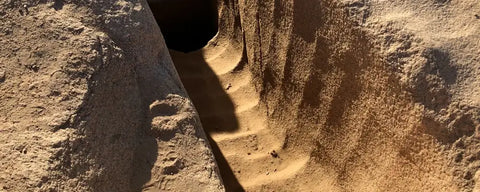
The manufacturing process involved several complex steps. Workers first had to detach a massive block from the quarry. Then, they sculpted the obelisk’s slender shape and carved the hieroglyphs onto its faces. Transport was generally carried out by boat on the Nile. Finally, the monument was erected using ramps and ingenious lifting systems.
Famous early obelisks
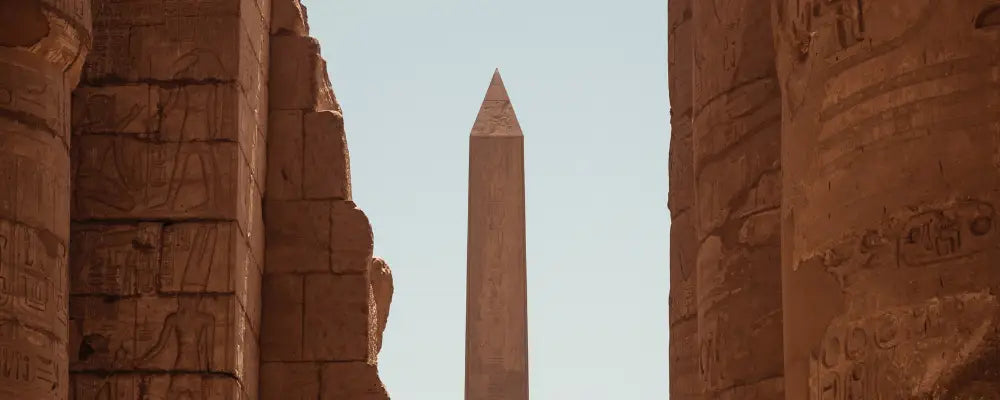
Some obelisks built during antiquity are still visible today and testify to the grandeur of Egyptian civilization. The Temple of Karnak houses several impressive monuments erected by various pharaohs. One of the most famous is the obelisk of Queen Hatshepsut, which exceeds thirty meters in height.
These monuments were designed to impress visitors and symbolize the ruler's power. Each obelisk told a story through its hieroglyphs. The inscriptions described military victories, offerings made to the gods, and major construction projects of the reign. Thus, the obelisk became a commemorative monument destined to endure through the centuries.
The obelisk as a symbol of pharaonic power
In ancient Egypt, the obelisk was not just a religious monument. It was also a powerful political tool that allowed pharaohs to assert their authority and legitimacy. By erecting these monumental structures, sovereigns demonstrated their ability to mobilize the kingdom’s resources, organize massive construction sites, and accomplish impressive architectural projects. The obelisk thus became a visible manifestation of royal power and the pharaoh’s control over his territory.
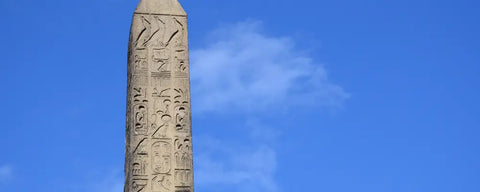
The hieroglyphs carved on the monument’s faces played a central role in this political strategy. They recounted the pharaoh’s exploits, military conquests, and religious constructions, all while highlighting his direct connection to the deities. Texts often claimed that the sovereign had been chosen by the gods to rule Egypt and maintain cosmic order. This association between royal power and divine will significantly reinforced the pharaoh’s legitimacy in the eyes of his people.
The location of the obelisks was also strategic. Placed in front of temples or in major religious centers, they dominated the landscape and caught the attention of all visitors. Their impressive height served as a constant reminder of the sovereign’s greatness and the importance of his reign.
Hieroglyphs as propaganda
The inscriptions carved on obelisks constituted a true form of political propaganda. Each face of the monument told a part of the pharaoh’s history. The texts highlighted his military conquests, temple constructions, and privileged relations with the gods.
These hieroglyphs served several important functions. They glorified the sovereign and communicated his message to the population. They also served as a reminder that the pharaoh was the guarantor of cosmic order and the kingdom’s prosperity. Through these inscriptions, the obelisk became a tool of monumental communication.
A demonstration of architectural power
Constructing an obelisk represented an impressive technical challenge. Some monuments weighed over three hundred tons and stood more than thirty meters high. Their extraction, transport, and installation required hundreds of workers and remarkable organization.
This architectural feat also served to impress foreign visitors. It demonstrated the wealth and power of the Egyptian kingdom. The obelisk thus became a visible symbol of the pharaoh’s ability to execute extraordinary projects.

The spiritual and cosmic dimension of obelisks
Beyond their political role, obelisks held a profound religious significance in Egyptian civilization. They were closely linked to sun worship and the god Ra, considered the source of all life. The obelisk’s slender shape symbolized a ray of sunlight descending from the sky to the earth, representing the connection between the divine and human worlds. This image evoked the transmission of divine energy and the protection granted by the gods.
Egyptians believed these monuments captured sunlight and diffused it into temples and sacred sites. The tip, called the pyramidion, was often covered with electrum, a precious alloy of gold and silver. This coating intensely reflected sunbeams, making the obelisk appear to radiate with sacred energy.
In temples, these monuments also marked a divine presence. Their position and orientation were carefully chosen to capture light at specific times of the day, thereby reinforcing their spiritual role in Egyptian religious architecture.
The connection with the solar god Ra
The god Ra occupied a central place in Egyptian religion. He was considered the creator of the world and the source of all life. Obelisks were often dedicated to this deity and installed in temples devoted to sun worship.
To the Egyptians, the obelisk represented the first hill that appeared during the creation of the world. This mythical hill was illuminated by the light of the rising sun. By erecting these monuments, pharaohs sought to replicate this founding moment of Egyptian cosmogony.

The pyramidion and sacred light
The pyramidion was the most sacred element of the obelisk. Located at the monument's peak, it was often covered in electrum to reflect sunlight. When sunbeams hit this shiny surface, the obelisk appeared to radiate with divine energy.
This phenomenon reinforced the idea that the monument served as a channel between heaven and earth. Priests saw this light as a sign of the gods' presence within the temple.
Famous obelisks around the world
Over the centuries, several obelisks were transported out of Egypt and installed in different regions of the world. The Romans were among the first to move these monuments to their capital to symbolize the power of their empire and their admiration for Egyptian civilization. They viewed these monumental structures as a prestigious legacy and a means to assert Rome’s cultural and political dominance. Several obelisks were thus transported from Egyptian temples to large Roman squares.
Today, many obelisks are found in major cities across the world. Rome possesses the largest number of Egyptian obelisks outside of Egypt, which testifies to this civilization's enduring influence on European history. These monuments were installed in public squares, gardens, or in front of historical buildings to decorate the city and recall the greatness of the Roman Empire.
Other famous obelisks are also found in Paris, London, and New York. Their presence in these major capitals testifies to the enduring fascination with ancient Egypt and the profound influence of this civilization on global architecture and culture.

The Luxor Obelisk in Paris
The Luxor Obelisk is one of the most famous Egyptian monuments in Europe. It was gifted to France in the 19th century by the Viceroy of Egypt. After a spectacular journey, it was installed in the Place de la Concorde in Paris.
This monument, over three thousand years old, recalls the European interest in Egyptian civilization. It also serves as historical evidence of the diplomatic relations between France and Egypt.
The Washington Monument
The Washington Monument is one of the most impressive modern obelisks. Located in Washington D.C., it was built to honor George Washington, the first President of the United States. Its shape is directly inspired by Egyptian obelisks.
Standing over one hundred and sixty meters tall, it dominates the American capital. This monument symbolizes the continuity between the great civilizations of Antiquity and modern nations.

The modern symbolism of obelisks
Today, obelisks have lost much of their original religious dimension. In Antiquity, they represented the direct connection between gods and men, but their meaning has evolved over time. Nevertheless, they continue to be associated with strong values such as memory, power, and eternity. Their simple, slender shape naturally draws the eye toward the sky and symbolizes elevation, light, and the human aspiration toward something greater.
In many cities around the world, obelisks now serve as memorial monuments. They are used to honor leaders, celebrate military victories, or commemorate important historical events. Their verticality and imposing presence in the urban space evoke the grandeur, permanence, and collective memory of nations.
Modern architects also continue to draw inspiration from this ancient form. The silhouette of the obelisk can be found in certain contemporary monuments and sometimes even in skyscraper architecture. This influence demonstrates that the architectural legacy of ancient Egypt continues to inspire constructions and symbols of power in the modern world.
Why obelisks still fascinate
Several factors explain the enduring interest in these impressive monuments. Their historical antiquity and the mystery surrounding their construction have long attracted researchers, historians, and archaeology enthusiasts. Their monumental architecture and spectacular height also continue to impress visitors and travelers from all over the world.
Obelisks also possess a very powerful universal symbolism. They represent light, knowledge, and the connection between the earthly world and the celestial world, which further strengthens their fascination through the centuries.
The influence on modern architecture
The influence of obelisks can be found in many modern architectural projects around the world. Architects often use verticality to express the power, grandeur, and ambition of a monument. Some contemporary buildings directly adopt the slender silhouette of the obelisk, particularly in memorial monuments or certain skyscrapers.
This simple, balanced, and elegant form continues to inspire creators and urban planners. It symbolizes elevation, permanence, and the transmission of the architectural heritage of ancient civilizations.

FAQ on The Obelisk: a symbol of power and divine connection
Obelisks are among the most iconic monuments of ancient Egypt and still raise many questions today. Their slender shape, impressive size, and religious symbolism have fascinated historians, archaeologists, and enthusiasts of ancient civilizations. These stone monuments are not merely architectural feats; they also bear witness to a worldview where political power, religion, and the universe were closely intertwined.
For millennia, obelisks have represented a symbolic link between the earth and the sky. They embodied the light of the sun and the divine presence in Egyptian temples. Their construction required remarkable technical knowledge as well as impressive organization, which reinforced their symbolic and political dimension.
Today, these monuments are found not only in Egypt but also in several major cities around the world. Their history, transport, and significance continue to pique public interest. The following questions help to better understand the origin, function, and cultural importance of obelisks throughout history.
What is an obelisk?
An obelisk is a slender, four-sided stone monument ending in a pyramidal point called a pyramidion. In ancient Egypt, it was usually carved from a single block of granite and installed in front of temples to honor the gods and glorify the pharaohs.
Why were obelisks important in Egypt?
Obelisks played both a religious and political role. They symbolized the light of the solar god and asserted the power of the pharaoh. The engraved hieroglyphs recounted the sovereign's achievements and his connection to the deities.
How many Egyptian obelisks still exist?
There are several dozen Egyptian obelisks remaining today. Most are found in Egypt, notably in Karnak and Luxor. Others have been transported to cities such as Rome, Paris, London, or New York.
Which is the oldest obelisk?
The first obelisks date back to the Egyptian Old Kingdom. However, the majority of the monuments still visible today date from the New Kingdom, a period during which their construction was widely developed.
Why did the tip of the obelisks shine?
The tip, called the pyramidion, was often covered in electrum, an alloy of gold and silver. This coating reflected sunlight and symbolized the divine presence.
Which is the tallest obelisk in the world?
The Washington Monument, located in the United States, is the tallest obelisk in the world at over 160 meters. Ancient obelisks were generally much smaller.
Why are there obelisks in Europe?
Several obelisks were transported to Europe during the Roman Empire. Subsequently, some were gifted or moved to capitals such as Rome, Paris, or London.
Conclusion on The Obelisk: a symbol of power and divine connection
The obelisk represents one of the most impressive legacies of the Egyptian civilization. These stone monuments testify both to the technical mastery of the ancient Egyptians and to their spiritual vision of the world. For the pharaohs, erecting an obelisk meant asserting their power while honoring the gods. These monumental structures symbolized a sunbeam connecting the divine world to the earthly world.
Over the centuries, obelisks have crossed borders and civilizations. The Romans, and later modern nations, adopted this architectural form to express grandeur and memory. Still today, these monuments continue to fascinate visitors and historians alike.
The obelisk remains a universal symbol of light, eternity, and power. It serves as a reminder that ancient civilizations were already seeking to understand their place in the universe and to establish a link between the earth and the sky. Through its simplicity and symbolic strength, this monument continues to inspire contemporary architecture and culture.