

The Valley of the Kings is one of the most famous archaeological sites of ancient Egypt. Located near Luxor, this mythical necropolis houses the tombs of numerous pharaohs of the New Kingdom. It reveals the importance of funerary beliefs and the cultural wealth of this civilization.

Origin and history of the Valley of the Kings
The Valley of the Kings emerged at the beginning of the New Kingdom, around 1550 BC, when Egyptian sovereigns decided to change their funerary traditions. During previous periods, pharaohs were buried in monumental pyramids, notably at Giza or Saqqara. However, these imposing structures were easily spotted and quickly attracted tomb robbers in search of funerary treasures. To protect their wealth and their burials, the pharaohs adopted a new strategy.
They chose a desert valley located on the west bank of the Nile, near Thebes, the current Luxor. This isolated location, surrounded by natural cliffs, offered an ideal setting to hide the royal tombs. The rugged topography made access more difficult, while its proximity to the religious centers of Thebes reinforced its spiritual symbolism.
Over time, this valley became the main necropolis for the sovereigns of the New Kingdom. More than sixty tombs would be carved there, each reflecting the power and religious beliefs of the pharaoh who rested within. Artisans, architects, and priests participated in the design of these underground burials, which often required several years of work.
The role of the New Kingdom in the creation of the valley
The New Kingdom represents one of the most prosperous periods in the history of ancient Egypt. The pharaohs expanded their influence over vast territories and accumulated significant wealth. This prosperity allowed for the development of particularly elaborate funerary art.
The tombs became true underground sanctuaries designed to accompany the pharaoh in his passage to the afterlife. Priests and artisans collaborated to create symbolic decorations representing the deities and the stages of the spiritual journey.
The choice of the Nile's west bank
In Egyptian religion, the west bank of the Nile was associated with the world of the dead. The sun sets in the west, symbolizing the end of earthly life and the beginning of the journey to the afterlife.
Choosing this location for royal burials therefore carried a strong symbolic dimension. The Valley of the Kings represented a sacred place where sovereigns could join the gods after their death.
Famous pharaohs buried in the Valley of the Kings
The Valley of the Kings houses the burials of several of the most famous sovereigns in the history of ancient Egypt. These pharaohs marked their era through their conquests, their monumental constructions, and their religious influence. Their tombs reflect the prestige and power of their reigns.
Among the best-known figures are Thutmose III, Ramesses II, and Seti I. Their burials feature exceptional decorations and inscriptions detailing their achievements and their relationships with the deities. The tomb walls often recount the pharaoh's journey to the afterlife and his transformation into a divine being.
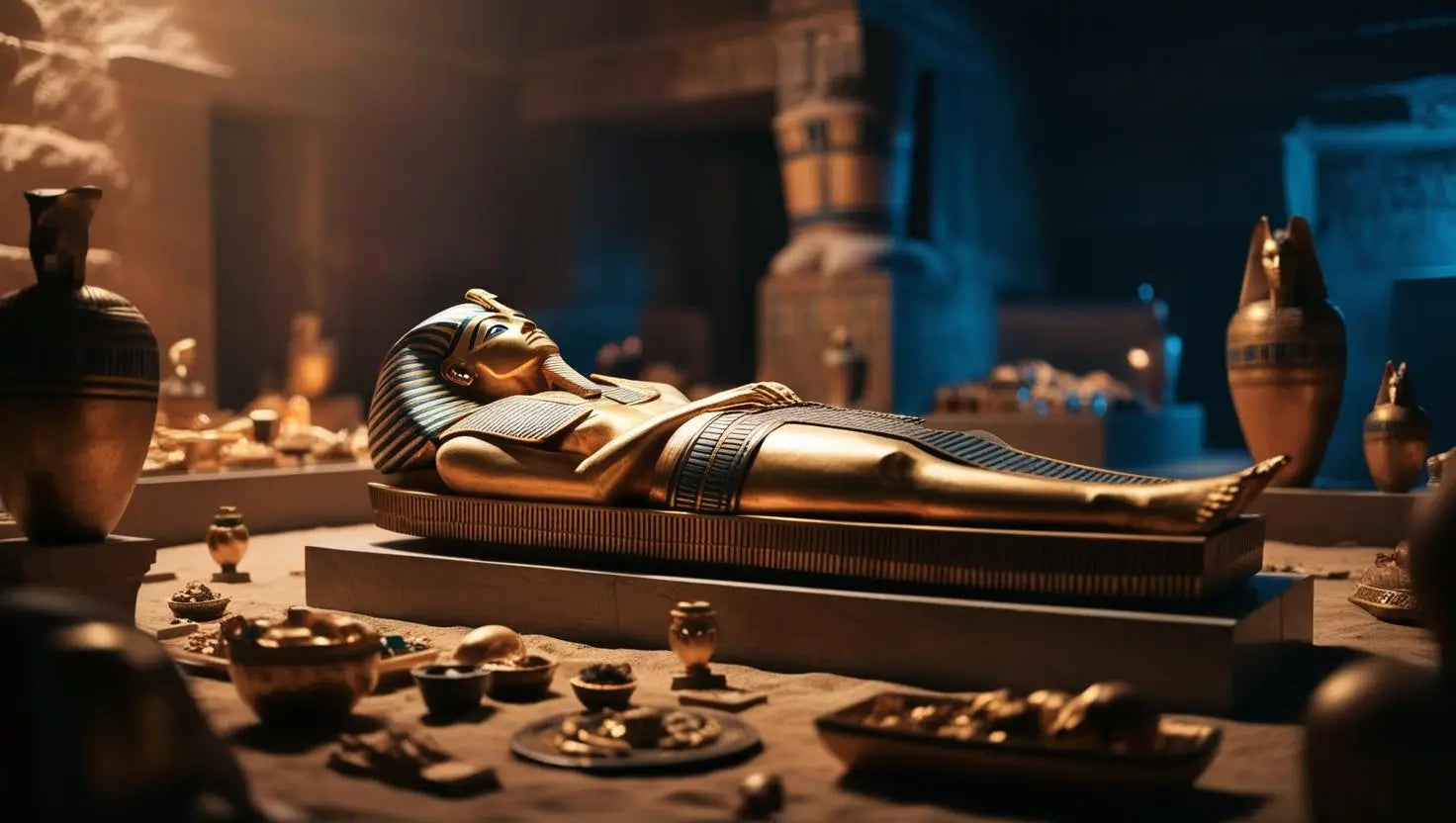
However, the most famous tomb remains that of Tutankhamun. Discovered in 1922 by archaeologist Howard Carter, it has become one of the most famous symbols of world archaeology. Unlike many other tombs, this one had remained almost intact.
This discovery provided a better understanding of the funerary rituals, wealth, and religious beliefs of ancient Egypt. It also revealed the importance placed on funerary objects and offerings intended to accompany the sovereign in the afterlife. Thanks to these finds, historians have been able to reconstruct a portion of royal daily life and better understand the spiritual traditions linked to death.
The discovery of Tutankhamun's tomb
The tomb of Tutankhamun is one of the most spectacular archaeological discoveries of the 20th century. When Howard Carter opened the burial chamber, he discovered an almost intact treasure dating back over three thousand years.
The objects found include a gold funerary mask, precious jewelry, statues, and numerous ritual artifacts. This discovery profoundly transformed our understanding of Egyptian funerary rites.

The tombs of Ramesses II and Seti I
Ramesses II is often considered one of Egypt's greatest pharaohs. His reign marked history through numerous monumental constructions, such as the temples of Abu Simbel, and through his political influence over a large part of the Near East. His name remains associated today with the power and grandeur of the New Kingdom.
The tomb of Seti I is also remarkable. It is renowned for the exceptional quality of its frescoes and the richness of its wall decorations, considered among the most beautiful in the entire Valley of the Kings.
The architecture of the tombs in the Valley of the Kings
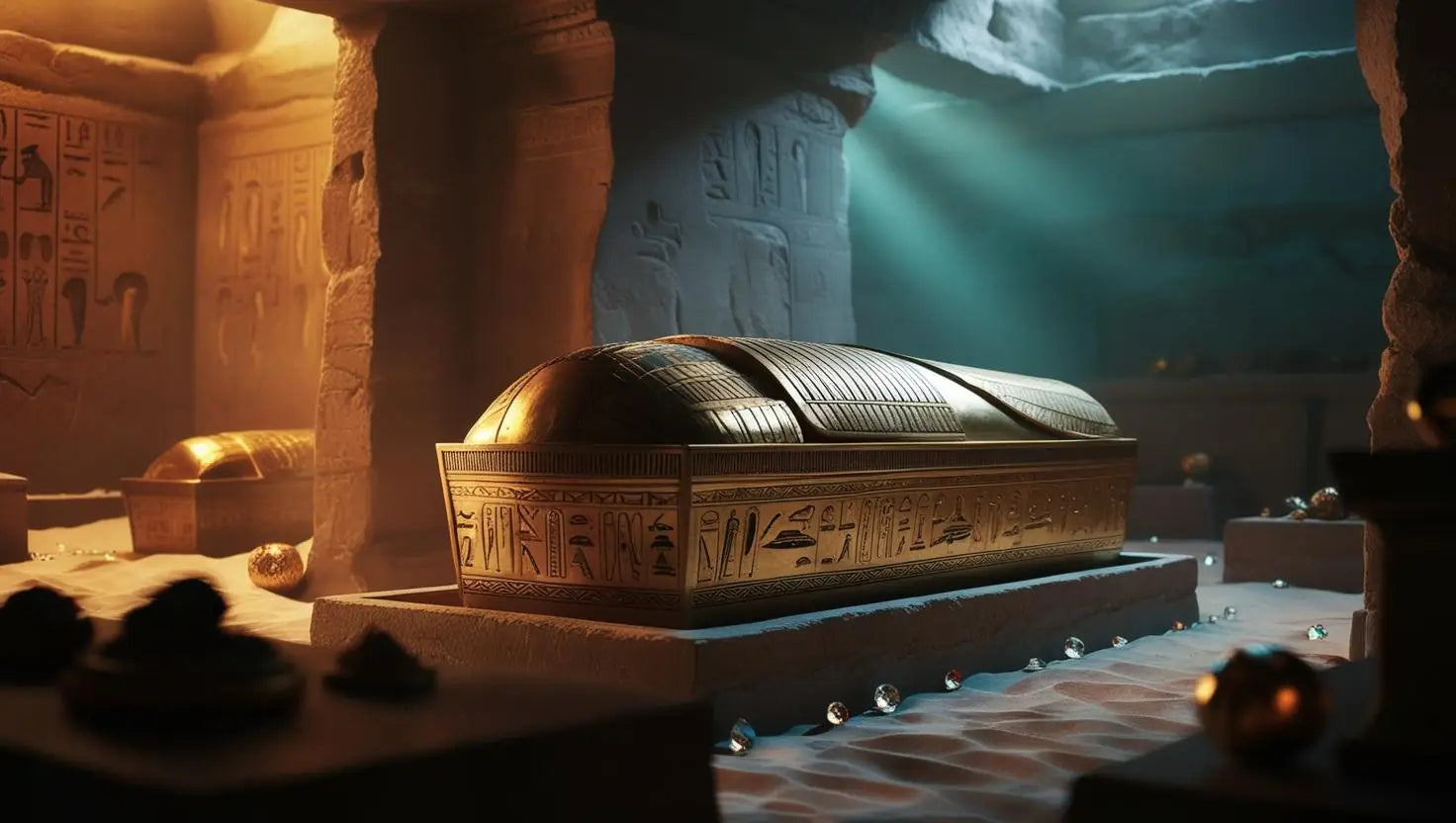
The tombs of the Valley of the Kings represent masterpieces of funerary architecture. Carved directly into the limestone of the cliffs, they often follow a complex layout composed of corridors, secondary chambers, and a main burial chamber. Each tomb was designed to protect the pharaoh's body and accompany his soul into the afterlife.
The architects of the time developed sophisticated plans to make the tombs difficult for robbers to access. Corridors could be inclined, feature turns, or lead to secondary rooms intended to deceive thieves. Some passages were deliberately narrow or steep to complicate any intrusion attempt.
The walls were then covered with colorful frescoes and sacred hieroglyphs. These inscriptions often represented passages from the Book of the Dead or other religious texts intended to guide the pharaoh on his spiritual journey.
The burial chamber contained the royal sarcophagus and numerous precious objects meant to accompany the sovereign into eternity. All these elements formed a symbolic space where architecture, art, and religion were closely linked to ensure the pharaoh's protection and immortality.
The religious frescoes of the tombs
The wall frescoes are one of the most impressive elements of the royal tombs. They illustrate mythological scenes showing the pharaoh alongside the gods and recount the various stages of his journey to the afterlife. These images carried a strong symbolic and spiritual dimension.
Artists used natural pigments to create vibrant colors capable of withstanding the test of time. These depictions also had an essential religious function, as they served to protect the pharaoh's soul and accompany him on his passage to eternity.
Funerary treasures
The tombs contained a great variety of objects intended to ensure the pharaoh's comfort in the afterlife. These treasures bear witness to the exceptional craftsmanship of Egyptian artisans and the importance placed on funerary rites in ancient civilization.
Among the objects found are jewelry, sculpted furniture, ceremonial weapons, and protective statues. Amulets, precious chests, and sometimes everyday objects intended to accompany the pharaoh in his new eternal life were also found.

Major archaeological discoveries
Since the 19th century, the Valley of the Kings has been at the heart of numerous archaeological explorations. Researchers have gradually uncovered tombs, precious objects, and inscriptions that reveal essential information about Egyptian civilization.
The first systematic excavations were led by European archaeologists fascinated by the mysteries of ancient Egypt. Over time, research methods have improved thanks to scientific progress and a better understanding of heritage conservation techniques.
Today, archaeologists use modern technologies such as scanners, geophysical surveys, and satellite imagery to explore the valley without damaging existing structures.
Despite over a century of research, the Valley of the Kings has likely not yet revealed all its secrets. Specialists believe that new tombs could still be discovered beneath layers of rock and sand. Each new discovery helps enrich our knowledge of the social, religious, and artistic organization of ancient Egypt.
Modern technologies in archaeology
Researchers today use advanced technological tools to analyze the underground structures of the Valley of the Kings. Scanners, radar, and sensors allow for the detection of potential cavities hidden in the rock without having to dig directly into the ground.
These modern methods offer new possibilities for exploring the valley while preserving existing tombs. They also allow for a better understanding of the arrangement of burial sites and the identification of areas that remain unexplored.

Still-unsolved mysteries
Despite the numerous discoveries made in the Valley of the Kings, several questions remain to this day. Some tombs mentioned in ancient texts or historical archives have still not been found.
Archaeologists believe that other burial sites could still be hidden beneath the rocks or debris accumulated over the centuries. New technologies could thus make it possible to reveal future secrets of this necropolis.
Visiting the Valley of the Kings today
Today, the Valley of the Kings is one of the most famous tourist sites in Egypt and attracts thousands of visitors from all over the world every year. Located near Luxor, this mythical necropolis allows you to discover the tombs of New Kingdom pharaohs and admire frescoes that are thousands of years old. Visitors can walk through corridors carved into the rock and observe up close the decorations that tell the story and beliefs of ancient Egypt.
To preserve this exceptional heritage, Egyptian authorities limit access to certain tombs. Only a few burial sites are open to the public at any given time to reduce the risk of degradation and protect particularly fragile ancient paintings. This rotation helps preserve the frescoes and hieroglyphs in the best possible condition.
Visitors can nevertheless explore several remarkable tombs and observe the details of the wall decorations up close. These frescoes offer a unique insight into the religious beliefs and funeral rites of ancient Egypt.
To fully enjoy your visit, it is recommended to choose a favorable time of year and follow the site’s conservation rules. It is also advisable to be accompanied by a guide to better understand the history, symbols, and cultural importance of this iconic necropolis.
Tombs open to the public
Some tombs in the Valley of the Kings are particularly popular with visitors and rank among the most impressive on the site. Among them are those of Ramesses VI, Thutmose III, and Tutankhamun, which attract numerous history and archaeology enthusiasts every year.
Each tomb possesses a unique artistic style and allows for the discovery of fascinating mythological scenes. The frescoes and hieroglyphs present on the walls often recount the pharaoh's journey to the afterlife and illustrate the religious beliefs of ancient Egypt.
Tips for a successful visit
To fully enjoy the Valley of the Kings, it is advisable to visit the site between October and April, when temperatures are more pleasant and visiting conditions are more comfortable for exploring the tombs.
It is also recommended to arrive early in the morning to avoid crowds and the heat. Being accompanied by a local guide can also enrich the experience by providing explanations about the history, symbols, and secrets of the tombs.

FAQ about the Valley of the Kings in Egypt
The Valley of the Kings is one of the most iconic sites of ancient Egypt and has long sparked the curiosity of historians, archaeologists, and travelers from around the world. Located near Luxor, this royal necropolis gathers the tombs of many New Kingdom pharaohs and serves today as an exceptional source of information on religious beliefs, funeral practices, and the organization of Egyptian society.
Over the course of archaeological discoveries, many questions have emerged around this fascinating place. Visitors often wonder about the history of the valley, the number of tombs discovered, the identity of the pharaohs resting there, or why this site replaced the pyramids as the royal burial place. Others wish to understand how archaeologists have explored this necropolis and why some tombs remain surrounded by mystery to this day.
This FAQ section aims to answer the most frequently asked questions about the Valley of the Kings. It helps clarify essential points regarding its history, major discoveries, and importance in the civilization of ancient Egypt, in order to offer a more complete view of this exceptional site.
Where is the Valley of the Kings located in Egypt?
The Valley of the Kings is located on the west bank of the Nile, near the city of Luxor, in the ancient region of Thebes. This archaeological site is part of the Theban Necropolis, a UNESCO World Heritage site. The west bank was symbolically associated with the world of the dead in Egyptian religion.
How many tombs have been discovered in the Valley of the Kings?
To date, more than 60 tombs have been discovered in the Valley of the Kings. They belong primarily to the pharaohs of the New Kingdom, but also to members of the royal family and high dignitaries. Some tombs are very large and richly decorated, while others are more modest.
Why did the Valley of the Kings replace the pyramids?
Pyramids were highly visible and easily attracted tomb raiders. The pharaohs of the New Kingdom therefore chose tombs carved into the rock to better conceal their burial sites and protect their funeral treasures. The Valley of the Kings offered an isolated and naturally protected location.
What is the most famous tomb in the Valley of the Kings?
The most famous tomb is that of Tutankhamun, discovered in 1922 by the archaeologist Howard Carter. It became famous because it contained a nearly intact treasure, including a gold funerary mask and numerous precious objects.
Can we visit the Valley of the Kings today?
Yes, the Valley of the Kings is open to the public and is one of the most visited tourist sites in Egypt. Several tombs can be explored, but access varies depending on the period to preserve the frescoes and hieroglyphs.
What is the best time to visit the Valley of the Kings?
The best time to visit the Valley of the Kings is between October and April. Temperatures are more pleasant during these months, making the tour of the tombs and the archaeological site much more comfortable.

Conclusion on the Valley of the Kings in Egypt
The Valley of the Kings represents much more than a simple archaeological site. It constitutes the true final resting place of the New Kingdom pharaohs and an exceptional testimony to the power and beliefs of ancient Egypt. By choosing this isolated valley for their burial sites, the sovereigns sought to protect their wealth while respecting the religious symbols linked to the journey to the afterlife.
The tombs carved into the rock, the colorful frescoes, and the funeral treasures found in these burial sites allow us today to better understand the Egyptian vision of death and immortality. Each tomb tells a part of a pharaoh's story and reveals the importance of the rituals intended to ensure their eternal life.
Thanks to archaeological discoveries and modern technologies, researchers continue to explore this necropolis and reveal its secrets. The Valley of the Kings thus remains one of the most fascinating places for understanding Egyptian civilization.
Ultimately, the Valley of the Kings is indeed the final resting place of the pharaohs, a place where history, art, and spirituality meet to pass on the millennial legacy of ancient Egypt.