
Who is Osiris in Egyptian mythology
Osiris is one of the most important deities in the Egyptian pantheon. In the religious tradition of ancient Egypt, he embodies the god of the afterlife, rebirth, and fertility. Before becoming the ruler of the realm of the dead, he is often described as a mythical king who taught humans agriculture, justice, and social organization. His role in Egyptian religion is fundamental, as he represents the hope of an afterlife for every human being.
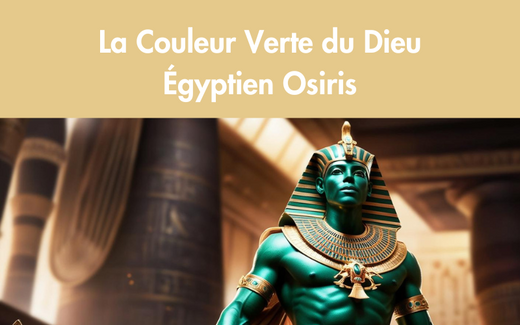
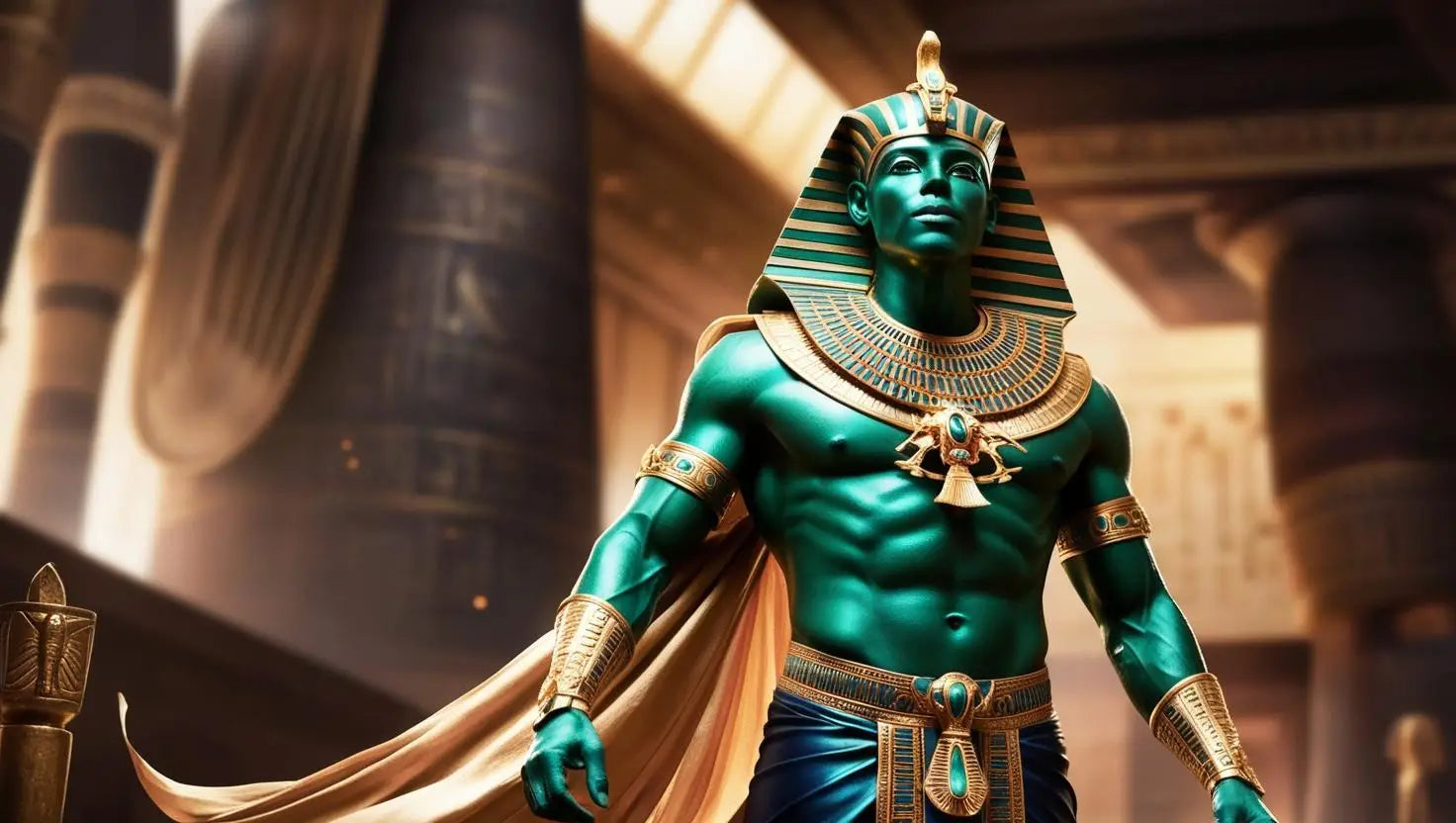
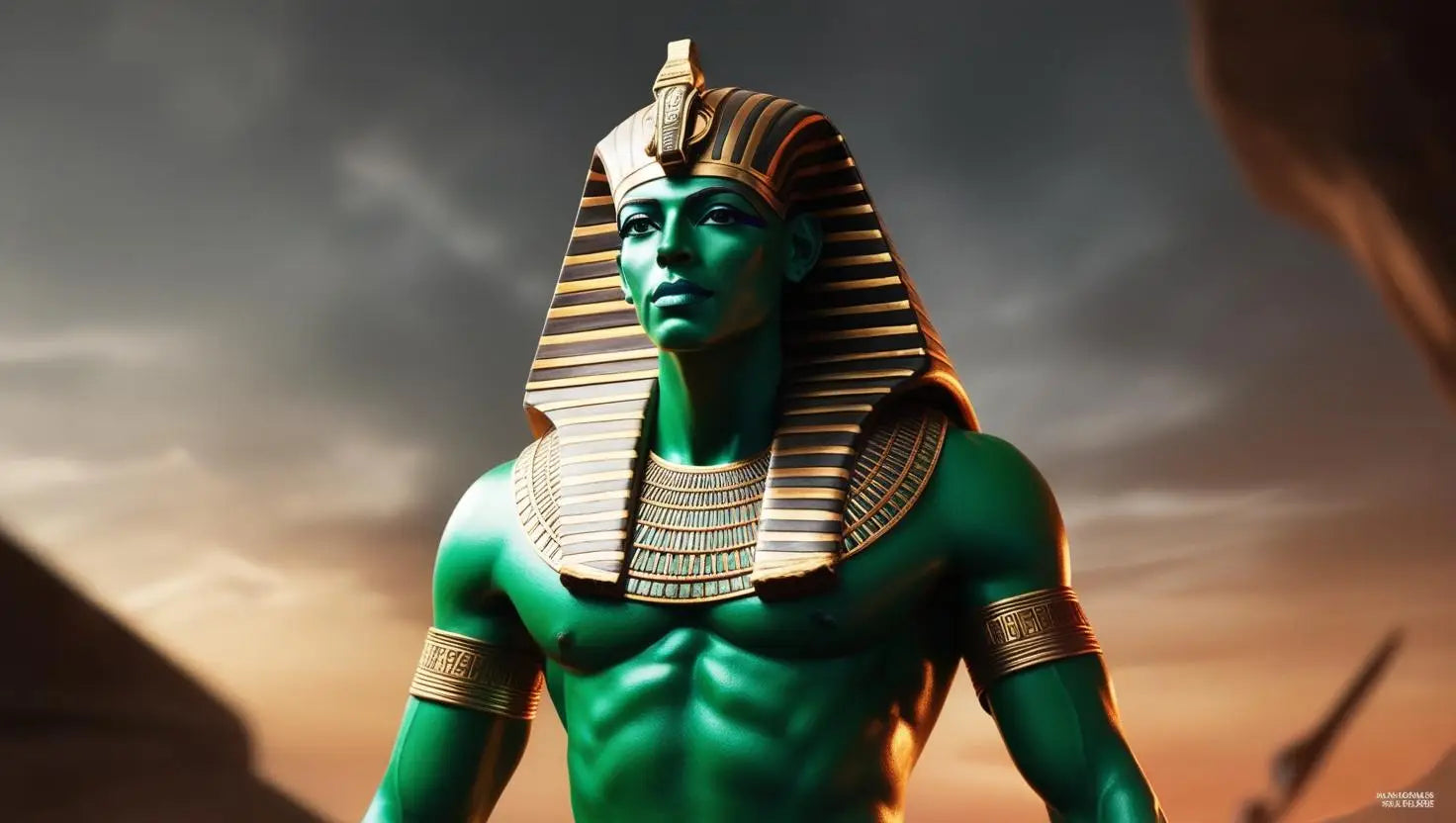
In artistic depictions, Osiris has a very characteristic appearance. His body is wrapped like that of a mummy, which recalls his connection to funerary rites. He wears the Atef crown and holds the symbols of royal power, the crook and the flail. But the most remarkable element remains the green color of his skin.
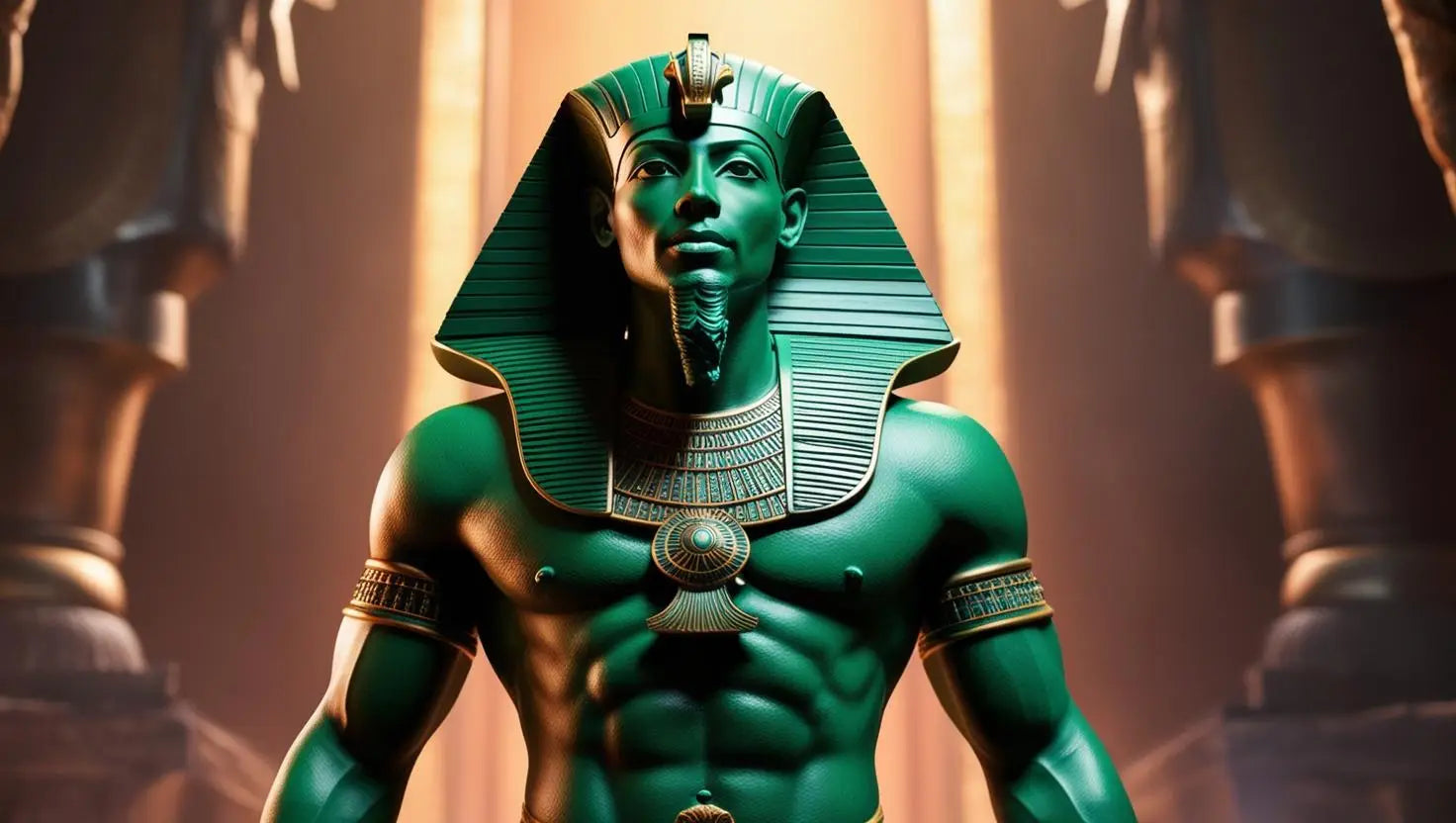
This shade is not a mere artistic choice. It symbolizes regeneration, growth, and the renewal of life. The Egyptians saw in Osiris a divine representation of natural cycles. Like the plants that are reborn after the flooding of the Nile, the god Osiris embodies the transformation and continuity of life.
Osiris, god of death and rebirth
In Egyptian religion, Osiris is not just the god of the dead. He is above all the symbol of rebirth and spiritual transformation. After his death, he became the ruler of the realm of the dead and the judge of souls. Every deceased person had to present themselves before him during the famous weighing of the heart, where the heart was compared to the feather of Ma'at.
This scene illustrates the Egyptian vision of the afterlife. Osiris ensures that righteous souls will be able to be reborn in the beyond. Thanks to him, death is not considered a definitive end, but rather a stage toward a new existence.

The myth of Osiris and the birth of an eternal god
The role of Isis in the rebirth of Osiris
Isis is one of the most important figures in this myth. She embodies fidelity, magic, and divine protection. After the death of Osiris, she embarks on a long journey to find the fragments of his body scattered by Seth. With her magical powers, she succeeds in reconstituting his body and bringing him back to life.
This episode symbolizes the power of renewal and transformation. Isis thus becomes the protector of the dead and the goddess associated with funerary rituals. The myth also emphasizes the idea that death can be followed by a spiritual rebirth.
The symbolism of green in ancient Egypt

The link between Osiris and the Nile
Osiris and the rebirth of nature
In certain religious ceremonies, priests performed rituals symbolizing the rebirth of Osiris. Figurines of the god were made with soil and seeds.
These figurines were buried and then watered to allow plants to grow. When the seeds sprouted, it represented the rebirth of the god and the continuity of life.
This ritual shows how closely religion and agriculture were linked in Egyptian culture.
Osiris in art and iconography
Depictions of Osiris appear in numerous temples, tombs, and papyri of ancient Egypt. Artists used very precise iconographic codes to represent deities and convey their symbolic attributes. In Egyptian religious art, every detail has a particular meaning, allowing one to immediately identify the role and nature of a god. Osiris occupies a central place in these depictions, particularly in funerary scenes and frescoes decorating tombs.
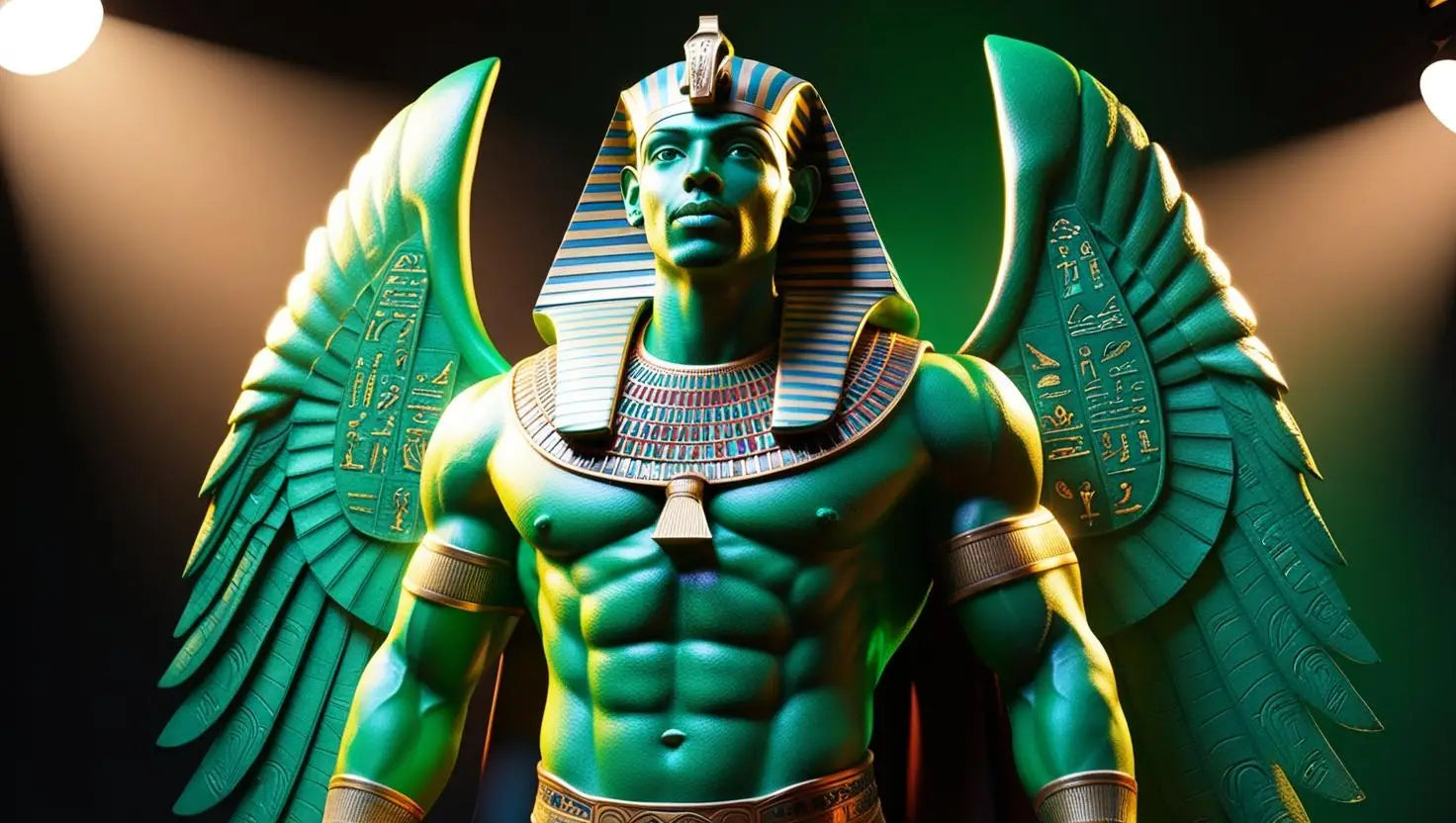
Osiris is generally represented in the form of a mummy, with his arms crossed on his chest. He wears the Atef crown and holds the symbols of royal power. But the most recognizable element remains the green color of his skin. This visual representation allows the faithful and the priests to instantly recognize the divinity and understand his role in the cosmic order.
This shade allows for the immediate identification of the god and recalls his divine nature. It also emphasizes his role in the cycle of life and death. In tombs, these images also had a protective function, as they symbolically guided the soul of the deceased toward the afterlife.
Egyptian artists used natural pigments to represent this color. These pigments often came from crushed minerals and were applied with precision in order to preserve the sacred symbolism associated with the god Osiris.
Green pigments in Egyptian art

Funerary objects related to Osiris
The Egyptians placed great importance on funerary rites. They believed that death was merely a transition to another existence. To ensure this transformation, tombs contained numerous sacred objects related to the god Osiris.
These objects served to protect the soul of the deceased and help it navigate the trials of the afterlife. Amulets and jewelry were particularly important in this process.
Among the most frequent objects:
-
amulets representing Osiris
-
sacred scarabs
-
Ankh pendants
-
funerary figurines
These objects were often decorated with green stones or pigments.
The green color recalled the promise of rebirth and eternal life offered by Osiris.
Green stones in Egyptian jewelry
Certain green stones were particularly prized in Ancient Egypt for their strong symbolic value. They were often used in jewelry, amulets, and funerary objects intended to protect the deceased in the afterlife. The Egyptians believed these stones possessed spiritual power linked to the rebirth and regeneration of life.
Among the most well-known:
-
malachite
-
amazonite
-
turquoise
The legacy of Osiris in culture and spirituality
Religious festivals dedicated to Osiris
Festivals dedicated to Osiris were among the most important religious celebrations in Ancient Egypt. They commemorated the god's death and rebirth, a central event in Egyptian spirituality. These festivals allowed the faithful to symbolically relive the myth of Osiris and recall the eternal cycle of life and death.
These festivals included several rituals:
-
sacred processions
-
re-enactments of the Osiris myth
-
agricultural ceremonies
These celebrations symbolized the victory of life over death, the fertility of the land, and the rebirth of nature linked to the god Osiris.

FAQ on the Green Color of the Egyptian God Osiris
Why is Osiris represented in green?
Osiris is represented in green because this color symbolizes rebirth and fertility. In Egyptian culture, green is associated with vegetation and the regeneration of nature. Osiris's green skin therefore represents his power to give life and renew existence after death.
Is Osiris sometimes represented with another color?
Yes, Osiris is sometimes depicted with black skin. This color symbolizes the fertile soil deposited by the flooding of the Nile. Black, like green, represents rebirth and fertility.
What is the role of Osiris in the afterlife?
Osiris is the ruler of the kingdom of the dead. He presides over the judgment of souls and decides if the deceased can access eternal life.
Why is the Nile linked to Osiris?
The Nile is associated with Osiris because its flooding allows for the rebirth of nature. This cycle corresponds symbolically to the god's death and resurrection.
What symbols accompany Osiris in Egyptian art?
Osiris is often represented with the Atef crown, the scepter, and the flail. These symbols represent his royal power and divine nature.
Conclusion on the Green Color of the Egyptian God Osiris
The green color of the god Osiris is one of the most important symbols in Egyptian mythology. It represents fertility, rebirth, and the regeneration of nature. In a civilization closely linked to the Nile and agricultural cycles, this color evoked the vegetation that returns after the river's floods and the promise of a new life.
If Osiris is represented in green, it is therefore to illustrate his power of rebirth and his role in the eternal cycle of life and death. The god embodies the idea that death is not an end, but a transformation toward a new existence. This symbolism explains why he became the ruler of the kingdom of the dead and the guarantor of eternal life in Egyptian religion.
Through art, funerary rites, and religious beliefs, Osiris's green color recalls the importance of renewal in the culture of ancient Egypt. Still today, this representation continues to fascinate and remains a universal symbol of eternity and rebirth.