
Ancient Egypt continues to fascinate the world thanks to its exceptional archaeological discoveries. From monumental pyramids to intact royal tombs, every excavation reveals new secrets about this millenary civilization.
These discoveries allow for a better understanding of the religion, architecture, and daily life of the ancient Egyptians throughout history.
The discovery of the tomb of Tutankhamun
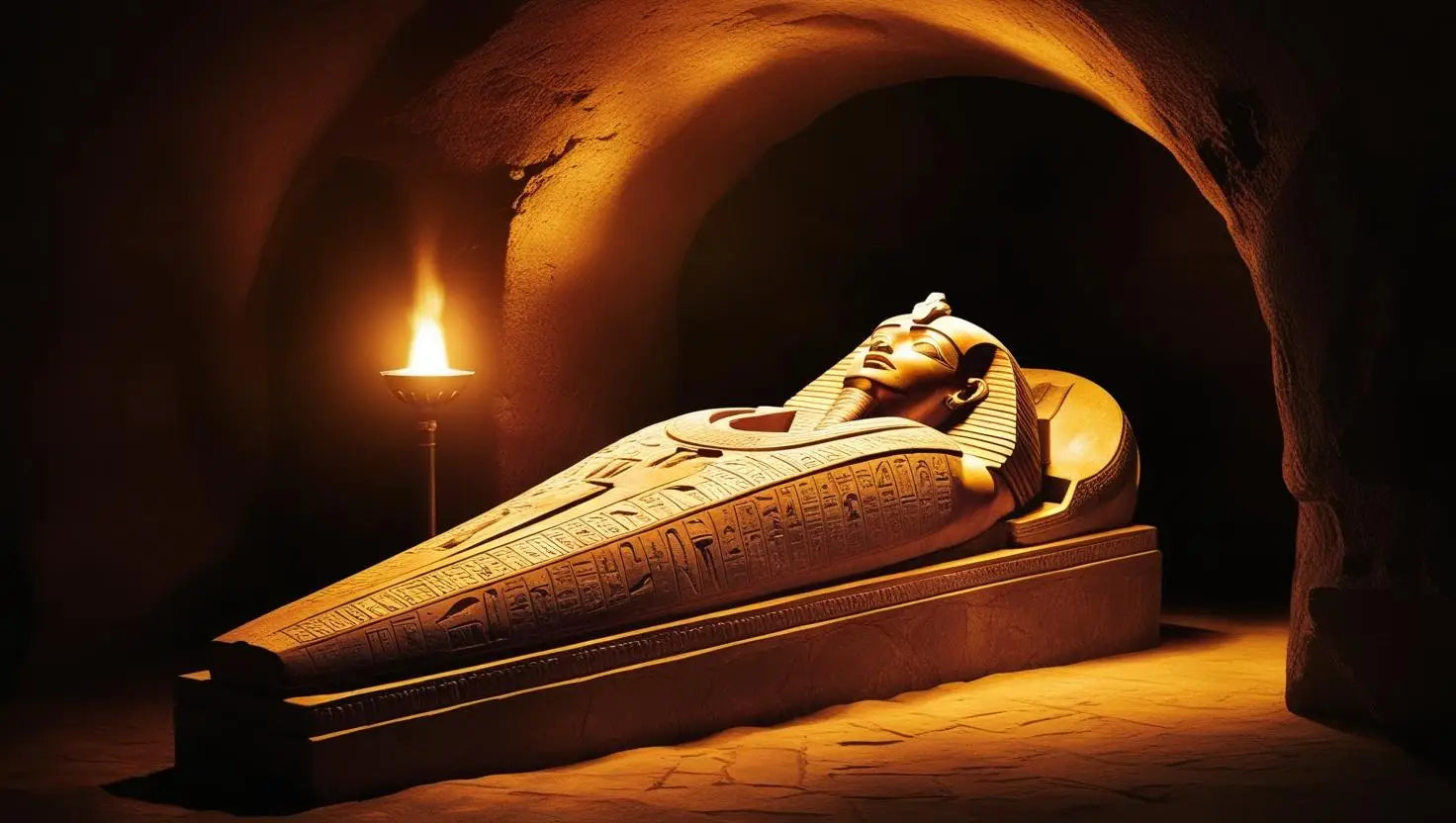
The discovery of the tomb of Tutankhamun in 1922 by archaeologist Howard Carter is one of the most famous discoveries in the history of archaeology. Located in the Valley of the Kings, this royal tomb had remained intact for more than three millennia. Unlike many tombs plundered in antiquity, this one still contained a large part of its original treasures. This exceptional discovery revealed the immense wealth of the Egyptian royal court and the importance placed on funeral rituals.
The young pharaoh's tomb included several chambers filled with precious objects. Archaeologists discovered furniture, chariots, statues, weapons, and gold jewelry. These items had been placed in the tomb to accompany the pharaoh into the afterlife according to the religious beliefs of the time. The most famous object remains the solid gold funeral mask inlaid with precious stones, which has become one of the best-known symbols of ancient Egypt.
This discovery profoundly transformed our understanding of Egyptian funeral practices and the lives of the pharaohs. It also sparked immense global interest in ancient Egypt and archaeology. Even today, the treasures of Tutankhamun are among the most impressive archaeological collections ever discovered.
Treasures found in the tomb
Tutankhamun's tomb contained more than five thousand funeral objects intended to accompany the pharaoh into the afterlife. These treasures represent one of the richest sets of artifacts ever discovered in a royal tomb. Archaeologists found chests filled with jewelry, statues of protective deities, and several ritual objects.
Among the most famous pieces is the solid gold funeral mask, which has become a symbol of ancient Egypt. Researchers also discovered royal chariots, carved funeral beds, and decorated thrones. These objects bear witness to the artistic refinement and funeral beliefs of this civilization.
The mystery of the pharaoh's curse
The discovery of Tutankhamun's tomb gave birth to the famous legend of the pharaoh's curse. After the opening of the tomb, several members of the expedition allegedly died under mysterious circumstances. These events fueled the idea that a curse protected the royal burial site.
This story largely contributed to popularizing archaeology and strengthening the mystery surrounding ancient Egypt. Most historians, however, believe that these deaths were coincidences. Despite this, the legend of the curse continues to fascinate the general public.
The Pyramids of Giza
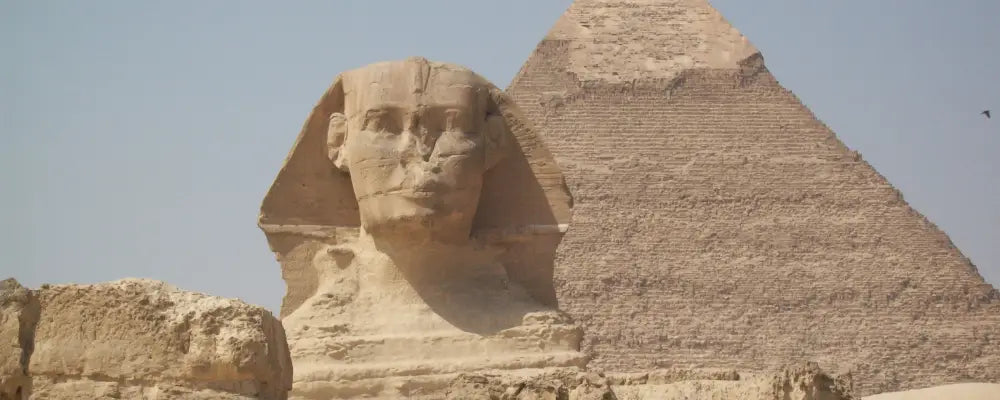
The Pyramids of Giza are among the most famous and impressive monuments in human history. Built more than 4,500 years ago, they testify to the ingenuity and expertise of ancient Egyptian architects. The largest pyramid at the site, that of the pharaoh Khufu (Cheops), originally reached approximately 146 meters in height. For millennia, it was the tallest man-made structure ever built.
These pyramids served primarily as tombs for the pharaohs and symbolized their ascension to the afterlife. Their construction required impressive organization involving thousands of workers, artisans, and engineers. The stone blocks used to build these monuments could weigh several tons, making their transport and assembly particularly remarkable. For a long time, it was believed that these monuments were built by slaves, but modern archaeological discoveries have shown that they were actually constructed by specialized and well-organized workers.
Recent excavations have also made it possible to discover workers' villages and papyri describing the organization of the construction sites. These documents offer a valuable glimpse into the functioning of the economy and administration in ancient Egypt. The pyramids remain one of the world's greatest archaeological and architectural mysteries.

The construction techniques of the pyramids
The construction of the pyramids represents one of the greatest mysteries in the history of architecture. The stone blocks used to build the Pyramid of Khufu could weigh several tons. Archaeologists have long tried to understand how these materials were transported and assembled with the technologies of the time.
Recent research suggests that the Egyptians used ramps, sledges, and various ingenious lifting systems. Papyri found near the Red Sea also describe the organization of stone transport by river. These elements show that the construction relied on complex logistics and a highly organized workforce.
Secret cavities discovered in the Pyramid of Khufu
Modern technologies have revealed new structures inside the Pyramid of Khufu. One of the most innovative methods used by scientists is muon tomography. This technique allows for the detection of hidden cavities in monuments without damaging them.
Thanks to this technology, researchers have identified a secret corridor about nine meters long. This discovery revives hypotheses about the existence of still-unknown chambers in the pyramid. Archaeologists hope that these spaces could provide new information about the construction or function of the monument.
The Temple of Abu Simbel
The Temple of Abu Simbel is one of the most spectacular monuments of ancient Egypt. Built during the reign of Pharaoh Ramesses II in the 13th century BC, this monumental temple was intended to assert the power of the sovereign and celebrate the protective gods of the kingdom. The entrance to the temple is dominated by four colossal statues representing Ramesses II seated on his throne. Each of these statues measures approximately twenty meters in height and symbolizes the divine authority of the pharaoh.
The interior of the temple is decorated with bas-reliefs depicting religious and military scenes. Among the most famous representations is the Battle of Kadesh, one of the major military campaigns of Ramesses II. These sculptures served to illustrate the victories of the pharaoh and to reinforce his image as a powerful leader and protector of the Egyptian people.
This temple is also famous for a unique architectural phenomenon. Twice a year, the sun's rays penetrate deep into the sanctuary and illuminate the statues of the gods. This phenomenon testifies to the advanced level of astronomical knowledge of the Egyptian architects and the remarkable precision of their architectural design.
The spectacular rescue of the temple
In the 1960s, the construction of the Aswan Dam threatened to swallow the Temple of Abu Simbel under the waters of Lake Nasser. To avoid this catastrophe, an international mission coordinated by UNESCO was set up.
Engineers launched a spectacular operation consisting of dismantling the temple block by block before rebuilding it on a higher site. This rescue operation took place between 1964 and 1968. The stone blocks were carefully numbered in order to reconstruct the monument exactly as it was.
This project remains one of the greatest successes of world heritage conservation today.
Archaeological discoveries in Saqqara
The Saqqara necropolis is one of the most important archaeological sites in Egypt. Located near the ancient capital Memphis, it served as a burial area for more than three thousand years. This vast archaeological complex spans several kilometers and brings together monuments dating from many periods of Egyptian history, from the Old Kingdom to the Roman era.
The site includes tombs of high officials, royal funerary complexes, and several temples dedicated to various deities. Archaeologists have also discovered underground galleries, wall frescoes, and hieroglyphic inscriptions that provide a better understanding of the religious and administrative life of the era. These elements offer a valuable glimpse into beliefs concerning the afterlife and the central place of death in Egyptian culture.
Saqqara is also famous for the Step Pyramid of Djoser, designed by the architect Imhotep. This monument marks a major milestone in the evolution of funerary architecture. Research conducted at this site continues to reveal new structures and important information about the organization of society and the religious traditions of ancient Egypt.
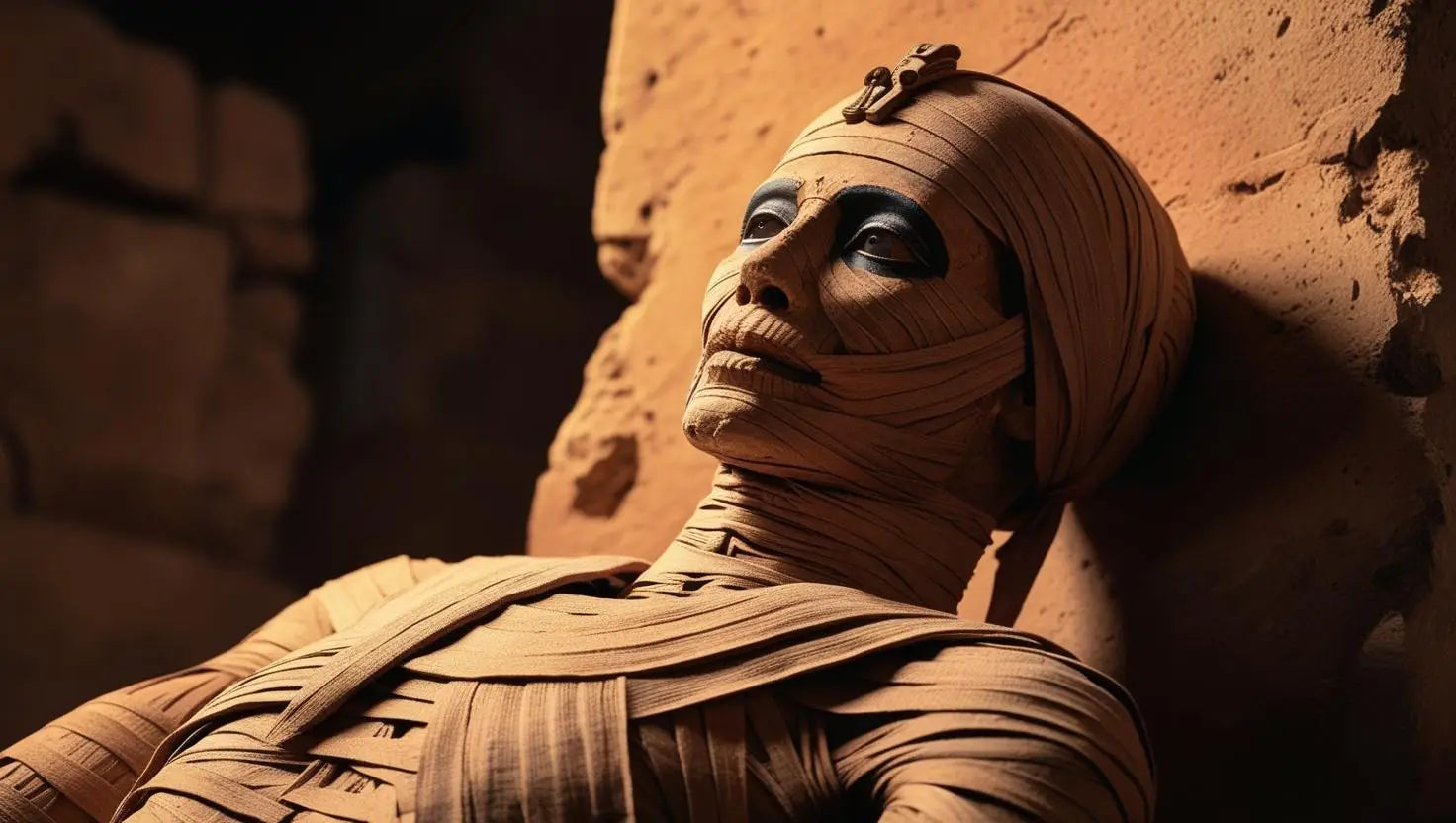
The mummy of the priest Pontifex
Among the notable discoveries at Saqqara is the mummy of a priest named Pontifex. Over two thousand years old, it is remarkably well preserved. Scientific analyses have helped to learn more about the embalming techniques used at that time.
The body was wrapped in silk bandages, a sign of high social status. Archaeologists also discovered a golden headdress as well as precious resins and oils used to preserve the body.
This discovery highlights the importance of priests in ancient Egyptian society and provides valuable information on the funerary rites of the period.

FAQ on Egypt's Most Impressive Archaeological Discoveries
Archaeological discoveries in Egypt have long generated immense public interest. The monumental pyramids, majestic temples, and royal tombs continue to fascinate historians, scientists, and history enthusiasts. Each new excavation reveals valuable information about the Egyptian civilization and the traditions that shaped this culture for millennia. These discoveries allow for a better understanding of the religion, social organization, and architectural techniques developed by the ancient Egyptians.
With advances in technology, archaeologists today have increasingly powerful tools to explore ancient sites. Scanners, scientific analyses, and satellite imagery make it possible to identify hidden structures and study monuments without damaging them. These modern methods pave the way for new research and potentially even more spectacular discoveries. Egypt thus remains one of the most important fields for global archaeology.
In this FAQ section on Egypt's Most Impressive Archaeological Discoveries, we answer the questions most frequently asked by internet users. These queries concern major discoveries, as-yet unsolved mysteries, and the methods used by archaeologists to explore this ancient civilization.
What is the greatest archaeological discovery in Egypt?
The most famous discovery remains the tomb of Tutankhamun, found in 1922 in the Valley of the Kings. This burial site was nearly intact and contained thousands of precious objects. It profoundly transformed the understanding of Egyptian funerary rites.
Do the pyramids still hide secrets?
Yes, the pyramids of Giza continue to be studied by scientists. Modern technologies allow for the detection of unknown cavities and structures. Researchers believe that there could still be undiscovered chambers.
Why does Egypt possess so many archaeological sites?
Egypt has an extremely long history that spans several millennia. Monuments, temples, and tombs have often been preserved by the desert climate. This explains the exceptional richness of its archaeological heritage.
Can we still discover pharaohs' tombs?
Yes, many areas remain unexplored. Archaeologists continue to conduct excavations in various regions of Egypt. It is therefore possible that new royal tombs will be discovered in the future.
How do archaeologists find new sites?
Researchers today use satellites, 3D scanners, and geophysical techniques. These technologies allow for the identification of structures buried under the sand without immediately carrying out excavations.
Where are most of the pharaohs' tombs located in Egypt?
The majority of royal tombs have been discovered in the Valley of the Kings, near Luxor. This necropolis housed the burial sites of New Kingdom pharaohs. The tombs there were carved into the rock to better protect the funerary treasures.
Can we visit the main archaeological sites of Egypt?
Yes, several major sites are open to the public, such as the Giza pyramids, the Valley of the Kings, the Karnak temple, or Abu Simbel. These places attract millions of visitors every year who come to discover the history of ancient Egypt.
Why did Egyptian tombs contain so many objects?
The Egyptians believed in life after death. Funerary objects were intended to accompany the deceased into the afterlife. One often found jewelry, statues, amulets, and everyday items there.
What modern technologies are used in Egyptian archaeology?
Archaeologists today use 3D scanners, satellites, geophysical radars, and muon tomography. These technologies allow for the detection of hidden structures without damaging the monuments.
Is Egypt still discovering new archaeological sites?
Yes, new discoveries are announced almost every year. Excavations regularly reveal tombs, statues, or temples buried under the sand, showing that ancient Egypt still holds many mysteries.
Conclusion on Egypt's Most Impressive Archaeological Discoveries
The archaeological discoveries made in Egypt over the last two centuries have profoundly transformed our understanding of human history. From the treasures of Tutankhamun's tomb to the mysteries of the Giza pyramids, each excavation reveals new information about this fascinating civilization. Ancient Egypt stands out for the richness of its monuments, the complexity of its religion, and the extraordinary level of craftsmanship of its artisans.
Technological advances today play an essential role in archaeological research. Scanners, satellites, and imaging techniques make it possible to explore hidden structures without damaging the monuments. Thanks to these tools, archaeologists can analyze pyramids, temples, and tombs with a precision never achieved before.
Despite more than two centuries of intensive research, Egypt continues to reveal new secrets. Many areas remain unexplored and could contain major discoveries. Each new excavation contributes to enriching our knowledge of this ancient civilization. Egypt's most impressive archaeological discoveries thus serve as a reminder that the past still has many mysteries left to unveil.