
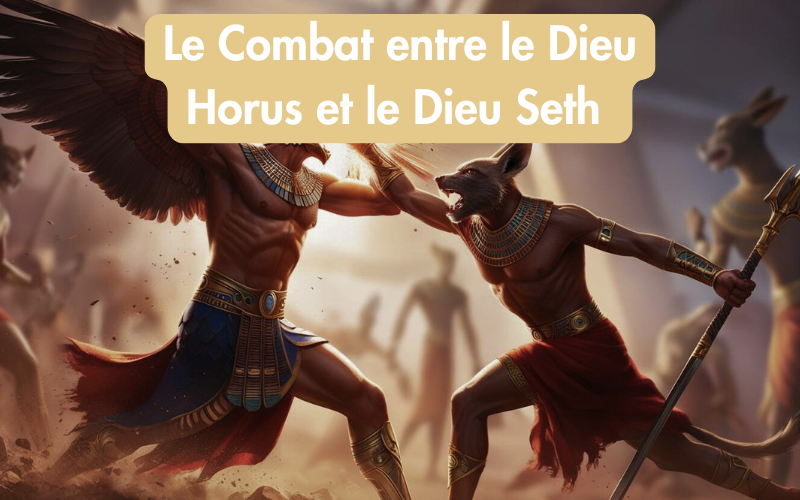
The battle between Horus and Seth is one of the most iconic myths in Egyptian mythology. This divine rivalry recounts the struggle for the throne of Egypt following the death of Osiris. It symbolizes the eternal clash between order, represented by Horus, and chaos, embodied by Seth.
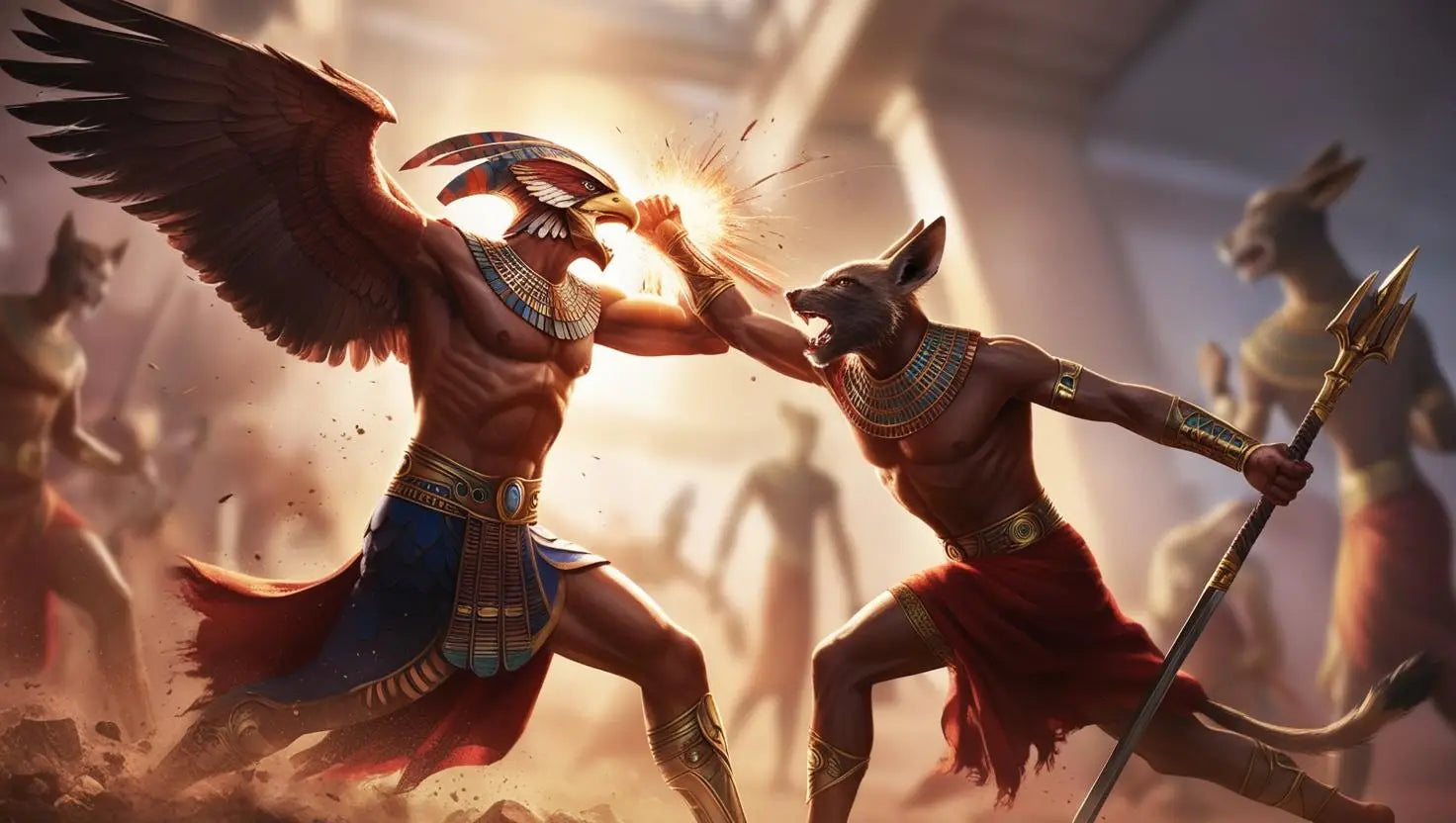
The origin of the conflict between Horus and Seth
The conflict between Horus and Seth originates from one of the most tragic events in Egyptian mythology: the murder of the god Osiris. Osiris was the legitimate king of Egypt and a deity associated with fertility, rebirth, and the underworld. His reign symbolized the harmony and prosperity of the kingdom. However, his brother Seth, jealous of his power and influence, decided to seize the throne by force.
According to mythological accounts, Seth organized a plot to assassinate Osiris. After succeeding in his plan, he cut his brother's body into several pieces and scattered them across Egypt. This act was intended to prevent any resurrection and to ensure his own power over the kingdom.
The goddess Isis, wife of Osiris, then began a quest to find the fragments of her husband's body. Through her magic and determination, she succeeded in reconstituting Osiris and bringing him back to life temporarily. From this union Horus was born, destined to avenge his father and restore the lost order.
The birth of Horus and his role in the vengeance
The birth of Horus marks the beginning of the fight against Seth. After the death of Osiris, the goddess Isis knew that her son would be threatened by Seth, who feared the heir’s vengeance. She therefore decided to raise him in secret in the marshes of the Nile Delta.
Protected by Isis's magic and several allied deities, Horus grew up sheltered from danger. As an adult, he realized he had to confront Seth in order to reclaim the throne of Egypt and restore the divine order.
The tribunal of the gods and the question of the throne
When Horus became an adult, he decided to reclaim the throne of Egypt that had once belonged to his father Osiris. However, Seth refused to give up the power he had acquired. This rivalry became so significant that the other gods decided to intervene in order to avoid a destructive conflict.
A divine tribunal was then organized to determine who should rule Egypt. This council was composed of several great deities, including the sun god Ra, Thoth, and other important members of the Egyptian pantheon. Each god had to listen to the arguments of both Horus and Seth before reaching a decision.
Horus asserted that he was the legitimate heir to the throne as the son of Osiris. Seth, for his part, defended his strength and experience as the current ruler. The debate was long and complex, as some gods believed that Seth possessed the necessary power to protect Egypt.
Finally, the gods decided that the best solution was to organize several trials to determine which of the two rivals truly deserved to rule.
The role of the god Ra in the divine decision
The god Ra played a central role in the conflict between Horus and Seth. As a solar deity and an authority figure in the Egyptian pantheon, he had to ensure the balance of the world and the stability of the kingdom.
However, Ra hesitated for a long time before making a final decision. Seth was a powerful god and sometimes useful for protecting the solar barque against the forces of chaos. Some gods therefore thought he should retain an important place.
To avoid an unfair decision, Ra proposed that both gods participate in several trials. These challenges would determine which of them possessed the wisdom, strength, and legitimacy necessary to rule Egypt.

The great trials of the battle between Horus and Seth
The battle between Horus and Seth was not limited to a simple fight. Myths tell of a series of trials intended to prove the superiority of one of the two gods. These challenges were often observed by the other deities, who served as judges and guarantors of divine justice. The goal was to determine who truly possessed the qualities needed to rule Egypt and maintain the balance of the world.
Some trials were physical, while others required intelligence, strategy, and cunning. For example, both gods were transformed into hippopotamuses for a fight underwater. This trial was meant to demonstrate their endurance and power, but also their ability to withstand adversity over time.
Another challenge involved building a boat made of stone capable of floating on the Nile. Seth tried to cheat by crafting a hollow boat covered with stone, thinking he could deceive the divine judges. Horus, being more cunning, managed to thwart this stratagem and proved his ability to show wisdom in the face of manipulation.
These trials show that the rivalry between Horus and Seth was not just a matter of brute force. It also represented a duel of intelligence, patience, and divine legitimacy. Each trial allowed the gods to measure the qualities necessary to become a sovereign and maintain order in the universe.
The most famous mythological clashes
Several episodes of the fight between Horus and Seth have become famous in Egyptian mythology. These clashes symbolize the struggle between two opposing forces.
Among the most well-known episodes are:
-
the duel in the form of hippopotamuses in the Nile
-
the challenge of the stone boats
-
the ruses and traps between the two gods
-
the interventions of Isis to help Horus
These fights do not only represent a family rivalry. They also symbolize the permanent struggle between order and chaos in the worldview of the ancient Egyptians.
The wounding of the Eye of Horus and its symbolism
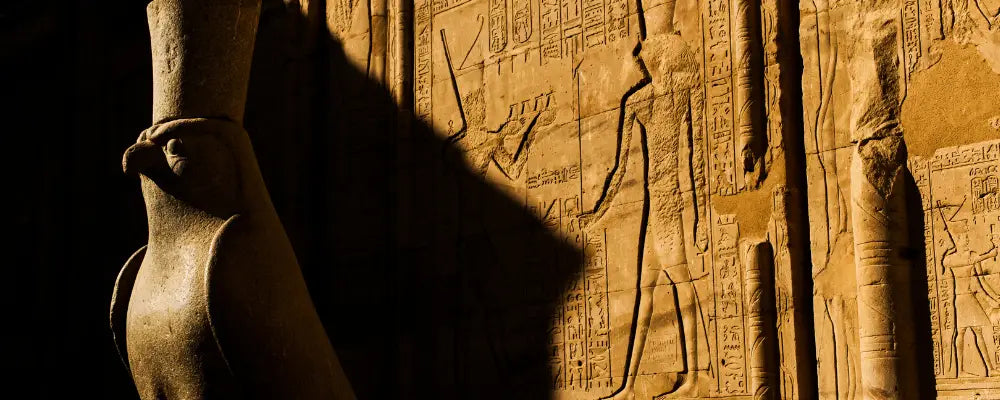
One of the most famous episodes of the fight between Horus and Seth concerns the loss of the Eye of Horus. During a particularly violent clash between the two gods, Seth manages to rip out his rival’s left eye. This injury deeply marked Egyptian mythology and became a key moment in the narrative. It symbolizes the violence of the conflict between the two deities and the consequences of the chaos that threatens the world's balance.
After this event, the god Thoth intervened to restore Horus's eye using his magic and great wisdom. According to several mythological accounts, he succeeded in reconstituting the eye by repairing the fragments that had been broken during the fight. The repaired eye was then returned to Horus, who chose to offer it symbolically to his father Osiris. This gesture represented the restoration of Osiris's strength and the gradual return of divine order.
The Eye of Horus, called Wadjet, thus became a major symbol of protection, healing, and regeneration. The ancient Egyptians used this symbol on amulets, jewelry, and numerous funerary objects to protect the living and the dead against evil forces. It also represented the balance regained after the conflict between the two gods.
Why the Eye of Horus became a protective symbol
The Eye of Horus became a major symbol in Egyptian culture due to its strong spiritual significance. It represents healing after a conflict and the restoration of cosmic balance.
In Egyptian religion, this symbol was associated with divine protection, health, and the ability to overcome injury. Priests also used this symbol in certain rituals.
Egyptians believed that wearing the Eye of Horus protected against disease, curses, and evil forces.

The final victory of Horus
After many trials and confrontations, the gods eventually recognized Horus's legitimacy. The divine tribunal decided that the son of Osiris should become the new king of Egypt. This decision ended the long conflict between Horus and Seth, which had long threatened the stability of the kingdom and the harmony of the divine world. By granting the throne to Horus, the gods confirmed the principle that power should return to the legitimate heir.
The victory of Horus symbolizes the triumph of order, justice, and stability over the forces of chaos. In Egyptian thought, this event marks the restoration of Maat, the principle of balance that ensures the proper functioning of the universe. Horus then becomes the protector of the kingdom and the guarantor of the continuity of kingship.
In some versions of the myth, Seth is exiled to the desert, a territory associated with storms, drought, and wild regions. This place corresponds to his unpredictable and dangerous nature. However, Seth does not disappear entirely from Egyptian mythology.
In some accounts, he continues to play a role in protecting the sun god Ra against the serpent Apophis. This shows that even the forces of chaos can contribute to maintaining the balance of the world when they are controlled.
The impact of the myth on the pharaohs
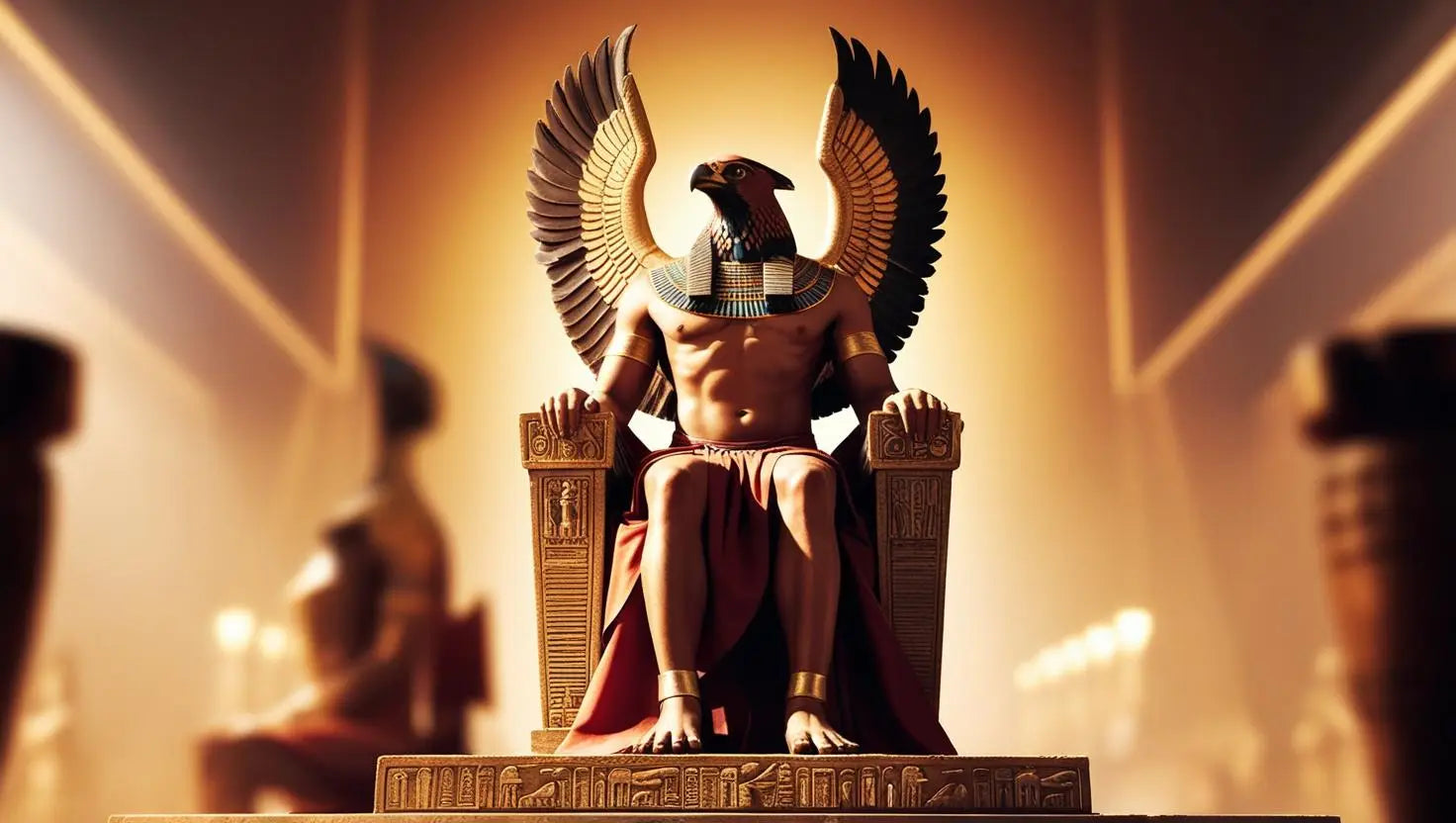
The myth of the battle between Horus and Seth deeply influenced the concept of royal power in Egypt. The pharaohs considered themselves the representatives of Horus on Earth.
This belief meant that every king had to maintain order and justice in the kingdom. The pharaoh was responsible for protecting Maat, the principle of cosmic balance in Egyptian religion.
The enemies of the kingdom were often associated with the forces of Seth, symbolizing chaos and destruction. Thus, royal power became a sacred mission intended to preserve the harmony of the world.
The religious significance of the battle between Horus and Seth
The battle between Horus and Seth possesses a deep significance in Egyptian religion. This myth is not limited to a simple rivalry between two deities. It represents the constant struggle between two fundamental forces of the universe: order and chaos. Through this narrative, the ancient Egyptians explained how the balance of the world could be threatened and then restored through the action of the gods.
Horus embodies Maat, a central concept in Egyptian thought. Maat represents the balance, justice, and harmony that allow the world to function correctly. It also symbolizes the truth and stability necessary for society. Seth, for his part, represents the unpredictable forces of the desert, storms, and destruction.
For the ancient Egyptians, the universe had to be constantly protected against disorder. The role of the gods, priests, and the pharaoh was therefore to maintain this balance through rituals, laws, and religious traditions. The myth of the battle between Horus and Seth illustrates this worldview and reminds us that order must always be defended against chaos.
A symbolic struggle between order and chaos
The rivalry between Horus and Seth is often interpreted as a metaphor for how the world functions. In Egyptian thought, chaos can never be totally eliminated, but it must be mastered to preserve balance.
The myth shows that even after Horus's victory, Seth continues to exist. This idea reflects the belief that the harmony of the world depends on the coexistence of opposing forces.
The ancient Egyptians therefore saw this story as a spiritual teaching reminding us that order, justice, and wisdom must be protected against destructive forces.

FAQ on the Battle between the God Horus and the God Seth
The battle between Horus and Seth is one of the most famous narratives in Egyptian mythology. This story recounts the rivalry between the son of Osiris, the legitimate heir to the throne of Egypt, and Seth, the god associated with chaos, storms, and desert regions. Through this myth, the ancient Egyptians sought to explain the origin of certain religious symbols, but also how order had to be maintained in the universe.
This story is not limited to a simple battle between two deities. It illustrates a symbolic opposition between two fundamental forces: order represented by Horus and chaos embodied by Seth. This rivalry allowed the Egyptians to understand the fragile balance of the world and the importance of preserving harmony.
Many questions often arise when discovering this mythological story. Readers seek, in particular, to understand the origins of the conflict, the role of the gods in this rivalry, or the meaning of certain famous symbols.
The following FAQ answers the most frequent questions about the battle between the god Horus and the god Seth and its place in Egyptian mythology.
Why does Horus fight Seth?
Horus fights Seth to avenge the death of his father Osiris and to recover the throne of Egypt. Seth had assassinated Osiris in order to seize power. As the legitimate son, Horus had to restore order and justice in the kingdom.
Who wins the battle between Horus and Seth?
In the majority of mythological narratives, Horus eventually wins the victory. The gods recognize his legitimacy and grant him the throne of Egypt.
What does Seth represent in Egyptian mythology?
Seth is the god of the desert, storms, and chaos. He represents the wild and unpredictable forces of nature.
What does the Eye of Horus symbolize?
The Eye of Horus symbolizes protection, healing, and the restoration of order after a conflict.
Why is this myth important for the pharaohs?
The pharaohs considered themselves the incarnation of Horus on Earth, which legitimized their power.
Conclusion on the Battle between the God Horus and the God Seth
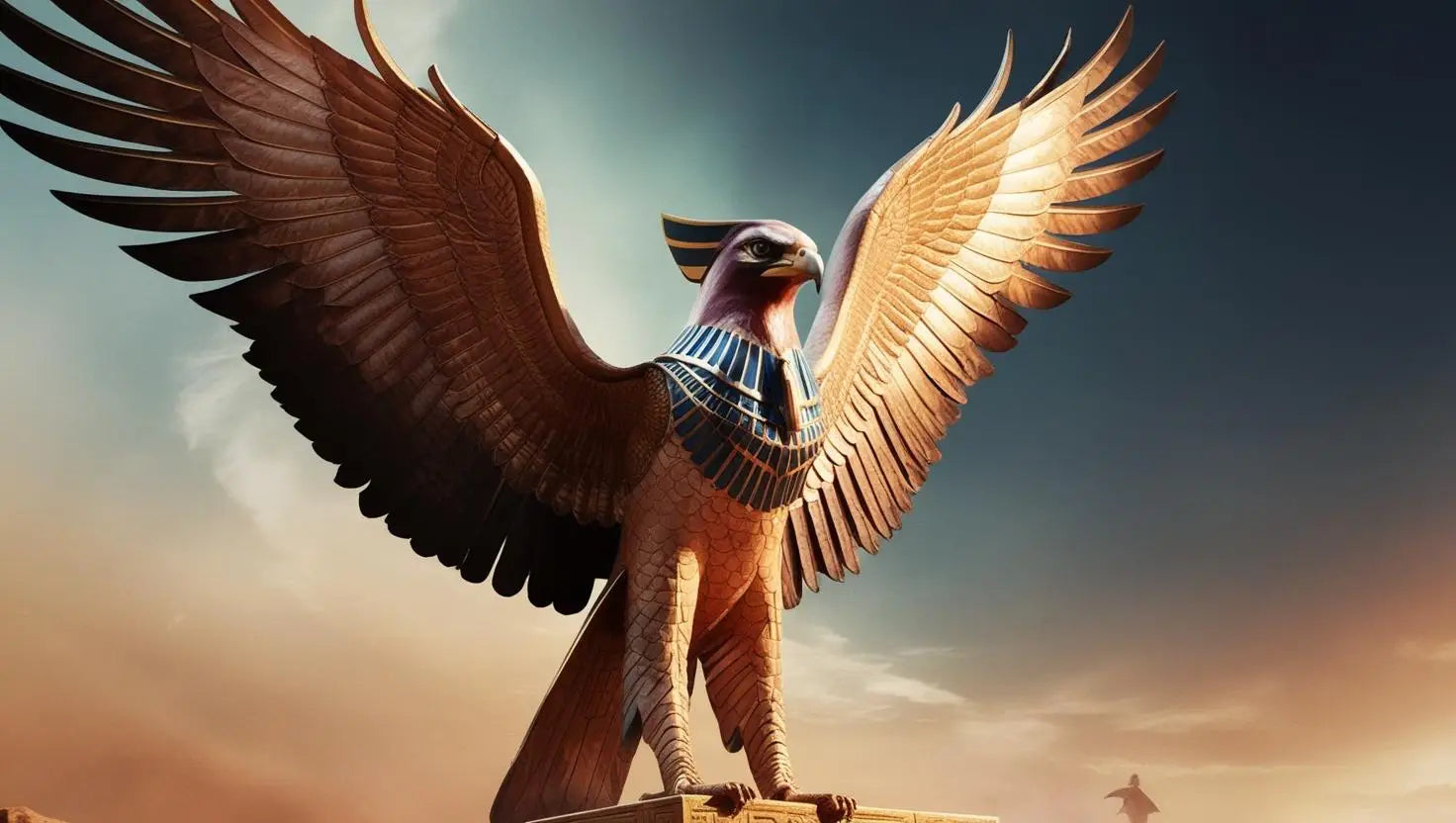
The battle between the god Horus and the god Seth is one of the most striking narratives in Egyptian mythology. Through this rivalry between two powerful deities, the ancient Egyptians explained the fragile balance between order and chaos in the universe. Horus represents justice, legitimacy, and stability, while Seth embodies unpredictable and destructive forces.
This myth goes beyond a simple clash between two gods. It reflects the religious and political vision of ancient Egypt, where the stability of the kingdom depended on the respect of Maat, the fundamental principle of harmony and balance. Horus's victory thus symbolizes the return of order and the legitimacy of royal power.
This story also influenced how pharaohs were perceived. Each sovereign was considered an incarnation of Horus on Earth, charged with maintaining the balance of the world and protecting the kingdom.
Even today, the myth of the battle between Horus and Seth fascinates enthusiasts of ancient Egypt. It bears witness to the richness of this civilization and the depth of its beliefs, where every mythological narrative served to explain the forces that govern the world.