
Dreams as divine messages in Egyptian religion
In ancient Egyptian civilization, dreams were considered a form of direct communication between humans and the gods. The Egyptians believed that during sleep, the soul could leave the body and come into contact with the divine realm. This spiritual concept explained why nocturnal visions were often interpreted as sacred messages. Dreams could announce important events, warn of danger, or provide advice to those who received them.
Religious texts and inscriptions found in temples show that deities could appear in dreams to guide individuals. Pharaohs, priests, and members of the elite took these visions very seriously. Some dreams were considered blessings, announcing prosperity and divine protection. Others were perceived as warnings, signaling crises or upheaval to come.
This belief reinforced the idea that the gods participated actively in human life. Dreams thus became a means of interpreting the divine will and guiding important decisions in Egyptian society.
Sacred symbols present in dreams
The Egyptians placed great importance on the symbols present in dreams. Each element appearing in a vision could possess a precise meaning linked to religious beliefs. Animals, objects, or landscapes seen during sleep were analyzed to understand the message conveyed by the gods. Priests studied these images to reveal their spiritual significance.
For example, dreaming of water could symbolize fertility and abundance, while certain animals represented divine protection or danger. The colors, gestures, or actions observed in dreams could also influence their interpretation. This symbolic analysis shows that dreams were considered a sacred language requiring specific understanding.
The link between sleep and the divine world
For the Egyptians, sleep was a moment when the spirit could make contact with a spiritual dimension. They believed that the soul became freer during the night and could access the world of the deities. This belief explained why dreams were interpreted as revelations or divine messages.
Sleep was therefore perceived as a particular state where the boundary between the human world and the sacred world became thinner. This religious vision of the dream deeply influenced spiritual practices and rituals in ancient Egypt.

Priests and the interpretation of dreams
In Egyptian society, priests played an essential role in the interpretation of dreams and prophecies. They were considered specialists capable of understanding the messages sent by the gods. Through their knowledge of religious texts and sacred symbols, they could analyze the nocturnal visions reported by the faithful.
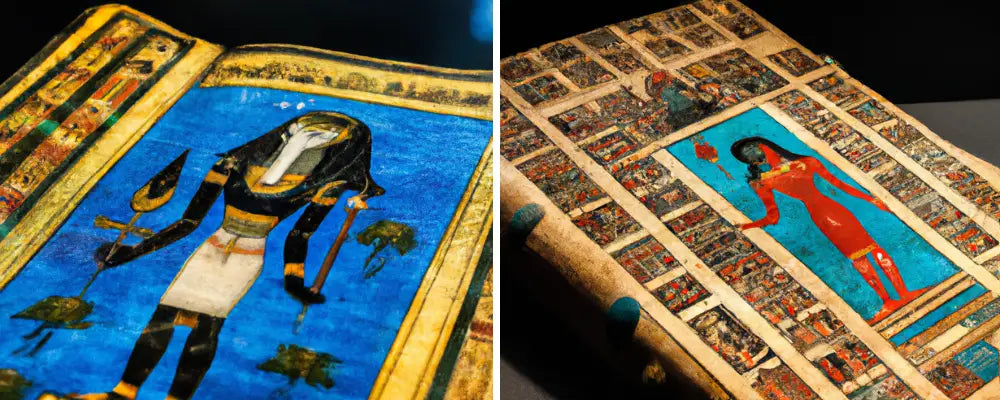
Temples possessed documents called "dream books," which listed different types of visions and their meanings. These texts served as guides to understanding the symbols present in dreams. Priests used this knowledge to determine whether a dream announced a favorable event or a warning.
Dream interpretation was not limited to simple symbol analysis. Priests also took into account the dreamer's context, social status, and the circumstances under which the dream occurred. This approach allowed for a more precise and tailored interpretation.
Thanks to their expertise, priests played an important role in Egyptian society. Their ability to interpret divine messages reinforced their authority and influence in religious and political affairs.
Dream books in the temples
Egyptian temples kept texts called dream books, which served as references for interpreting nocturnal visions. These works listed numerous symbols and explained their possible meanings. They were used by priests to analyze the dreams reported by the faithful.
These books often contained lists of oneiric events accompanied by their interpretations. For instance, some dreams were considered favorable and announced prosperity, while others were seen as warnings. These texts show that dream interpretation was based on a structured and organized system.
The religious authority of interpreters
Dream interpreters held a special status in Egyptian society. Their role was to convey the will of the gods through the analysis of nocturnal visions. This function conferred great influence upon them within the community.
Priests could advise leaders, guide religious decisions, and reassure the faithful by interpreting their dreams. Their symbolic and spiritual knowledge was considered essential for maintaining the balance between humans and the deities.

Sleep temples and dream incubation
In ancient Egypt, certain religious practices allowed the faithful to voluntarily seek prophetic dreams. This tradition was called dream incubation. People would go to specific temples to spend the night in the hope of receiving a vision sent by the gods.
Sleep temples were considered sacred places where communication with the divine realm was facilitated. The faithful who went there often sought answers to personal problems, spiritual guidance, or physical healing. Before sleeping, they performed purification rituals and made offerings to the deities to show their respect and devotion.
The temple of Serapis at Memphis was one of the most famous sanctuaries for this practice. Visitors believed that the divine presence in these places increased the chances of receiving a revelation during sleep. The visions obtained in these temples were then recounted to the priests, who provided an interpretation to understand the spiritual message.
This practice shows how deeply integrated dreams were into the religious life of ancient Egypt. It also testifies to the Egyptians' trust in the ability of the gods to guide humans through signs appearing during sleep.
Dream preparation rituals
Before participating in dream incubation, the faithful followed several rituals intended to purify their mind and body. These practices aimed to prepare the person to receive a divine vision. Priests believed that spiritual purity encouraged the appearance of significant dreams.
Among the most common rituals were ablutions, prayers, and offerings. Participants might also observe a period of silence or meditation before sleeping in the temple. These practices reinforced the sacred dimension of the experience and the connection with the deities.
Visions received in sanctuaries
Dreams obtained in temples were often interpreted as prophetic visions. The faithful recounted their experiences to the priests, who analyzed the symbols present in the dream. These visions could announce healing, a change in personal life, or an important event.
Some visions were considered direct instructions given by the gods. In such cases, priests could advise specific actions to be taken. This practice reinforced the reputation of the temples as places of divine revelation.

Prophecies and the power of the pharaohs
In ancient Egypt, prophecies played an important role in the legitimacy of royal power. Pharaohs were considered representatives of the gods on Earth. Dreams and prophetic visions could therefore reinforce their authority and divine status.
Some accounts relate that rulers received dreams announcing their destiny or divine mission. These stories helped justify their accession to the throne and convince the population of their legitimacy. Prophecies thus became a symbolic tool for maintaining political order.
Rulers could also consult oracles before making important decisions. Dreams and divine signs were interpreted to determine whether an action should be undertaken. This could concern military campaigns, diplomatic alliances, or construction projects.
This relationship between prophecy and power shows that religion held a central place in the governance of ancient Egypt. Visions and dreams served not only to guide individuals but also to strengthen the authority of the pharaoh.
Prophetic accounts of rulers
Several ancient texts mention prophecies announcing the arrival of a pharaoh destined to restore order and prosperity. These accounts were sometimes used to reinforce the legitimacy of a new ruler. They served to show that his power was supported by the gods.
These stories could be disseminated in temples or engraved in inscriptions. They contributed to creating a sacred image of the pharaoh and reinforcing the idea that he was chosen by the deities.
The influence of dreams on political decisions
Dreams could also influence certain political decisions in ancient Egypt. Rulers placed importance on visions interpreted by the priests. If a dream was considered a favorable sign, it could encourage a particular action.
In some cases, dreams could even be used to justify decisions before the population. This reinforced the sacred dimension of power and the relationship between the pharaoh and the gods.
The legacy of dreams and prophecies in world culture
Dreams in monotheistic religions
Dreams also play a role in several monotheistic religions. In certain religious accounts, nocturnal visions are presented as divine messages intended to guide believers.
In the biblical tradition, for example, Joseph interprets dreams and Daniel explains prophetic visions. These stories show that the belief in the spiritual significance of dreams has transcended eras and cultures.
Dreams in modern psychology

FAQ on the Role of Dreams and Prophecies in Egyptian Culture
In ancient Egypt, dreams and prophecies held an essential place in the understanding of the world and in the relationship between humans and the gods. Egyptians believed that nocturnal visions could convey divine messages, announce future events, or offer spiritual guidance. These beliefs were an integral part of religion and influenced how individuals interpreted the signs and symbols present in their daily lives.
Over the centuries, these practices have sparked interest among historians, archaeologists, and researchers studying the spirituality of this fascinating civilization. Ancient texts, temple inscriptions, and artistic representations show how deeply prophecies and dreams were linked to religious practices, rituals, and sometimes even political decisions.
This FAQ gathers the most frequently asked questions about the role of dreams and prophecies in Egyptian culture. It aims to explain, in a clear and accessible way, the beliefs, practices, and importance of these visions in the society of that time.
Why were dreams important in ancient Egypt?
Dreams were considered messages sent by the gods. Egyptians believed they could announce the future, guide important decisions, or warn of danger.
Who interpreted dreams in ancient Egypt?
Priests were in charge of interpreting dreams. They used specialized texts and their knowledge of religious symbols to analyze the visions.
What is a sleep temple?
A sleep temple was a sanctuary where the faithful would sleep in order to receive a divine vision. This practice was known as dream incubation.
Did pharaohs believe in prophetic dreams?
Yes, pharaohs placed great importance on dreams and prophecies. These visions could influence their political and religious decisions.
Could dreams influence politics?
Yes, certain prophecies and visions were used to justify important decisions or to reinforce the legitimacy of royal power.
Did Egyptian beliefs influence other cultures?
Yes, traditions linked to dreams influenced Greek and Roman mythology as well as certain monotheistic religions.
Do dreams still have importance today?
Today, dreams are studied by psychology and continue to inspire culture, literature, and spiritual traditions.
Conclusion on the Role of Dreams and Prophecies in Egyptian Culture
In ancient Egyptian civilization, dreams and prophecies held an essential place in the understanding of the world and the will of the gods. Nocturnal visions were interpreted as sacred messages capable of guiding individual and collective decisions. Priests, temples, and religious texts contributed to developing a complex system of interpretation that linked spirituality to daily life.
Prophecies could also reinforce the power of pharaohs and support certain political decisions. This close relationship between religion and governance shows the extent to which spiritual beliefs structured Egyptian society.
Today, the legacy of these traditions continues to influence our perception of dreams. Whether studied by psychology or explored in art and literature, dreams remain a fascinating subject. Ancient Egypt reminds us that, for millennia, humanity has sought to understand the hidden messages that appear during sleep.