

Understanding the role of priests in Egyptian society
Priests occupied an essential position in ancient Egypt. They were not limited to celebrating religious ceremonies, but participated actively in maintaining the kingdom's social and symbolic order.
Their status was based on deep knowledge of sacred traditions, ritual texts, and the rules of purity necessary for the exercise of their duties. This expertise granted them recognized and respected authority.
Their primary mission consisted of maintaining the link between humans and the gods through codified and strictly regulated practices.
Each gesture, each word spoken within the temple precinct followed a tradition passed down from generation to generation. This rigor reflected the importance placed on cosmic stability and the continuity of rites.
Understanding the role of priests in Egyptian society thus allows us to analyze the internal mechanisms of a civilization deeply structured by the sacred.
Their presence embodied a form of balance between spirituality, social hierarchy, and institutional organization, contributing to the lasting cohesion of the kingdom.

A paramount religious function
In Egyptian civilization, the religious dimension structured the whole of society and deeply influenced collective life. Priests were the only ones authorized to enter the most sacred spaces of the temples, considered the earthly abode of the deities.
They performed daily rituals intended to honor the gods and preserve the cosmic order called Maat. Their mission was not to teach a doctrine, but to act concretely to maintain harmony between the visible world and the divine world.
Each day in a sanctuary followed a rigorous and immutable protocol. Priests had to purify themselves, wear specific garments, and respect strict prohibitions before approaching the divine statue.
This was perceived as a real presence requiring attention and respect. The precision of the gestures and the repetition of sacred formulas guaranteed the continuity of traditions.
Their action was essential to the kingdom's prosperity. If the rites were not executed correctly, disorder could set in.
Thus, the priests' religious function contributed directly to the spiritual and political stability of ancient Egypt.
Daily rituals in the temples
The ceremonies followed a precise and immutable order:
-
Purification by water and incense
-
Dressing and maintaining the divine statue
-
Presentation of food offerings
-
Recitation of sacred hymns
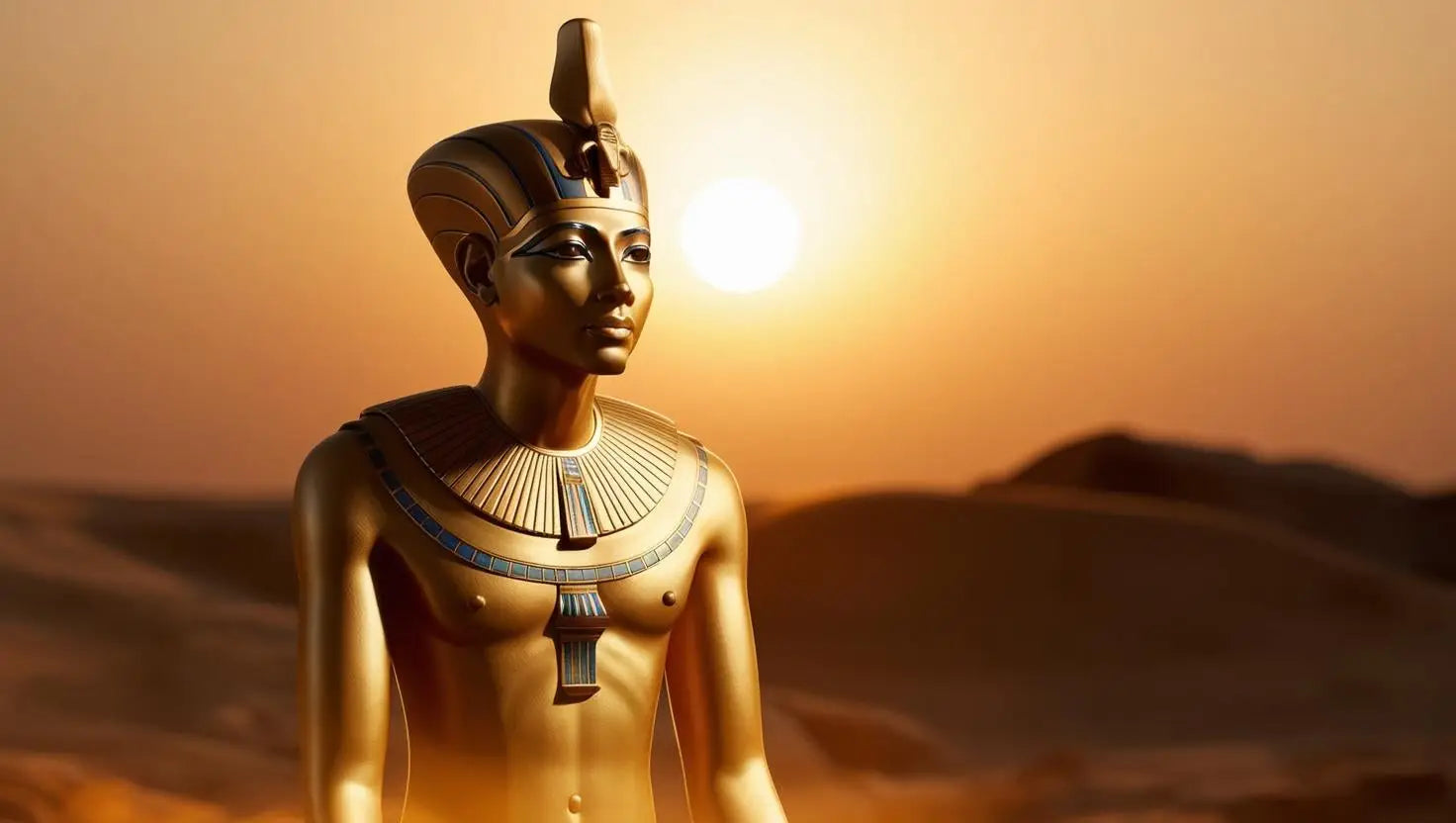
These symbolic gestures allowed them to nurture and honor the gods. The priests had to respect strict rules of physical and moral purity. This discipline reinforced the sacred nature of their function.
 A major social and administrative role
Beyond the religious sphere, priests occupied a strategic place in the social and economic organization of ancient Egypt. Temples were not limited to being places of worship: they constituted genuine production and management centers.
Equipped with vast agricultural estates, craft workshops, and granaries, they formed structuring economic hubs. The priests supervised these activities with method and precision.
Their position granted them considerable economic weight. Some sanctuaries possessed resources comparable to those of a royal administration. This material influence reinforced their prestige and authority among the population.
The priests intervened in the regulation of trade, the redistribution of goods, and the management of workers attached to the temple estates.
They also played a key role in the intellectual training of the elite. Schools associated with the temples transmitted writing, calculation, and religious knowledge.
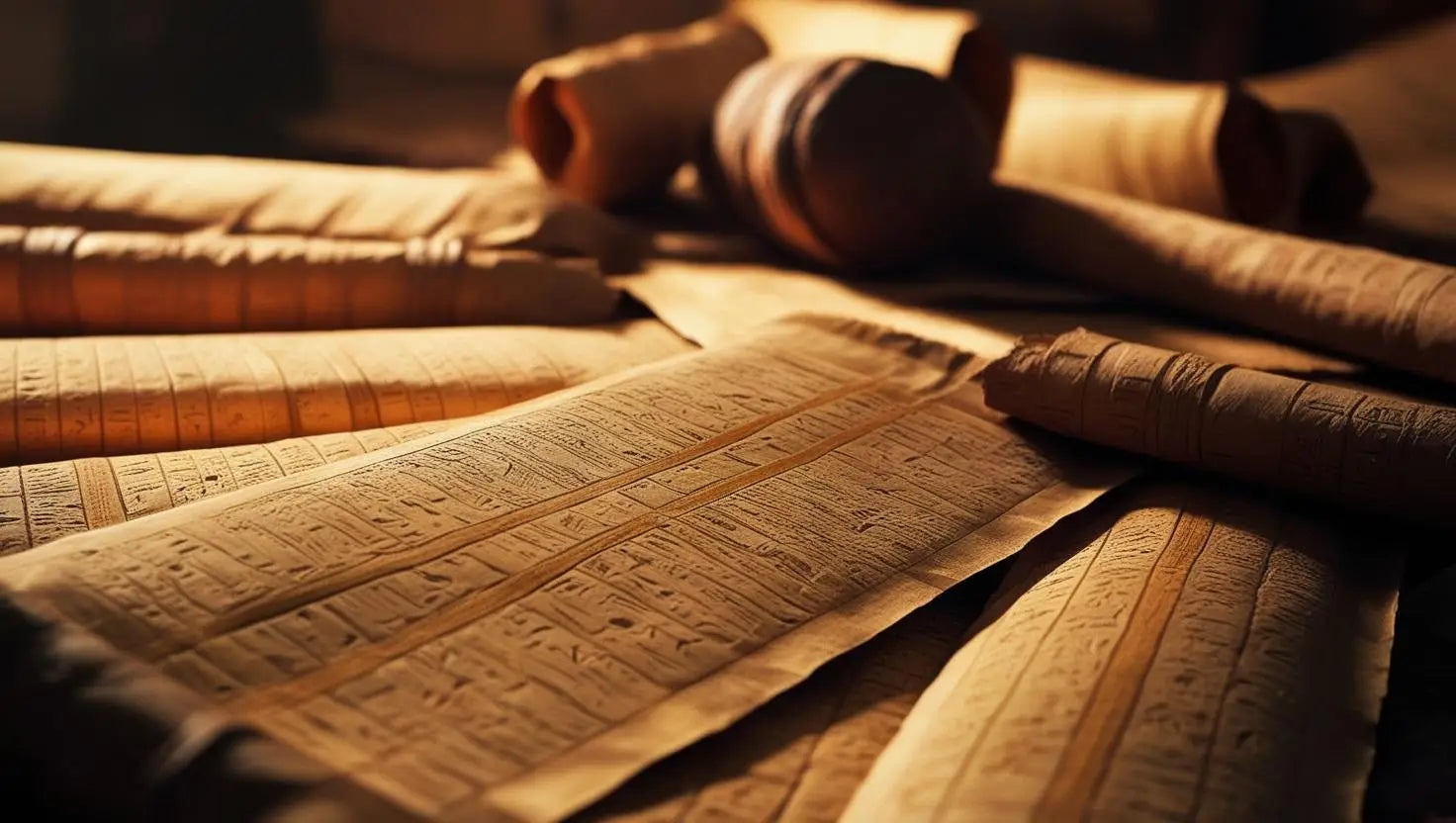
As guardians of archives and official documents, the priests actively participated in the kingdom's administrative continuity. Their role thus combined spirituality, territorial organization, and sustainable institutional management.
Temple administration
The priests assumed several economic responsibilities essential to the proper functioning of the temple and, more broadly, the kingdom:
-
Management of agricultural land and harvest planning
-
Organization of work and supervision of laborers
-
Conservation of temple wealth and food reserves
-
Distribution of resources to workers and the needy
The temple functioned as a true structured and hierarchical economic institution.
The priests were its principal administrators, ensuring the proper management of assets, the storage of surpluses, and the keeping of accounting records. Their rigor guaranteed the financial and material stability of the religious establishment.
A sometimes decisive political influence
The link between the priests and the pharaoh was both institutional and strategic. In theory, the sovereign remained the supreme head of the cult and the representative of the gods on earth.
However, in practice, the priests held daily control of the temples, ceremonies, and associated resources. This relative autonomy granted them a significant margin of action in the kingdom's affairs.
During certain periods, notably during the New Kingdom, the clergy of Amun acquired considerable power. The high priests administered immense estates and possessed an extensive network of influence.
Their authority relied as much on their religious prestige as on their ability to mobilize material wealth.
This situation could create a delicate balance between spiritual power and royal authority.
Even officially subordinate to the pharaoh, the priests could influence major decisions by invoking the divine will. Their role as interpreters of signs and oracles reinforced their legitimacy.
Thus, the role of priests in Egyptian society included a subtle political dimension, capable of orienting power dynamics without directly questioning the monarchy.
Relations with the pharaoh
The relationships between priests and royal power relied on several subtle balances:
-
Official religious collaboration during major state ceremonies
-
Mutual financial dependence linked to temple resources
-
Occasional tensions provoked by control over wealth
-
Constant spiritual legitimization of the pharaoh's authority
The pharaoh needed the priests to ensure the religious validity of his reign, while the priests benefited from royal protection.
This interdependent relationship varied according to dynasties and political contexts, capable of oscillating between harmonious cooperation and discreet rivalry.
Priests and sacred medicine
In ancient Egypt, some priests practiced specialized medical functions. Called physician-priests, they occupied a particular place at the intersection of care and the sacred.
Illness was not perceived only as a physical disorder, but as an imbalance affecting the soul and body.
It could be interpreted as the consequence of a moral fault, an evil influence, or a cosmic disorder.
These priests combined precise empirical knowledge with a structured religious approach. They observed symptoms, established diagnoses, and prescribed adapted treatments. The recovered medical papyri show advanced knowledge of anatomy, fractures, wounds, and certain internal diseases.
Their practice testified to a real method, even if it remained integrated within a spiritual framework.
The role of priests in Egyptian society thus included the preservation of collective health. By caring for individuals, they indirectly contributed to the kingdom's social and economic stability.
Medicine was never dissociated from spirituality, but was part of a global vision of human balance.
Therapeutic practices
The physician-priests applied different methods combining practical knowledge and a sacred dimension:
-
Remedies based on plants and natural substances
-
Bandages and simple surgical procedures to treat wounds and fractures
-
Healing prayers recited according to precise formulas
-
Rituals of exorcism intended to ward off malevolent forces
Each treatment was adapted to the presumed nature of the affliction. The priests observed the evolution of symptoms attentively and adjusted their interventions.
This global approach, mingling science and spirituality, reflected the unified vision of body and soul proper to Egyptian civilization.

The priests, astronomers, and scholars
The priests of ancient Egypt were not limited to religious and administrative functions. They also held scientific knowledge essential to the proper functioning of the kingdom.
Their attentive observation of the sky allowed them to track celestial cycles and anticipate natural phenomena.
The annual appearance of the star Sirius, for example, was closely associated with the flooding of the Nile, a fundamental event for agriculture.
Their mastery of mathematics and geometry played a central role in the organization of the territory. After each flood, land had to be re-demarcated with precision. The priests contributed to these measurements, ensuring equity in the distribution of plots.
These skills were also mobilized in the planning of monumental constructions, where precision and symbolic alignment were indispensable.
Astronomical knowledge was never dissociated from religious beliefs. The study of the stars contributed to the understanding of the cosmic order. As guardians of knowledge, the priests ensured the transmission of this expertise through temple schools.
Their role in Egyptian society thus extended to science, education, and the structuring of collective time.
Mastery of the calendar
The religious calendar relied on several complementary elements that structured collective life:
-
Regular observation of the stars and constellations
-
The solar cycle determining the succession of days and seasons
-
Agricultural seasons linked to the Nile floods
-
Sacred festivals punctuating the religious year
This organization of time allowed for the anticipation of agricultural work, the planning of major ceremonies, and the coordination of administrative activities.
The precision of the calendar thus fostered the stability of the kingdom and guaranteed harmony between natural cycles, religious practices, and social organization.
The transmission and legacy of the priests
The legacy of the Egyptian priests extends well beyond the Pharaonic period and constitutes one of the foundations of the cultural memory of ancient Egypt. Thanks to their role as guardians of knowledge, numerous religious and administrative texts have been preserved throughout the centuries.
Hymns, rituals, funerary formulas, and symbolic treatises have survived through time, offering today an in-depth understanding of Egyptian thought.
Their influence was not limited to the banks of the Nile. Cultural exchanges with Greece and then Rome allowed for the diffusion of certain spiritual ideas derived from the Egyptian tradition.
Notions such as the immortality of the soul, the post-mortem judgment, or resurrection found echoes in other religious and philosophical systems. This transmission testifies to the intellectual depth of the Egyptian clergy.
The role of the priests in Egyptian society therefore did not end with the fall of the dynasties. It is part of a lasting cultural continuity, shaping collective memory and influencing later civilizations.
Their commitment to the conservation and dissemination of knowledge remains an essential pillar of ancient history.
The preservation of sacred texts
The priests carried out meticulous and constant work to preserve the religious and cultural heritage of ancient Egypt:
-
Regular copying of papyri to prevent the disappearance of texts
-
Engraving inscriptions on the walls of temples and tombs
-
Training scribes capable of mastering hieroglyphic writing
-
Faithful preservation of ritual traditions passed down orally
This mission required rigor, precision, and generational continuity.
Thanks to their commitment, a large portion of ancient beliefs, religious practices, and knowledge has traversed the centuries. Their work allowed for the lasting survival of Egyptian memory.

FAQ on the role of priests in Egyptian society
The place of priests in ancient Egypt raises many questions, as their influence seemed to extend to several areas of collective life.
They appear simultaneously as religious figures, administrators, scholars, and sometimes even political actors.
This diversity of functions explains why their role continues to fascinate historians and enthusiasts of antiquity. Understanding their exact position within Egyptian society requires examining their responsibilities, their training, and their daily life.
Over the centuries, the organization of the Egyptian clergy evolved according to dynasties, economic contexts, and religious transformations.
Some priests performed strictly ritualistic tasks, while others held more specialized functions. Their status also varied depending on the temples and regions of the kingdom.
The following section answers the most frequently asked questions about the role of priests in Egyptian society. It provides precise and structured clarifications to better understand their lasting influence in the history of this millennial civilization.
What was the main role of priests in ancient Egypt?
They performed daily religious rituals in the temples to maintain cosmic order. Their mission guaranteed the prosperity of the kingdom.
Did priests have political power?
Yes, especially when they controlled great wealth. Their influence could rival that of the pharaoh at certain times.
Were all priests also doctors?
No, only some priests practiced medicine. They were called priest-physicians.
How did one become a priest in ancient Egypt?
The position was often hereditary or reserved for the educated elite. Religious and scriptural training was necessary.
Did priests live in the temples?
Some resided nearby, but many performed their duties on a rotation basis while leading a family life.
Which god did Egyptian priests primarily serve?
Priests served different deities depending on the temple and the region. Some were dedicated to Amun, Ra, Osiris, or even Ptah. Each sanctuary was dedicated to a specific god.
Could priests get married?
Yes, the majority of priests could marry and have a family. The priestly office did not impose celibacy. Only certain specific duties required stricter discipline.
What is the difference between a high priest and an ordinary priest?
The high priest led the clergy of an important temple and oversaw major rituals. Ordinary priests performed the daily ceremonies. The hierarchy was clearly structured.
Were priests rich in ancient Egypt?
Some priests, especially those in the major temples, had significant resources. The temples owned land and wealth. However, not all priests were wealthy.
What was the role of priestesses in ancient Egypt?
Women could hold religious functions, notably as sacred singers or priestesses of certain deities. Their role varied according to the eras and cults.
Conclusion on the role of priests in Egyptian society
The role of priests in Egyptian society was multiple, structuring, and deeply rooted in all dimensions of collective life. They ensured the relationship between humans and the gods through precise rituals, administered temple resources, and participated actively in the transmission of knowledge.
Their influence was not limited to the religious sphere: it extended to politics, the economy, medicine, and science. This versatility made them central actors in the functioning of the kingdom.
As guardians of tradition, they contributed to preserving the cultural and spiritual continuity of ancient Egypt. Their mastery of sacred texts, calendars, and technical knowledge reinforced their authority and legitimacy.
Through their actions, they participated in maintaining cosmic and social order, ensuring the stability of the country.
Understanding the role of priests in Egyptian society thus sheds light on the internal mechanisms of a civilization remarkable for its longevity.
Their presence was a fundamental pillar of the balance between power, spirituality, and institutional organization.