

Temples occupied a central place in Pharaonic civilization and embodied the fundamental role of the sacred in society. The spiritual role of temples in ancient Egypt was manifested through their function as true divine houses, materializing the presence of the gods on earth. Through their monumental architecture, sacred rituals, and profound symbolism, they translated the spiritual worldview peculiar to ancient Egypt.
Temples as dwellings of the living gods
In Egyptian religious thought, the temple was not a simple gathering place, but the true earthly dwelling of a deity. Each edifice was dedicated to a primary god, such as Amun, Ra, or Hathor, whose sacred statue rested in the sanctuary. This divine presence rendered the space sacred and inaccessible to common mortals. The priests had the mission of maintaining this daily relationship with the divinity in order to preserve universal balance.
The temple functioned as an interface between the visible and invisible worlds. The Egyptians believed that the gods actively intervened in the prosperity of the kingdom. Thus, maintaining their favor was a spiritual and political necessity. The rituals were strictly codified and reproduced each day.
The main functions of the temple included:
-
hosting the divine statue
-
performing the daily rituals
-
preserving sacred objects
-
organizing major religious festivals
This conception reinforces the idea that the temple was above all a space of sacred mediation.

Daily rituals and the preservation of Ma'at


The sanctuary: spiritual heart of the temple
The sanctuary was the most sacred space in the entire religious complex. Only high-ranking priests and the pharaoh could enter it, after strict purification rites. The divine statue was kept there in a naos, often made of precious stone or gilded wood, carefully sealed.
This place symbolized the direct encounter between the human and the divine and concentrated all the spiritual power of the temple.
The darkness of the sanctuary accentuated its mysterious character and clearly separated this space from the rest of the world. Light only entered during specific events, sometimes linked to carefully calculated astronomical alignments.
This luminous staging gave the impression of a tangible manifestation of the god. The silence and semi-darkness reinforced the sacred intensity of the moment.
In the sanctuary:
-
divine communication was ritualized according to precise formulas
-
offerings took on a maximum sacred dimension
-
royal power was confirmed before the deity
Each gesture performed in this space had a cosmic reach. The sanctuary thus embodied the very essence of the spiritual role of temples in ancient Egypt, as the ultimate point of contact between heaven and earth.

The priests: intermediaries between men and gods
Temples and the divine legitimacy of the pharaoh
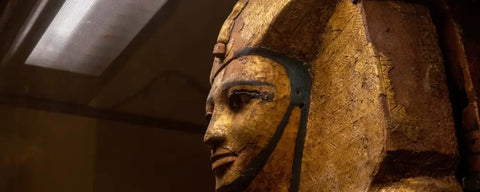
The pharaoh was considered the son of the gods and their living representative on earth. As such, he occupied a unique place in the religious and political order of ancient Egypt.
The construction of monumental temples reinforced this divine legitimacy by materializing his proximity to the sacred. Each edifice testified to his piety, wealth, and capacity to maintain cosmic balance.
Wall reliefs depicted the sovereign performing rites before the deities, receiving their blessing, or offering sacrifices.
These scenes were not mere decorations: they visually affirmed that the pharaoh was indispensable to the maintenance of Ma’at. *
By financing temples and participating in grand ceremonies, he confirmed his role as the supreme intermediary between men and the gods. The temple thus became as much a political tool as a religious one.
Temples allowed the pharaoh to:
-
assert his power over the people and the elites
-
inscribe his name in eternity through inscriptions
-
symbolically guarantee the country's prosperity
-
legitimize his military conquests under divine authority
Spirituality and politics formed an inseparable whole, consolidating royal authority at the very heart of the sacred.
Frescoes, sculptures, and spiritual transmission
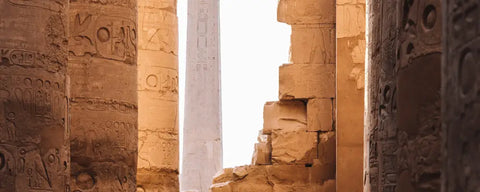
Temple walls were covered in reliefs and frescoes recounting foundational myths and major episodes of Egyptian religion.
These visual representations played an essential pedagogical role in a society where hieroglyphic writing remained the domain of an elite.
Even without knowing how to read, the faithful could understand divine narratives through the symbolic power of the images. Each scene participated in staging the cosmic order and the relationship between the gods and the pharaoh.
The scenes depicted:
-
the creation of the world and the emergence of light
-
the pharaoh’s victories supported by the divinities
-
sacred rituals performed in the temple
-
offerings presented to the gods
These images were not purely decorative: they were invested with sacred force. The hieroglyphs engraved alongside the figures brought divine words to life.
The reliefs thus contributed to maintaining religious memory and transmitting beliefs to future generations. Art became a true vector of spirituality, fixing the sacred vision of the Egyptian world in stone.
Astronomical alignment and the cosmic dimension
Some temples were designed according to precise axes linked to solar cycles and celestial movements. During solstices or on specific dates, sunlight would penetrate as far as the sanctuary, illuminating the divine statue.
This spectacular phenomenon symbolized the union between heaven and earth and concretely manifested the god's cosmic presence. The architecture thus reflected a fine understanding of natural rhythms.
These alignments served as reminders that Egyptian religion was profoundly cosmic and intimately linked to the cycles of time. The movements of the stars confirmed the order willed by the gods and reinforced the sanctity of the temple.
The building became an instrument of harmonization between the visible nature and the invisible world.
This astronomical dimension highlighted:
-
the builders' architectural precision
-
the extent of scientific knowledge
-
the sacralization of time and seasons
-
the universal connection between man and the cosmos
The temple thus embodied a global vision of the world, where spirituality, science, and celestial observation formed a coherent whole.

Temples as centers of pilgrimage and social cohesion
FAQ about the spiritual role of temples in Ancient Egypt
The temples of Ancient Egypt still raise many questions today. Their monumental architecture, complex rituals, and religious symbolism fascinate history buffs and the curious alike.
Understanding their spiritual role requires placing these buildings within their religious, political, and social context. They were not mere buildings, but sacred structures deeply integrated into the ancient Egyptians' worldview.
Over the centuries, these temples have left behind impressive traces that bear witness to a civilization structured around the divine. Their operation, access, and organization reflected a precise hierarchy and a highly elaborate cosmic conception.
Numerous archaeological studies have helped clarify their importance, but some misconceptions still persist today.
This section answers the most frequent questions readers have about the spiritual role of temples in Ancient Egypt.
It aims to provide clear, concise, and accessible explanations to better understand the central place of these monuments in pharaonic civilization.
Why were temples so important in Ancient Egypt?
Temples were considered the homes of the gods. They guaranteed cosmic balance through daily rituals. Without these practices, the kingdom's prosperity was threatened.
Who could enter the sanctuary?
Only high-ranking priests and the pharaoh had access to the sanctuary. This space was considered too sacred for the general public.
What was the link between temples and political power?
The pharaoh used the temples to assert his divine legitimacy. The monumental structures reinforced his authority.
Were the temples open to the people?
Interior access was limited, but the people participated in religious festivals and processions.
Why are some temples aligned with the sun?
These alignments symbolized cosmic harmony. They reinforced the sacred and astronomical dimension of the site.
What is the difference between a temple and a pyramid in Ancient Egypt?
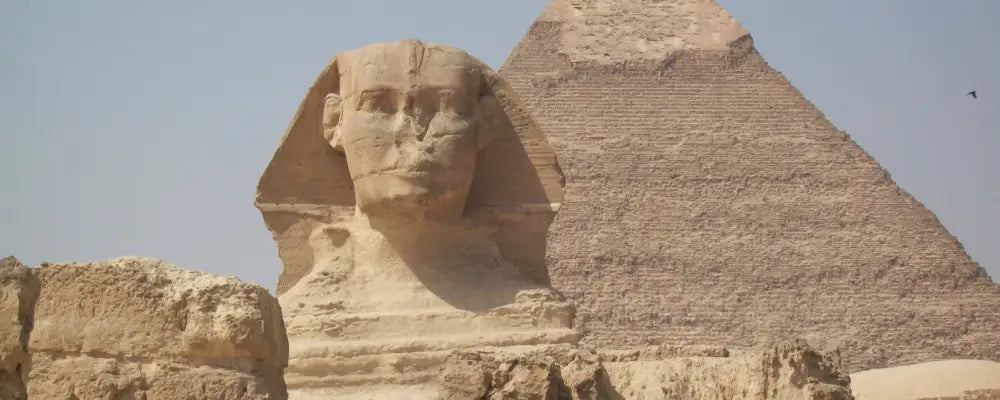
The temple was a place of worship dedicated to the gods and daily rituals. The pyramid was a funerary monument intended for the pharaoh and his life in the afterlife.
What was the largest temple in Ancient Egypt?
The Karnak complex was the largest. Dedicated primarily to Amun, it spanned several hectares and was expanded over centuries.
How many priests worked in an Egyptian temple?
Large temples could employ hundreds of priests. They worked in rotations and oversaw the rituals and management of the site.
Could women be priestesses in the temples?
Yes, some women held religious functions, particularly in cults dedicated to goddesses. However, the highest positions remained predominantly male.
What remains today of the temples of Ancient Egypt?
Many temples are still visible, such as in Luxor or Karnak. Their reliefs and inscriptions allow us to better understand Egyptian religion and society.

Conclusion on the spiritual role of temples in Ancient Egypt
The spiritual role of temples in Ancient Egypt goes far beyond simple religious practice or the monumental dimension we admire today. These edifices concretely embodied divine presence on earth and constituted the living center of the relationship between men and the gods.
Through daily rituals performed with rigor, they guaranteed the maintenance of Ma’at, thereby ensuring the cosmic order and the stability of the kingdom.
Beyond their sacred function, the temples affirmed the legitimacy of the pharaoh, the supreme representative of the divinities. Their symbolic architecture, frescoes, and astronomical alignments reflected a coherent vision of the universe where every element had a precise spiritual meaning.
They also structured social life through festivals, processions, and pilgrimages, reinforcing the unity of the people around a single belief system.
To understand these temples is to understand the very heart of Egyptian civilization. They were not merely places of worship, but the pillars of a world where spirituality, power, and the cosmos formed an inseparable harmony, deeply rooted in pharaonic culture.