

Egyptian earrings embody a form of elegance deeply rooted in ancient history. In ancient Egypt, these jewels were not used solely for adornment, but also to convey a social and spiritual message. Wearing them was linked to belief, power, and cultural identity. This symbolic richness explains why these jewels continue to fascinate today.
The origins of earrings in ancient Egypt
The first earrings appeared as early as the Old Kingdom, which testifies to their antiquity. They were initially reserved for the privileged classes, before spreading gradually. These jewels were an integral part of everyday appearance.
The frescoes and statues found show Egyptians wearing varied earrings. They accompanied both the living and the dead.
Earrings as a marker of social status
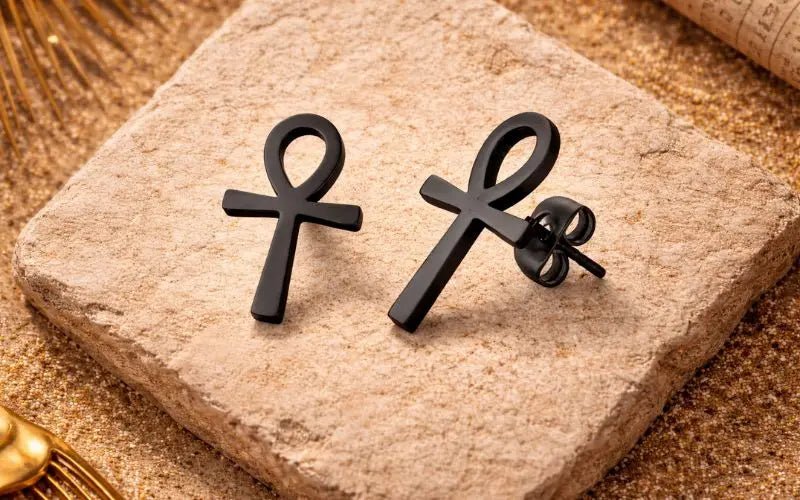
In ancient Egypt, jewelry was an immediate social indicator. Earrings made it possible to identify an individual's rank and wealth. The more elaborate the jewel, the higher the status. This distinction was understood by the whole of society.
Materials, size, and patterns played a key role. Each detail reinforced the social message conveyed. The jewel became a visual language.
Earrings worn by pharaohs
The pharaohs wore earrings of solid gold, often adorned with precious stones. These jewels symbolized their divine nature and absolute power. Their design was complex and richly decorated. Each pair reinforced royal authority.
These earrings were sometimes associated with solar symbols. They recalled the pharaoh’s direct link to the gods.
Earrings among the Egyptian people
The people also wore earrings, but with simpler materials. Copper, faience, and clay were commonly used. These jewels nevertheless remained important on a cultural level. They made it possible to respect traditions.
The shapes were more sober but still symbolic. Wearing earrings was part of daily life. They expressed a strong cultural belonging.
The materials used in Egyptian earrings
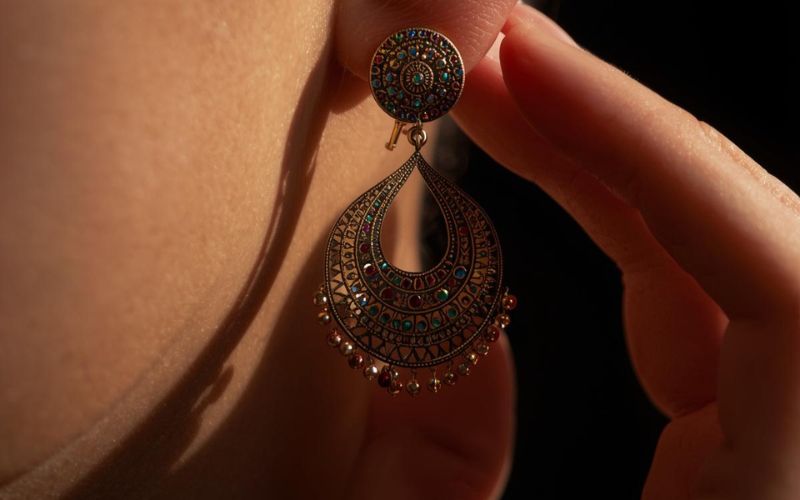
The Egyptians carefully selected the materials for their jewelry. Each material possessed a spiritual or symbolic meaning. The choice of material reinforced the jewel's message. Nothing was left to chance.
Access to natural resources facilitated this diversity. Trade also enriched their creations. This richness was reflected in jewelry-making.
Gold, symbol of eternity and divinity
Gold was considered the flesh of the gods. It symbolized immortality and perfection. Gold earrings were reserved for the elite. They often accompanied the deceased into the afterlife.
This metal did not deteriorate with time. Its luster recalled the sun and the god Ra. Wearing gold meant being close to the divine. It embodied absolute sanctity.
Precious and semi-precious stones
Stones brought color and protection to the jewelry. Lapis lazuli symbolized the sky and wisdom. Turquoise represented rebirth and life. Carnelian evoked energy and vitality.
Each stone had a specific function. They also gave a strong visual identity. Stones were essential to Egyptian symbolism.
The emblematic shapes of Egyptian earrings
The shapes of the earrings were never chosen by chance. They represented religious and natural concepts. Each shape had a deep meaning. Aesthetics always served meaning.
Artisans favored simple but powerful forms. Circles and figurative motifs dominated. These shapes transcended dynasties.
Sacred rings and circles
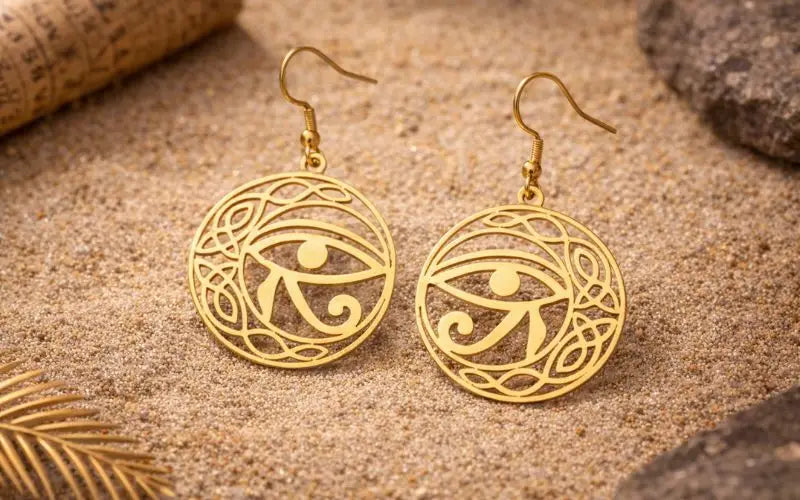
Rings symbolized eternity and the cycle of life. Their circular shape evoked the infinite. They were worn by all social classes. Their simplicity made them universal.
These earrings were adapted to daily life. They combined sobriety and symbolism. Their popularity was constant. The circle remained a fundamental symbol.
Figurative and symbolic motifs
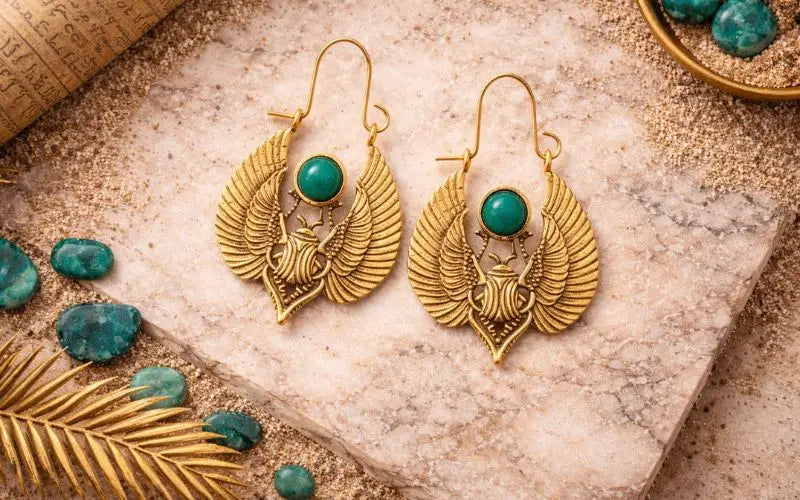
The motifs represented gods or sacred symbols. The scarab embodied rebirth. The Eye of Horus offered protection and healing. The falcon symbolized royalty.
These motifs transformed the earring into an amulet. They protected the wearer in daily life. Their presence reinforced the spiritual dimension. The jewel became a talisman.
The religious role of earrings in ancient Egypt
Religion occupied a central place in Egyptian life. Earrings participated in this spirituality. They served to honor the gods and to provide protection. Their role went far beyond aesthetics.
Beliefs influenced their design. The chosen symbols had a specific function. Wearing an earring was a spiritual act. The jewel became a sacred object.
Earrings as protective amulets
In ancient Egypt, some earrings were not limited to an aesthetic function. They were designed as true objects of spiritual protection.
-
The earrings incorporated protective symbols recognized in Egyptian religion, intended to repel negative forces.
-
These symbols acted as spiritual barriers, offering constant protection in daily life.
-
The amulets were often associated with stones with symbolic properties that reinforced their effectiveness.
-
Each design detail was thought out to maximize the protection of the wearer, from the motif to the material used.
The link to the afterlife and immortality
The Egyptians believed in life after death. Egyptian earrings accompanied the deceased into the tombs. They guaranteed eternal beauty and protection. Their presence was essential.
These jewels facilitated the passage to the other world. They ensured a continuity between life and death. Elegance became eternal. The jewel embodied immortality.
Craftsmanship techniques
Egyptian artisans possessed exceptional know-how. They used advanced techniques for their era. Precision was essential at every step. Each jewel required patience and expertise.
The tools remained simple but effective. The mastery of metal was remarkable. The techniques were passed down from generation to generation.
Hammering and casting of metals
Hammering made it possible to refine gold and copper. Casting created complex and regular shapes. These techniques ensured strength and finesse. They guaranteed long durability.
Artisans adapted the method to the material. Gold was worked with great delicacy. The result was both aesthetic and functional.
Granulation and decorative inlays
Granulation consisted of adding tiny gold beads. Stone inlays brought color and contrast. These details enriched the design. They increased the value of the jewel.
These techniques required extreme precision. The slightest error was irreversible. They testified to a great artisanal mastery. The jewel became a work of art.
Earrings and the concept of gender in Egypt
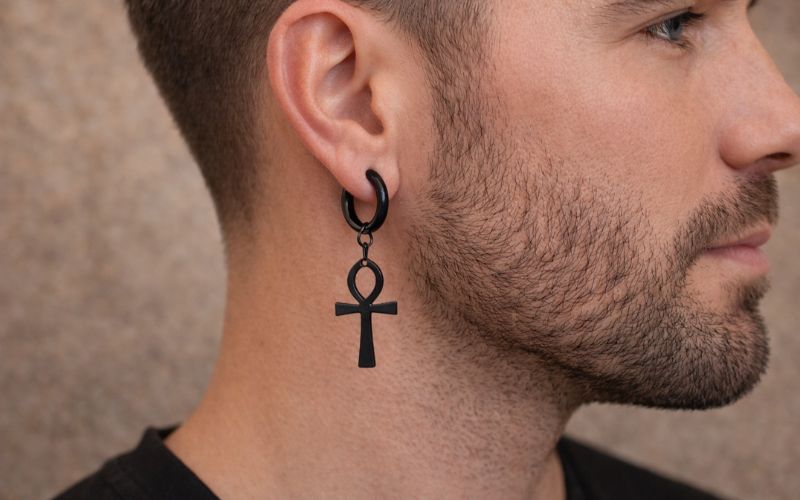
Unlike other civilizations, earrings were worn by everyone. Men, women, and children could wear them. The jewel was not gendered. It reflected, above all, social status.
This practice showed an open view of jewelry. The ornament was a universal symbol. It reinforced individual identity. Gender was not a cultural limit.
Wearing earrings among men
Men of high rank wore earrings with pride. They completed their official attire. These jewels symbolized power and nobility. They were not perceived as feminine.
Wearing them was socially valued. It reinforced the image of authority. The chosen motifs often evoked royalty. The jewel was a sign of prestige.
The role of earrings among women
Women wore earrings in daily life. They often chose finer models. These jewels accentuated their natural elegance. They were an integral part of their appearance.
Shapes and stones varied according to the occasion. The jewel accompanied rituals and festivities. It expressed femininity and culture.
The influence of Egyptian earrings on modern jewelry
Egyptian aesthetics continue to inspire contemporary jewelry. Ancient forms and symbols are regularly reinterpreted. This influence spans the centuries without waning. It remains synonymous with luxury and mystery.
Modern designers pay homage to this heritage. They adapt ancient codes to current trends. The past nourishes the present.
Egyptian inspirations in current fashion
Many brands use Egyptian motifs. Geometric shapes and sacred symbols are revisited. Gold and colored stones remain central. These creations attract history enthusiasts.
Contemporary fashion values these ancient references. They bring a strong cultural dimension. The jewel tells a story.
The success of Egyptian jewelry in e-commerce
Egyptian-inspired earrings are appealing online. They attract an audience sensitive to symbolism. Their storytelling reinforces their perceived value. They stand out on the market.
Consumers are looking for meaningful jewelry. The Egyptian heritage meets this expectation. These products are sold as unique pieces.
How to recognize Egyptian-inspired earrings
Certain elements make it easy to identify these jewels. Symbols and shapes are revealing. Materials evoke ancient wealth. Careful observation is often enough.
These details distinguish authentic creations. They testify to a faithful inspiration. The jewel tells a visual story. Each element reinforces the Egyptian identity.
Main visual characteristics
Egyptian-inspired earrings are distinguished by easily recognizable visual elements.
-
Presence of sacred symbols derived from Egyptian culture, associated with structured geometric shapes.
-
Use of deep, contrasting colors, particularly blue and gold, which are highly symbolic.
-
Often symmetrical patterns, reflecting the order and harmony cherished by Egyptian civilization.
-
Designs evoking antiquity while remaining adapted to a timeless aesthetic.
Expected quality and finish
An earring inspired by Egypt stands out for its finishes. The details are precise and balanced. The materials are durable and noble. The quality is visible.
Neglected creations betray a superficial imitation. Authenticity comes through attention to detail. The finish reinforces credibility. It guarantees lasting value.
FAQ about Egyptian Earrings
Egyptian earrings symbolize social status and divine protection. Made with stones such as lapis lazuli, turquoise, or carnelian, they also had a religious role. Today, they still inspire fashion and easily integrate into modern outfits, combining style and symbolism.
What do earrings symbolize in ancient Egypt?
Earrings symbolized social status and divine protection. They were also linked to religious beliefs. Each symbol had a precise meaning. Their role went far beyond aesthetics.
Who wore earrings in ancient Egypt?
Men, women, and children wore earrings. The material varied according to social rank. The elites used gold, the common people simple materials. This practice was widespread.
Which stones were used in Egyptian earrings?
Lapis lazuli, turquoise, and carnelian were common. These stones had strong symbolic value. They represented protection and vitality. Their color was essential.
Did earrings have a religious function?
Yes, they played an important religious role. They protected against evil. They also accompanied the deceased into the afterlife. Their function was spiritual.
Do Egyptian earrings still influence fashion?
The influence is still visible today. Many designers draw inspiration from them. Ancient symbols are regularly reinterpreted. The aesthetic remains highly appreciated.
How to wear Egyptian earrings today?
Simply pair them with understated outfits. They become the centerpiece of the look. Their symbolism adds character. They integrate easily into modern fashion.

Conclusion on Egyptian Earrings
Egyptian earrings represent a cultural heritage of exceptional richness. They embody the elegance, spirituality, and power of ancient Egypt. Their profound symbolism explains their longevity and current influence. Understanding their history allows for a better appreciation of their value. They remain a symbol of timeless elegance today.