
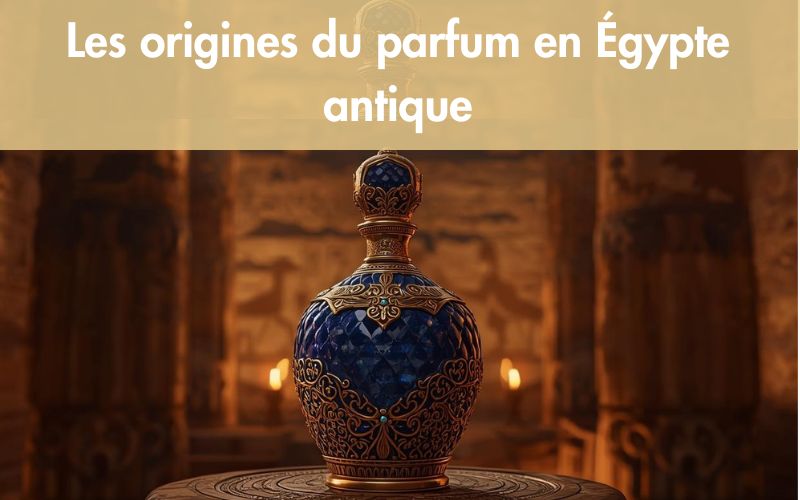
Perfume in ancient Egypt was neither a superficial luxury nor a simple vanity. It was deeply linked to spirituality, medicine, and the cosmic order. Understanding perfume in ancient Egypt means exploring a civilization where every scent had a meaning, a function, and a symbolic power.
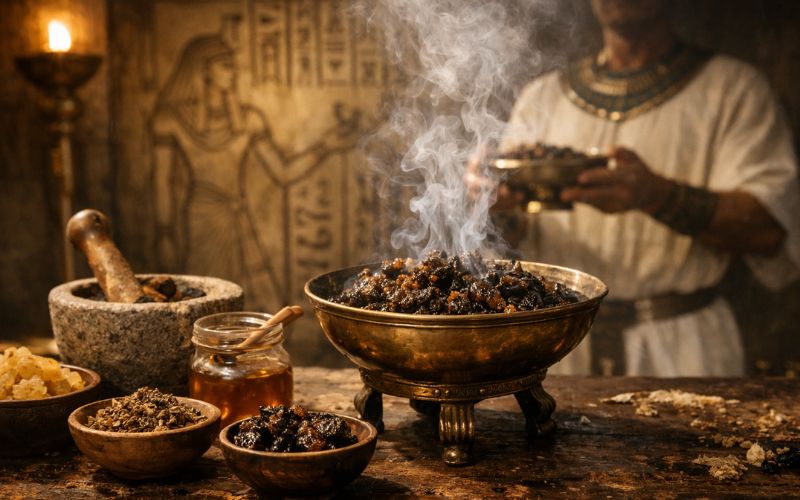
Ancient Egyptian perfume: history, rituals, and olfactory secrets
The sacred role of perfume in Egyptian religion
In temples, perfume was essential for maintaining ritual purity. Every day, priests perfumed divine statues and burned specific incenses. These scents served to attract the favor of the gods.
Perfume in ancient Egypt was perceived as an invisible offering. It symbolically nourished the deities and helped maintain Maat, the universal order.
Incense as a divine offering
Incense was burned morning, noon, and night in the sanctuaries. Each moment corresponded to a specific solar cycle. The scented smoke created a link between the earthly world and the celestial world.
-
Purification of sacred spaces
-
Protection against chaotic forces
-
Communication with the gods
In the perfume of ancient Egypt, incense embodied the divine presence.
Kyphi, the emblematic sacred perfume
Before discussing Kyphi, it is essential to understand its central role in nocturnal rituals. This complex perfume combined more than ten carefully measured ingredients. Its manufacture followed a strict protocol.
Kyphi was used as both incense and ointment. This ancient Egyptian perfume promoted sleep, inner harmony, and meditation.
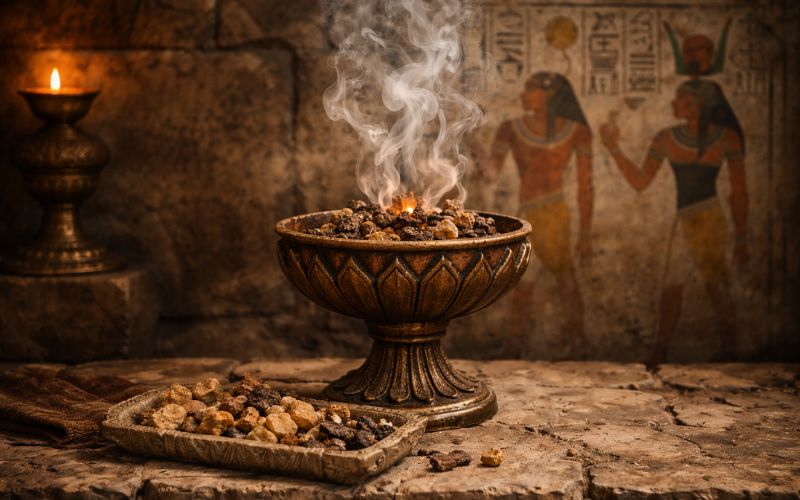
Ingredients used in ancient Egyptian perfume
Raw materials were chosen for their olfactory and symbolic properties. Each ingredient had a precise origin, value, and function. The Egyptians favored natural substances.
Perfume in ancient Egypt relied on an alchemy between local plants and imported products.
Aromatic resins and gums
Resins formed the base of many perfumes. They offered power, depth, and longevity. Their combustion was considered sacred.
-
Myrrh
-
Frankincense (olibanum)
-
Galbanum
-
Storax
These resins structured the identity of ancient Egyptian perfume.
Vegetable oils as a base
Before the advent of alcohol, oils played a central role. They fixed scents and facilitated application on the skin. Moringa oil was particularly prized.
Perfume in ancient Egypt often took the form of thick, rich, and nourishing ointments.
Flowers and aromatic plants
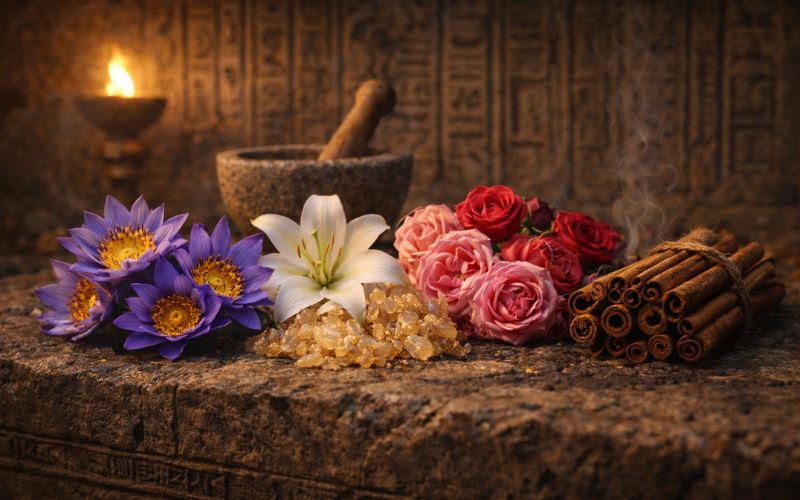
Flowers provided finesse and sensuality. They were slowly macerated to release their aromas. This technique required patience and expertise.
-
Blue lotus
-
White lily
-
Rose
-
Cinnamon
These notes gave perfume in ancient Egypt an elegant and spiritual dimension.
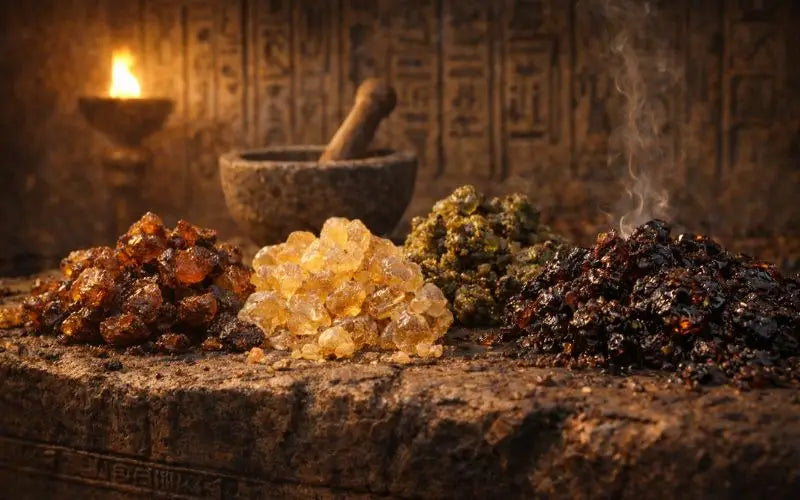
Perfume manufacturing techniques
The Egyptians did not distill like modern perfumers. However, they mastered effective extraction processes. Each step required precision and time.
Perfume in ancient Egypt was the result of know-how passed down over several generations.
Maceration and infusion
Plants were immersed in heated oils. The mixture rested for several days, sometimes several weeks. The liquid was then filtered.
This method ensured a stable and concentrated perfume.
Fumigation and combustion
Certain perfumes were designed exclusively to be burned. The smoke released aromas and purified spaces. This process was reserved for temples and funeral rites.
In the perfume of ancient Egypt, fumigation transformed matter into spiritual essence.
The use of perfume in daily life
Perfume was an integral part of social life. It served to protect from the sun, to perfume the body, and to maintain hygiene. The wealthy classes used it daily. Perfume was a sign of refinement and self-respect.
Perfume as cosmetic care
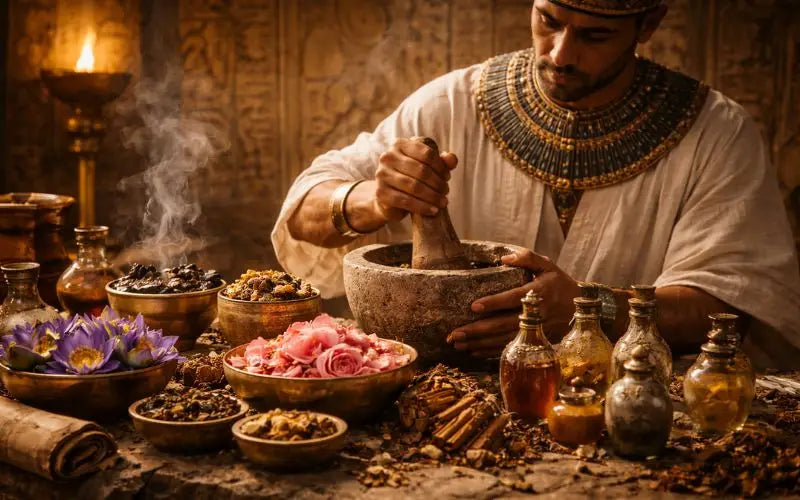
Scented ointments nourished the skin and hair. They prevented dryness and irritation. Certain oils had recognized medicinal properties.
The scented cone on the head
During banquets, guests wore a cone of perfumed fat. As it melted, it slowly diffused its scent. This practice symbolized abundance and joy. This ritual is one of the most iconic aspects of perfume in ancient Egypt.
Perfume as a social marker
Perfume immediately revealed one's social rank. Rare ingredients were reserved for the elite. The working classes used simpler compositions. Perfume in ancient Egypt was therefore an indicator of wealth and power.
Perfume in funeral rites
In death, perfume played an essential role. It accompanied the soul to the afterlife and protected the body. Embalmers used large quantities of resins. The fragrances guaranteed a spiritual rebirth.
Embalming and sacred oils
Bodies were coated with perfumed oils. These substances slowed decomposition. They also ensured ritual purity.
Perfume as magical protection
Certain scents repelled malevolent forces. Burned resins protected the soul during its journey. Perfume had an apotropaic function.
The perfume professions in ancient Egypt
Perfume production mobilized many specialists. Perfumers held precious knowledge. Their status was recognized, and it was based on a true artisanal organization.
The trade of scented materials
Ingredients sometimes came from very distant regions. The land of Punt provided myrrh and frankincense. These exchanges strengthened the value of perfume.
Even today, certain commercial logics recall these ancient circuits, particularly among modern actors like a wholesale perfume supplier in Dubai, specializing in oriental raw materials.
Historical sources of ancient Egyptian perfume
Our knowledge of ancient Egyptian perfume relies on varied and complementary sources. Texts, objects, and depictions allow us to reconstruct uses and recipes. These elements offer a concrete and reliable vision of the place of perfume in Egyptian civilization.
Medical and religious texts
Medical papyri mention the use of perfumes for healing and purification. Certain religious texts precisely describe the rituals of embalming and olfactory offerings. Perfume in ancient Egypt thus appears as a tool that was both therapeutic and sacred.
Archaeological vestiges and flasks
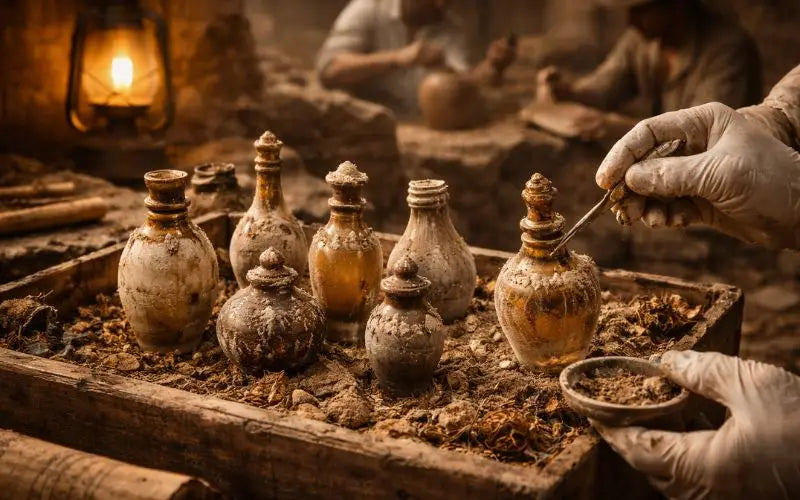
Archaeologists have discovered numerous flasks containing scented residues. These objects confirm the use of ointments and aromatic resins. Perfume in ancient Egypt thus leaves tangible material traces.
Wall paintings and bas-reliefs
Frescoes show scenes of banquets and perfumed rituals. They show aromatic cones and incense offerings. These images complete the understanding of perfume in ancient Egypt in daily life.
Symbolism and mythology of scents
Pleasant scents represented life and creation. Foul odors symbolized chaos. This opposition structured religious thought.
The legacy of ancient Egyptian perfume
Contemporary perfumery still draws inspiration from ancient Egypt. Myrrh, frankincense, and lotus remain ingredients appreciated in many oriental creations. Among the houses that perpetuate this know-how surrounding noble raw materials is Abdul Samad Al Qurashi, renowned for its refined compositions based on oud, musk, and amber. For the curious, it is this way. Today, Egyptian perfume continues to influence our relationship with fragrances.
The different uses of ancient Egyptian perfume
| Usage | Function | Ingredients |
|---|---|---|
| Religious | Honor the gods | Incense, myrrh |
| Cosmetic | Body care | Oils, flowers |
| Funerary | Preservation | Resins |
| Social | Status | Rare ingredients |
Perfume in Ancient Egypt in the collective imagination
Perfume in Ancient Egypt occupies a special place in the modern imagination. It is associated with mystery, the sacred, and lost knowledge. This perception still influences our way of conceiving perfumes inspired by antiquity.
Perfume in Ancient Egypt in literature and cinema
Numerous stories and visual works evoke the perfumes of Ancient Egypt as magical or forbidden substances. This representation reinforces the mysterious aura of perfume in Ancient Egypt. It also contributes to maintaining the public's interest in this subject.
Perfume in Ancient Egypt as a symbol of luxury and exoticism
In contemporary culture, perfume is often associated with oriental luxury. Rare raw materials and pharaonic references evoke wealth and refinement. This image strongly influences the marketing of modern perfumes.
The influence of perfume in Ancient Egypt on modern perfumery
Perfume in Ancient Egypt did not die out with the end of the pharaohs. Its ingredients, symbols, and techniques continue to inspire contemporary perfumery. This influence is found as much in the compositions as in the modern olfactory imagination.
Ancient ingredients still used today
Numerous raw materials used in antiquity are still present in current perfumes. Myrrh, incense, and certain oriental resins remain highly prized for their olfactory depth. Perfume in Ancient Egypt thus laid the foundations of a timeless olfactory vocabulary.
Sacred symbolism adopted by modern brands
Certain perfumery houses are directly inspired by Egyptian symbolism. Notions of purity, eternity, and spirituality are often highlighted. Perfume in Ancient Egypt therefore influences both storytelling and composition.
The transmission of oriental know-how
Ancient trade routes have shaped a legacy that is still alive today. Currently, specialized players, such as certain artisans or a Dubai perfume supplier, perpetuate the use of raw materials similar to those of Ancient Egypt. This continuity reinforces the link between ancient traditions and modern perfumery.
Why perfume in Ancient Egypt still fascinates today
Perfume in Ancient Egypt continues to spark growing interest among the general public. This fascination is explained by the symbolic richness, the rarity of the ingredients, and the mystery surrounding ancient recipes. Throughout the centuries, perfume has become a bridge between history, spirituality, and modernity.
A vision of perfume linked to eternity
In Ancient Egypt, perfume was not ephemeral. It symbolized eternity, the continuity of the soul, and rebirth. Perfume in Ancient Egypt was part of a logic of longevity, quite different from our modern consumption.
A powerful imagery transmitted by the pharaohs
The pharaohs used perfume as an attribute of power. Rare materials reinforced their divine aura. This strong image still contributes to the notoriety of perfume in Ancient Egypt today.
A subject highly sought after by perfume enthusiasts
Perfume in Ancient Egypt meets a modern curiosity for the origins of perfumery. Internet users search for its history, its ingredients, and its uses. This popularity explains why the subject remains very present in current searches.
FAQ on the origins of perfume in Ancient Egypt
Perfume in Ancient Egypt raises many questions. Its complex usage intrigues history buffs and perfumery enthusiasts alike. Here are the most searched-for answers.
What was perfume used for in Ancient Egypt?
Perfume in Ancient Egypt was used to honor the gods, purify spaces, and care for the body. It was used in rites, daily life, and funerals. Its role went far beyond aesthetics.
Which ingredients were used?
Perfumes contained resins, vegetable oils, and flowers. Myrrh and incense were the most common. Each ingredient had a symbolic value.
Does kyphi still exist?
Kyphi is recreated today by perfumers. Recipes vary according to the sources. It remains the emblem of perfume in Ancient Egypt.
Did the Egyptians use perfume every day?
The elites wore perfume daily. The common classes had access to simpler versions. Perfume was widely used.
Did perfume have a medical function?
Yes, certain oils relieved pain and soothed the mind. Perfume in Ancient Egypt was part of traditional medicine. It was used for overall well-being.
How were perfumes made?
The Egyptians used maceration and fumigation. They did not distill. These techniques produced long-lasting and powerful perfumes.
Can we smell Egyptian perfumes today?
Recreations exist thanks to archaeology. Some brands are inspired by them. Perfume in Ancient Egypt is being reborn in a modern form.
What is the history of perfume in Egypt?
Perfume in Ancient Egypt served religious, medicinal, and aesthetic purposes. It was used in temples, during funeral rituals, and by pharaohs to mark prestige and purity.
What is the scent of the perfumes of Ancient Egypt?
Egyptian perfumes had rich, natural scents, often woody, floral, or resinous, blending myrrh, incense, lotus, and local flowers.
Which perfumes did the ancient Egyptians use?
The Egyptians used scented oils and resins such as myrrh, incense, lotus, cinnamon, or carnelian, to wear as perfume or in religious rituals.
Conclusion on the origins of perfume in Ancient Egypt
Perfume in Ancient Egypt reveals a civilization where scent was language, offering, and protection. Through its religious, social, and funerary uses, it shows an exceptional mastery of natural materials. This olfactory legacy continues to influence current perfumery and our sensory relationship with the sacred.