
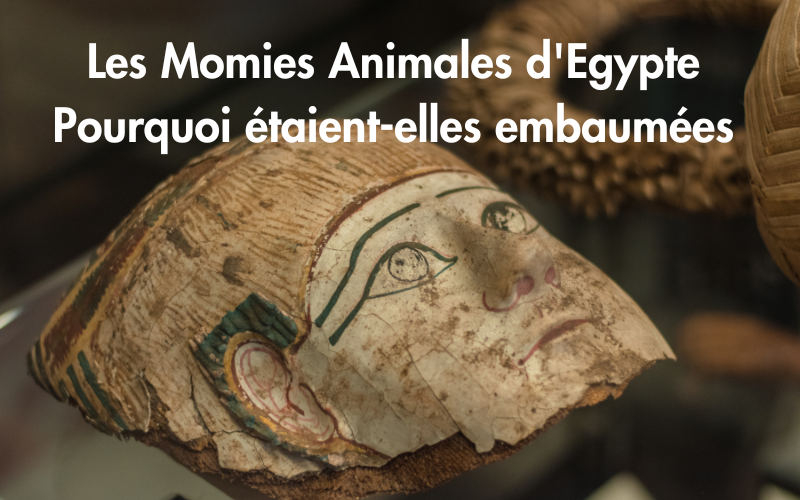
Egyptian animal mummies have intrigued historians and archaeologists for centuries. In ancient Egypt, millions of animals were embalmed for religious and symbolic reasons.
Cats, ibises, or crocodiles were linked to deities and played an important role in rituals. But why did the Egyptians actually mummify these animals?
The sacred relationship between animals and Egyptian gods
In ancient Egypt, animals held a central place in religion and spiritual symbolism. The Egyptians considered that certain creatures directly embodied the gods or served as manifestations of their powers on Earth. This vision explained why animals could be worshipped, protected, and sometimes mummified after their death. Temples often housed sacred animals that were cared for by priests and honored during important religious ceremonies. Their presence reinforced the bond between humans and the divine world.
Animal representations were omnipresent in Egyptian art. Frescoes, statues, and ritual objects often showed deities with animal heads. This iconography symbolized the specific qualities associated with each animal, such as strength, wisdom, or protection. By mummifying these creatures, the Egyptians paid homage to the gods and perpetuated their spiritual influence.
Animal mummification therefore reflects the deep spirituality of Egyptian civilization. It also shows the importance of maintaining a balance between the earthly world and the divine world, a fundamental principle in the Egyptian religion.

Animals associated with the main deities
Several animals were directly linked to the deities of the Egyptian pantheon and symbolized their attributes. These associations reinforced their sacred nature and explained their presence in temples and religious rituals.
Among the best known, the cat represented the goddess Bastet, protector of the home. The falcon embodied Horus, god of the sky and kingship. The ibis was associated with Thoth, god of wisdom, while the crocodile symbolized Sobek, linked to the Nile. Mummifying them allowed for honoring these deities and preserving the sacred character of these animals.
Animals as messengers between humans and the gods
In Egyptian spirituality, some animals were considered intermediaries between humans and the gods. Believers thought that these creatures could convey their prayers to the deities.
By placing an animal mummy in a temple, a believer hoped to obtain protection or blessing. Sanctuaries thus accumulated numerous animal offerings. This practice reflected a worldview where nature participated in communication with the divine, and where animals played an essential role in religious rituals.

Animal mummies as offerings in temples
Animal mummification was often linked to the practice of religious offerings in Egyptian temples. Believers brought animal mummies to honor a deity or request a divine favor. This tradition developed particularly from the first millennium BCE, when temples became major religious centers hosting many pilgrims.
Priests supervised the preparation of animals intended for offerings. Some animals were raised specifically to be mummified and used during religious ceremonies. This organization shows that animal mummification was part of a structured religious system.
Archaeologists have discovered immense necropolises containing millions of animal mummies. These funerary deposits testify to the scale of this practice in Egyptian society. Believers could purchase these mummies at the temples and offer them to the gods in the hope of obtaining protection, health, or prosperity.
This religious tradition underscores the importance of rituals and offerings in the daily life of the Egyptians. It also shows that temples played a central role in the dissemination of religious practices across the kingdom.
The economic role of temples
Egyptian temples were powerful institutions that managed numerous religious and economic activities. The production of animal mummies was part of these activities and attracted a large number of pilgrims.
Priests organized the breeding of sacred animals intended for offerings. These animals were then mummified according to precise rites before being sold to believers. This practice allowed temples to fund their religious activities and monumental constructions.
The importance of this trade is confirmed by the numerous necropolises discovered by archaeologists. Some contain millions of animal mummies, proof of the popularity of these religious offerings.
Pilgrimages and animal offerings
Pilgrimages were frequent in ancient Egypt, and believers regularly visited temples to honor the gods and ask for their protection or blessing. Animal mummies played an important role in these religious rituals. Believers thus hoped to attract divine favor to obtain health, prosperity, or protection for their families.
Pilgrims could buy an animal mummy prepared by the priests and place it in a sanctuary or a necropolis near the temple. This gesture symbolized a prayer addressed to the deity and strengthened the spiritual bond between humans and divine forces.

Animal mummification techniques
The mummification of animals relied on techniques similar to those used for humans. The Egyptians had developed very effective methods to preserve bodies and prevent their decomposition. These practices demonstrate their great knowledge of conservation processes.
The mummification process generally began with the dehydration of the body. Embalmers used natron, a natural salt found in the Egyptian desert, to remove moisture from the tissues. This step was essential to prevent decomposition.
After desiccation, the animal's body was wrapped in linen bandages. Priests sometimes applied resins or scented oils to protect the body and enhance its preservation. Finally, the mummy was placed in a sarcophagus or a funerary container.
These techniques could vary depending on the importance of the animal and the type of ritual. Some animal mummies were simple, while others were decorated with religious motifs.

The main stages of mummification
The preparation of an animal mummy generally followed several precise steps. Each phase of the process was carried out by specialists trained in funerary rites.
Here are the main steps:
- dehydration of the body with natron
- cleaning and preparation of the body
- wrapping in linen bandages
- application of protective resins
- placement in a sarcophagus or an urn
These steps allowed for the preservation of the body for centuries. Thanks to these techniques, numerous animal mummies have survived the millennia and are still studied today.
Sarcophagi and funerary ornaments
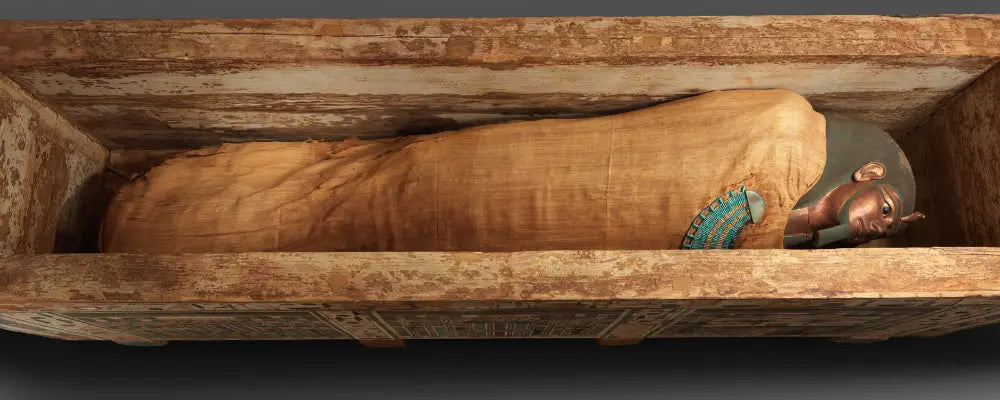
Some animal mummies were placed in sarcophagi specially designed for them. These funerary objects could be made of wood, stone, or bronze.
Sarcophagi often represented the animal they contained. They could also be decorated with religious symbols, inscriptions, or protective motifs.
These ornaments show that animal mummification was considered an important ritual worthy of attention. Even animals sometimes received elaborate funerary objects, testifying to their sacred status in Egyptian culture.

The great animal mummy necropolises
Archaeological excavations have revealed the existence of immense necropolises dedicated to animal mummies. These sites testify to the importance of this practice in the religion and society of ancient Egypt. Some underground galleries contain millions of mummies, carefully placed by priests and believers over the centuries. These places were considered sacred and were an integral part of the Egyptian religious landscape.
Animal necropolises were often located near temples. They served as places of deposit for religious offerings brought by pilgrims who came from different regions of Egypt. The mummies were placed in galleries carved into the rock, sometimes several hundred meters long, or in tombs specially built to house these sacred deposits.
These archaeological discoveries show that animal mummification was not a marginal practice. It was an integral part of the religious rituals and funerary traditions of ancient Egypt. Researchers continue to explore these sites in order to better understand the organization of the temples, the rituals associated with the offerings, and the management of these vast necropolises dedicated to sacred animals.
The most famous necropolises
Certain animal necropolises are particularly well-known for their archaeological importance and the impressive quantity of mummies they contain. They have yielded thousands, if not millions, of embalmed animal remains, testifying to the scale of religious practices in ancient Egypt.
Among the most famous sites:
- Saqqara, famous for its many cat mummies associated with the goddess Bastet
- Tuna el-Gebel, which houses millions of mummified ibises dedicated to the god Thoth
- Kom Ombo, known for its sacred crocodiles linked to the god Sobek
These sites are studied today by archaeologists and attract the interest of historians from around the world.
Archaeological discoveries
Research conducted in these necropolises has revealed surprising information about animal mummies and the rituals practiced in temples. Some mummies contained complete animals, carefully embalmed, while others contained only fragments of bone, feathers, or fabric.
These discoveries show that animal mummification could sometimes be symbolic. Worshippers would offer a representation of the animal rather than a whole body, probably to make offerings accessible to a greater number of pilgrims.

FAQ on Egypt's Animal Mummies: Why were they embalmed?
Animal mummies from Egypt still raise many questions today among history and archaeology enthusiasts. Discovered by the millions in temples and necropolises across Egypt, they testify to a religious practice deeply rooted in Egyptian civilization. Cats, ibises, falcons, or crocodiles were closely linked to the spiritual beliefs and rituals practiced by the ancient Egyptians. Their mummification was not for a single reason, but for a combination of religious, cultural, and symbolic traditions.
Understanding the origin and significance of these animal mummies helps us better grasp the Egyptian worldview, where animals could represent deities, serve as offerings, or accompany humans into the afterlife. Archaeological excavations and modern scientific studies continue to provide new information on these fascinating practices.
In this FAQ section on Egypt's Animal Mummies: Why were they embalmed?, we answer the most frequently asked questions about this unique tradition of ancient Egypt. These answers help us better understand the role of animals in the religion, rituals, and society of this ancient civilization.

Why did the Egyptians mummify animals?
Animal mummies were primarily used as religious offerings. Egyptians believed that these animals could convey their prayers to the gods. Mummification also served to honor sacred animals associated with deities.
Which animals were most frequently mummified?
The animals most frequently mummified were cats, ibises, falcons, and crocodiles. Each of these animals was linked to a specific deity in the Egyptian religion.
How many animal mummies have been discovered?
Archaeologists estimate that millions of animal mummies were buried in ancient Egypt. Some necropolises contain entire galleries filled with these mummies.
Do animal mummies always contain an animal?
No. Some mummies contain only fragments of bone or feathers. They sometimes served as symbolic offerings in temples.
Were animals raised to be mummified?
Yes. In some cases, animals were raised in temples to be used in religious rituals and subsequently mummified.
Where can one see animal mummies today?
You can see animal mummies in many museums dedicated to ancient Egypt. They are often displayed with sarcophagi and funerary objects.
How do scientists study animal mummies?
Researchers use scanners and X-rays to analyze mummies without opening them. These techniques allow for observation of their contents and the methods of mummification.
Were animal mummies as important as human mummies?
Animal mummies had a primarily religious role. They served mainly as offerings to the gods in temples.
Why were cats often mummified in Egypt?
Cats were associated with the goddess Bastet. Mummifying them was a way to honor this deity and seek her protection.
How many animals were mummified in ancient Egypt?
Millions of animals were mummified in ancient Egypt. Some necropolises contain galleries filled with mummies.

Conclusion on Egypt's Animal Mummies: Why were they embalmed?
Animal mummies represent a fascinating testimony to the spirituality and beliefs of ancient Egypt. Their presence in temples, necropolises, and tombs shows the extent to which animals occupied an important place in Egyptian religion. Whether as religious offerings, companions for the afterlife, or sacred symbols associated with deities, these embalmed creatures played an essential role in Egyptian culture.
Archaeological discoveries have revealed the scale of this practice. Millions of animal mummies have been found throughout the country, testifying to a tradition deeply rooted in society. The mummification techniques used for these animals also demonstrate the impressive expertise of Egyptian embalmers.
Today, scientific studies continue to provide new information on these ancient practices. Thanks to modern technology, researchers can analyze mummies without damaging them and better understand the funerary rituals of ancient Egypt.
Animal mummies thus remain a powerful symbol of the relationship between humans, animals, and the gods in one of the most fascinating civilizations in history.