
African jewelry is much more than mere ornamentation. It reflects identities, beliefs, and traditions deeply rooted in history. Through these creations, each culture expresses a unique vision of the world. Let’s discover five iconic pieces from the African continent.
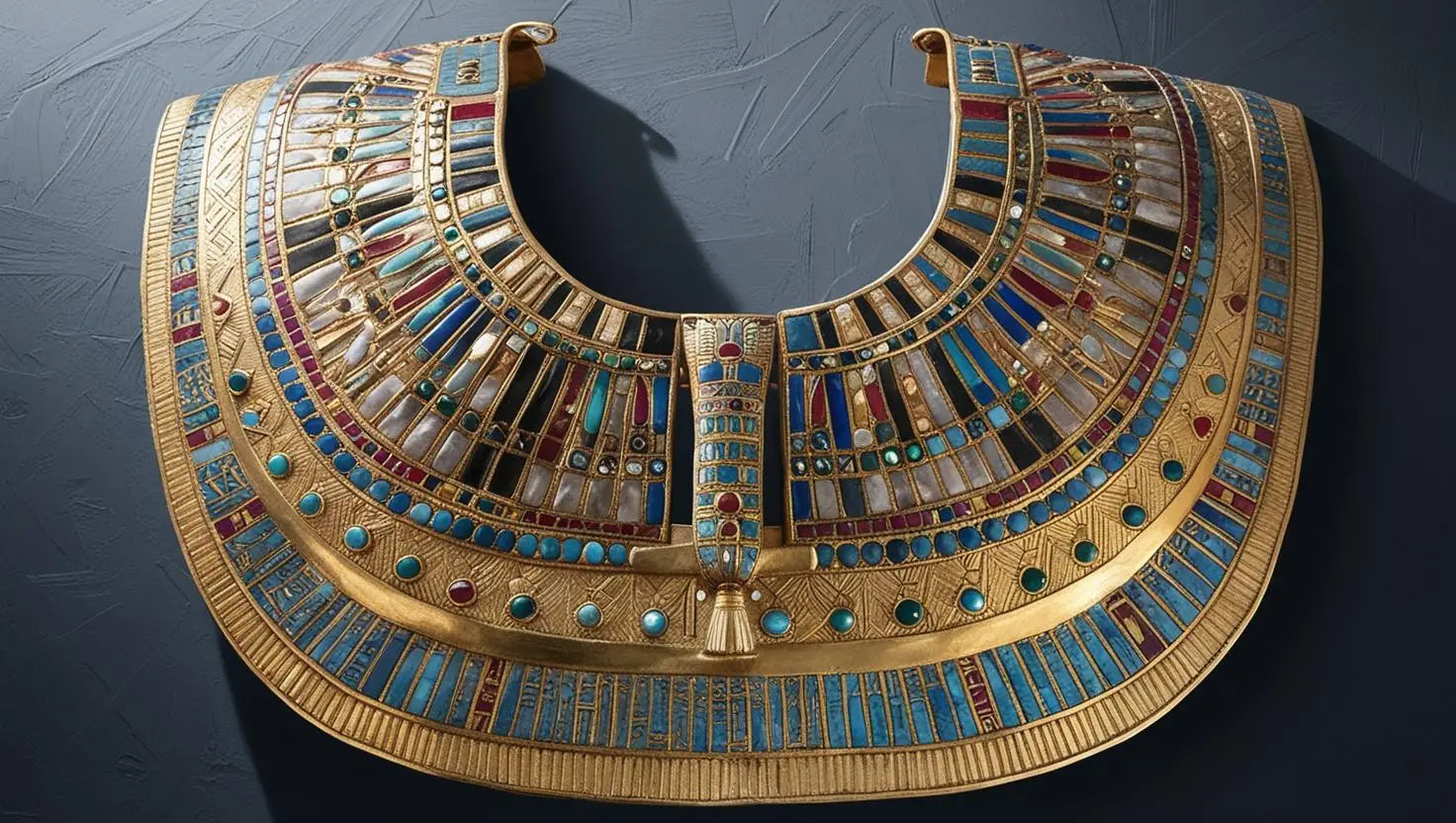
Tutankhamun's Pectoral: A sacred treasure of ancient Egypt
Tutankhamun's pectoral is one of the most fascinating pieces of jewelry from ancient Egypt, due to both its beauty and its symbolic significance. Discovered in 1922 in the young pharaoh's tomb, this jewel testifies to the exceptional refinement of Egyptian goldsmithing.
Made from solid gold and inlaid with precious stones such as lapis lazuli, turquoise, and carnelian, it embodies the spiritual wealth of this civilization. The winged scarab depicted in the center is a powerful symbol of rebirth and transformation, associated with the sun god Khepri.
This jewelry was not merely decorative; it served an essential function in funerary rites. The Egyptians believed that objects placed in tombs accompanied the deceased into the afterlife. The pectoral thus served as divine protection for the pharaoh. Every element, from the choice of materials to the arrangement of the motifs, was laden with religious meaning.
It also illustrates the impressive technical level of Egyptian artisans, who were capable of working with precious materials with remarkable precision. This masterpiece remains an essential testament to the grandeur of ancient Egypt today.

Symbolism of materials and motifs
Tutankhamun's pectoral is rich in symbols and spiritual meaning. Gold, the primary material, represented immortality and the flesh of the gods, which made it essential in funerary objects.
Lapis lazuli evoked the sky and the divine dimension, while turquoise symbolized protection and regeneration. The winged scarab at the center of the piece embodied the cycle of life and the daily rebirth of the sun. Each element of the jewel was carefully chosen to reinforce the pharaoh's spiritual protection in the afterlife.
A major archaeological legacy
Today, this piece is an iconic item housed in the Cairo Museum. It is studied by historians and archaeologists to better understand the funerary practices of ancient Egypt.
Tutankhamun's pectoral continues to inspire contemporary artists and designers. It bears witness to the technical and artistic excellence of the artisans of that era. This jewel remains one of the most powerful symbols of Egyptian civilization.
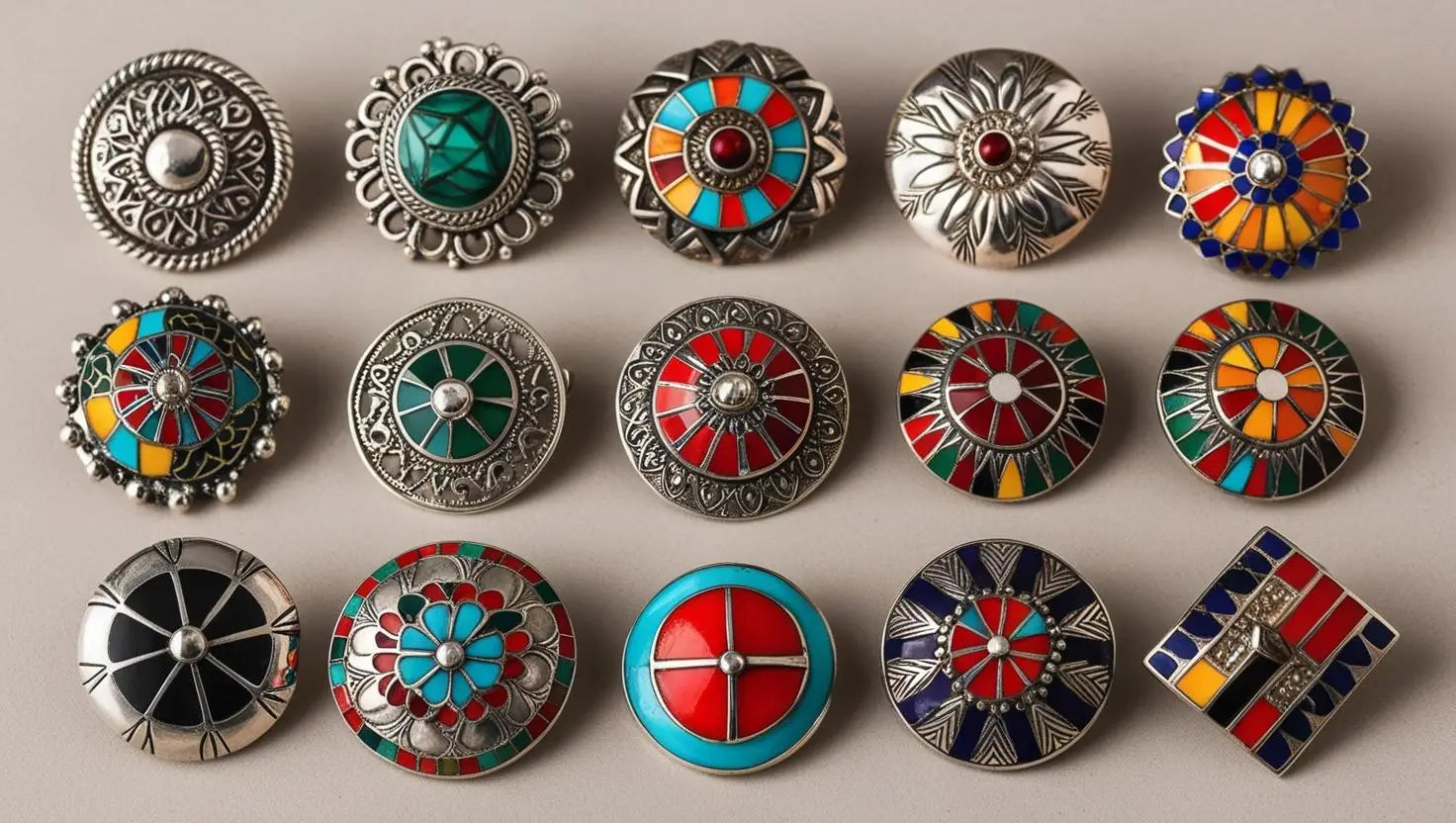
Berber fibulae: identity and protection in Amazigh culture
Berber fibulae, called "tazerzit," are traditional pieces of jewelry from Morocco deeply rooted in Amazigh culture. They were originally used to fasten clothing, particularly the shawls worn by women.
However, their role goes far beyond this practical function. They also embody symbols of protection, identity, and social status. Made of silver, they are often decorated with colored enamel, coral, or amber.
Each fibula is unique and reflects the region of origin of the wearer. The geometric motifs and colors have specific meanings linked to local beliefs and traditions.
These pieces of jewelry are often passed down from generation to generation, reinforcing their heritage value. Fibulae are worn during important events such as weddings or ceremonies. They testify to the central role of jewelry in Berber culture, where aesthetics and spirituality are closely linked.
To discover these Berber treasures and their artisanal context up close, an adventure in Morocco allows you to explore the souks and villages where this jewelry comes to life. You can, for example, organize a personalized excursion via the site https://maroc-en-quad.fr/ to traverse the desert and the Atlas Mountains while discovering local craftsmanship.
A piece of jewelry between utility and symbolism
Berber fibulae combine a practical function with a strong symbolic dimension. They make it possible to fasten clothing while protecting the wearer against the evil eye.
They are considered talismans, often associated with ancestral beliefs. Their presence in ceremonies shows their social importance. They embody both cultural identity and the transmission of traditions.
Artisanal techniques and craftsmanship
The production of fibulae is based on artisanal techniques passed down for centuries. Artisans use chasing and enameling methods to create complex patterns.
Each piece requires meticulous work and great technical mastery. This jewelry is still produced today in the souks and villages of Morocco. They represent a living heritage that continues to evolve.
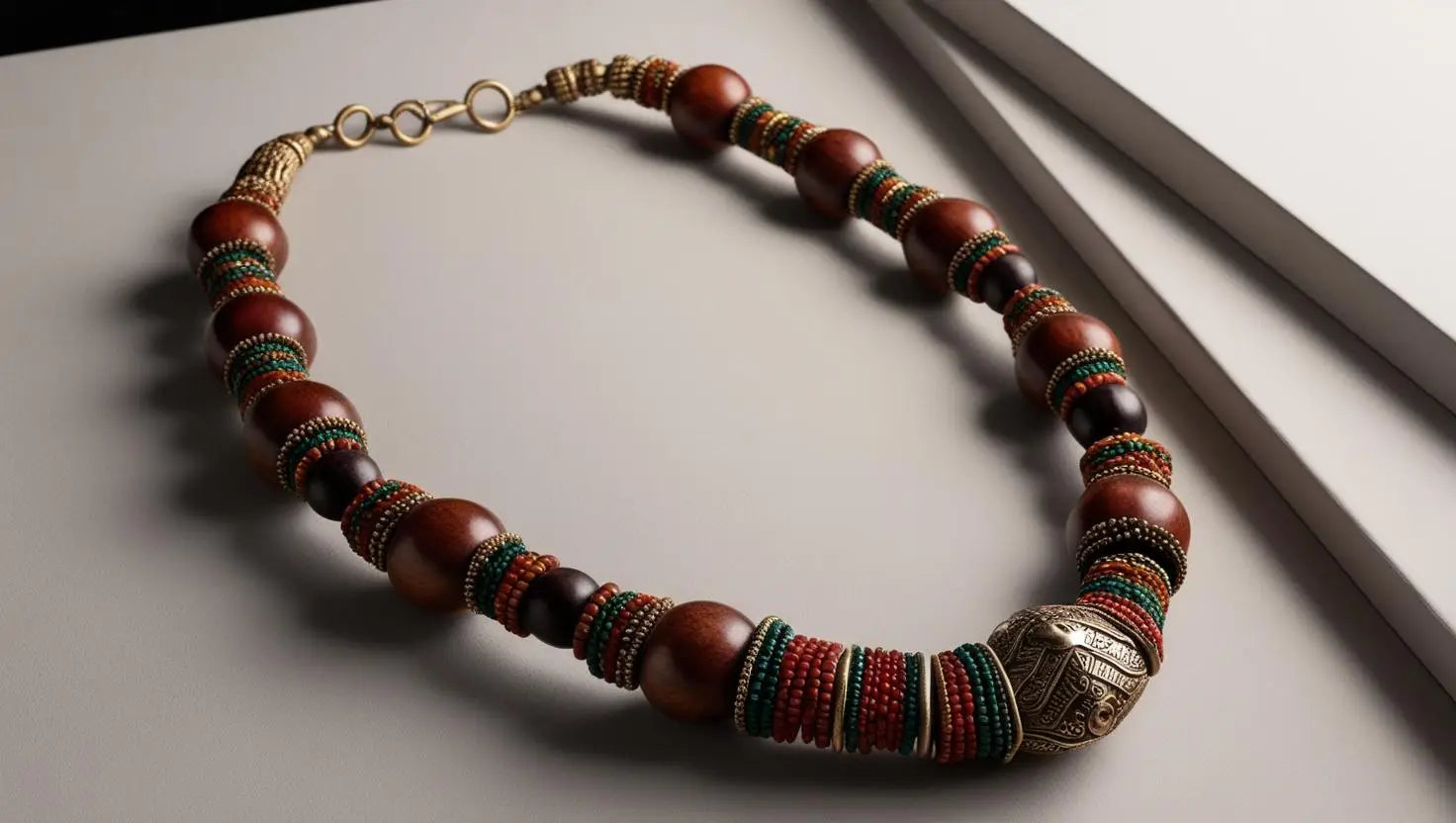
The Akan necklace: power and prestige in the Ashanti kingdom
The Akan necklace is an iconic piece of jewelry from West Africa, particularly in Ghana. It is closely linked to the Akan people and the Ashanti kingdom, where gold holds a central place.
This precious metal is considered sacred and symbolizes wealth, power, and spirituality. Akan necklaces are composed of finely crafted gold beads, often adorned with symbolic motifs.
This jewelry was worn by kings, chiefs, and dignitaries during important ceremonies. It served to display social status and convey symbolic messages. Each bead could represent a proverb or a cultural value. The Akan necklace is therefore much more than a mere ornament; it is a true communication tool. It reflects the complexity and richness of Akan culture.
Beyond their ceremonial function, these necklaces also play a role in the transmission of oral traditions and community values. They are often associated with major events such as enthronements or royal celebrations. Their presence reinforces the prestige of the wearers and emphasizes the importance of cultural heritage in Akan society.
Symbolism of gold in Akan culture
In Akan culture, gold is considered a link between the living and the ancestors. It is associated with spiritual power and authority. Wearing gold jewelry is a sign of prestige and responsibility.
This jewelry is often used during rituals and important ceremonies. It embodies the continuity of traditions and reinforces the role of chiefs and elites in society.
The lost-wax technique
Akan artisans use the lost-wax technique to create their jewelry with great precision. This method allows for the production of complex and detailed shapes. It is passed down from generation to generation, ensuring the preservation of this know-how.
Each piece is unique and reflects the expertise of the artisans. This traditional process is still widely used today in local workshops.
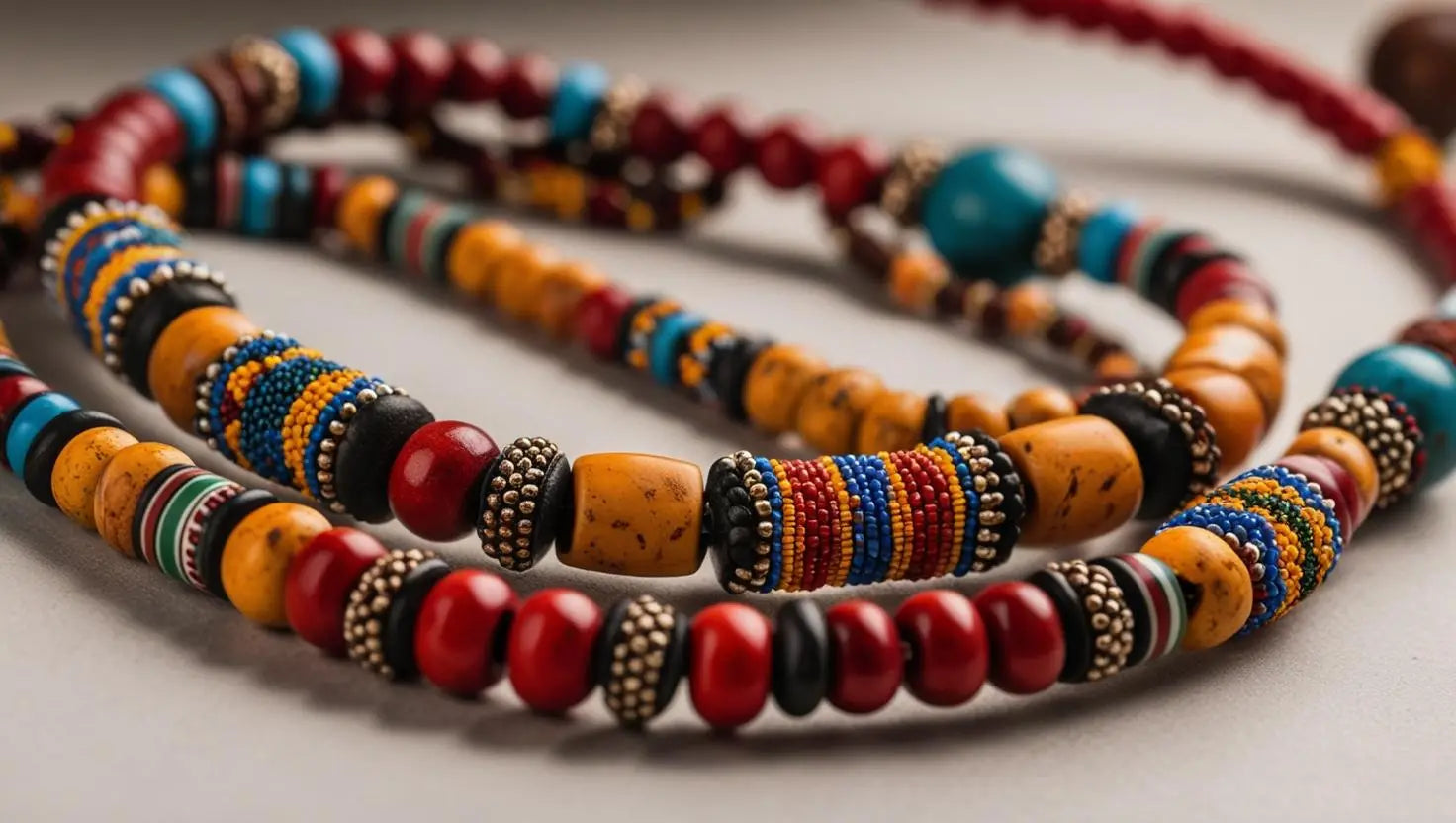
Maasai beads: a visual language in East Africa
Maasai beads are iconic pieces of jewelry from Kenya and Tanzania. They are made mainly by women and play an essential role in Maasai society.
These colorful necklaces are used to communicate important information such as age, social status, or marital status. They are worn both in daily life and during specific events, which reinforces their importance in social and community life.
Each color has a precise meaning, forming a true visual language understood by the entire community. Red symbolizes courage, blue peace, and white purity. The jewelry is worn during ceremonies and traditional dances, where it becomes a central element of cultural expression and collective identity. It reflects the values and traditions passed down through generations.
Beyond their symbolic role, these creations testify to a deep attachment to traditions and the transmission of knowledge. They also illustrate the creativity, rigor, and precision of Maasai artisanal work.
Meaning of colors
The colors used in Maasai beads have specific meanings and constitute a true symbolic language within the community:
-
Red: courage and protection
-
Blue: peace and energy
-
White: purity and health
-
Green: nature and fertility
-
Yellow: hospitality and warmth
These colors make it possible to transmit social and cultural messages. They also express the fundamental values of the Maasai people and strengthen collective identity.
Female craftsmanship
Beadwork is an art passed down from generation to generation. Women dedicate time to assembling beads with precision and patience.
This meticulous work requires great skill and an eye for detail. It strengthens social and cultural ties within the community. Each creation represents a precious heritage and an expression of Maasai feminine identity.
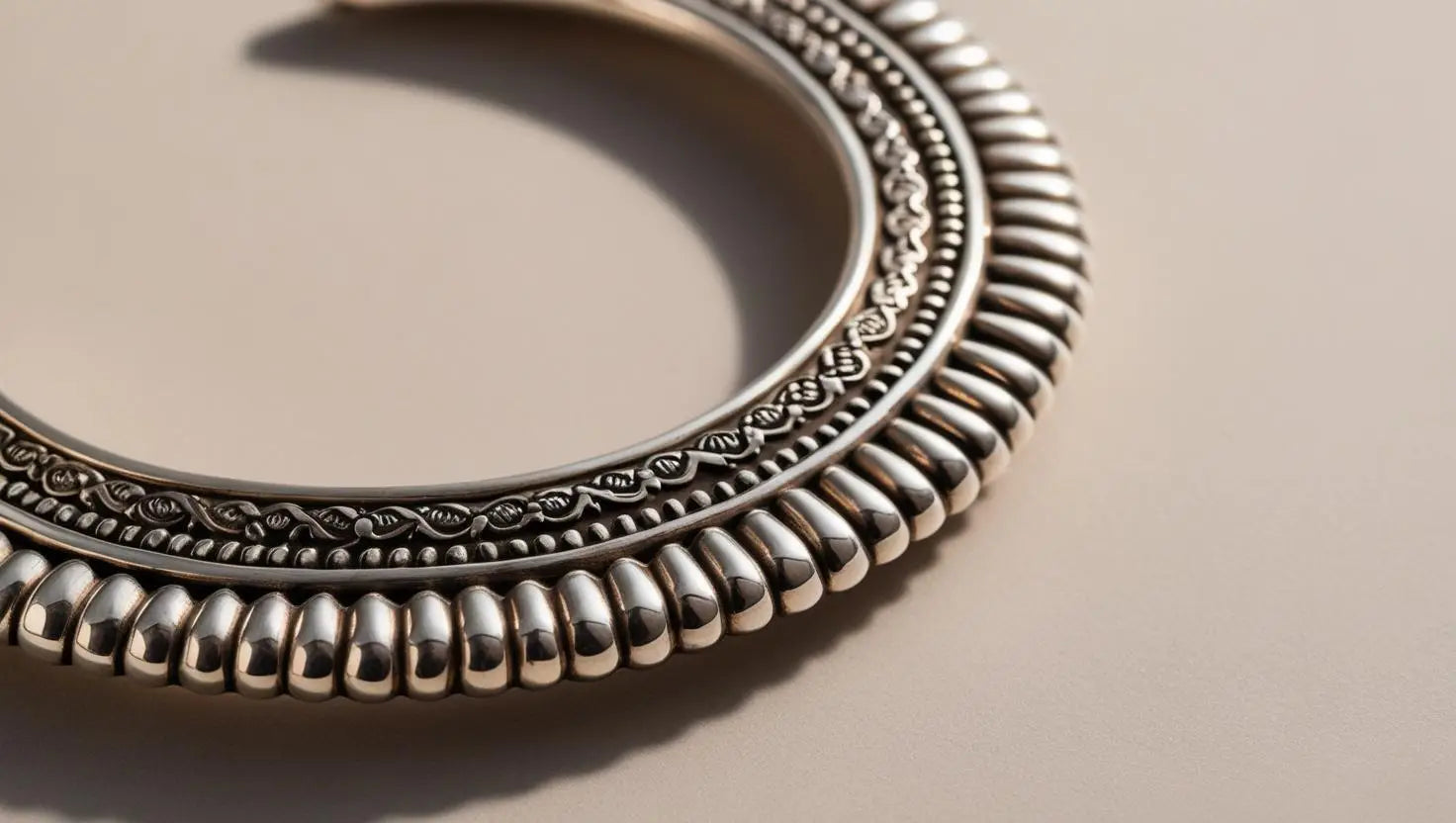
Tuareg silver jewelry: a symbol of the desert and spirituality
The Tuareg are known for their silver jewelry, most notably the Cross of Agadez. This pendant is both a spiritual symbol and a protective object. It represents a compass for nomads of the desert, serving as a landmark in a vast, arid, and often unpredictable environment.
These pieces of jewelry accompany the Tuareg in their daily lives, as well as during key moments such as coming-of-age transitions or family unions.
Silver is preferred over gold, as it is associated with purity, clarity, and a certain understated nobility. The motifs are inspired by astronomy, the constellations visible in the desert sky, and oral traditions. These jewels reflect life in the desert and Tuareg beliefs, which are deeply linked to nature, cycles of time, and navigation.
They are also used as objects of trade or dowry, reinforcing their economic and symbolic value within the communities. Their crafting and wearing reflect a strong attachment to nomadic traditions and cultural identity.
The Cross of Agadez
This piece of jewelry has several meanings. It can symbolize navigation, love, or family heritage. Its geometric shape is rich in symbols and often evokes a spiritual compass guiding nomads in the desert.
It is worn as a protective talisman, but also as a marker of cultural identity. The Cross of Agadez is often given during important life moments, reinforcing its symbolic and emotional role.
Craftsmanship techniques
Artisans use hammering and engraving to create these pieces with great precision. Each item is unique, as it is handmade according to traditional techniques.
This expertise has been passed down for generations, often from father to son. The engraved motifs are inspired by the desert environment and Tuareg traditions. This artisanal work reflects the patience and expertise of the craftsmen.

FAQ about 5 Exceptional Pieces of Jewelry Across the African Continent
African jewelry is attracting growing interest, both for its aesthetics and its cultural and historical richness. Behind each creation lie ancient traditions, unique expertise, and profound meanings that vary by region and people.
This diversity naturally leads to many questions, whether about their origin, symbolism, or current use.
Understanding these objects is not limited to their appearance, as they often play an essential role in society, whether in ceremonies, the transmission of values, or the expression of identity. Differences in materials, shapes, and colors reinforce this complexity and bear witness to the richness of the African continent.
This FAQ section aims to shed light on the most frequently asked questions about African jewelry. It provides clear and accessible answers to better understand their cultural importance, history, and place in contemporary traditions.
What are the most famous pieces of African jewelry?
The most famous include the pectoral of Tutankhamun, Berber fibulae, Akan necklaces, Maasai beads, and the Cross of Agadez. These pieces represent different regions and traditions. They are known for their symbolism and history.
What is the significance of African jewelry?
African jewelry symbolizes identity, spirituality, and social status. They can also serve as protection. Each culture assigns specific meanings to them.
Is African jewelry still being made?
Yes, they are still made today. Artisans perpetuate traditional techniques. They are used during ceremonies and in daily life.
Why do the Tuareg use silver?
Silver is associated with purity and light. It corresponds to Tuareg beliefs. It is also better suited to their environment.
What is special about Maasai beads?
They serve as a visual language. Colors indicate social status. They are handmade.
Where can I buy authentic African jewelry?
Authentic jewelry can be bought in local craft markets, from specialized artisans, or even on specialized websites. It is advisable to favor ethical channels and recognized designers.
What materials are used in African jewelry?
Materials vary by region: gold, silver, beads, leather, natural stones, and shells. Each material holds a specific cultural meaning.
Does African jewelry have spiritual value?
Yes, much African jewelry is considered to be a talisman. They protect, symbolize beliefs, or accompany traditional rituals.
What is the difference between traditional and modern African jewelry?
Traditional jewelry respects ancient cultural codes, while modern versions draw inspiration from these styles with contemporary designs.
Is African jewelry worn daily?
Some jewelry is worn every day, while others are reserved for ceremonies. Their use depends on their meaning and cultural importance.
Conclusion on 5 Exceptional Pieces of Jewelry Across the African Continent
African jewelry perfectly illustrates the cultural richness and diversity of the continent through unique and deeply symbolic creations. Through these five iconic examples, it clearly appears that these objects are not mere accessories, but true markers of identity, spirituality, and heritage.
Whether it be the pectoral of Tutankhamun, Berber fibulae, Akan necklaces, Maasai beads, or even Tuareg jewelry, each embodies a story, a craft, and a specific worldview.
This jewelry provides a better understanding of the societies that fashioned them, their beliefs, and their traditions. They also testify to exceptional craftsmanship, passed down from generation to generation, which continues to live on today. By exploring these pieces, one discovers a living heritage, rich in meaning and emotion.
Thus, these exceptional pieces of jewelry reveal the full cultural depth of Africa, where each creation becomes a language in its own right, combining aesthetics, symbolism, and legacy.