

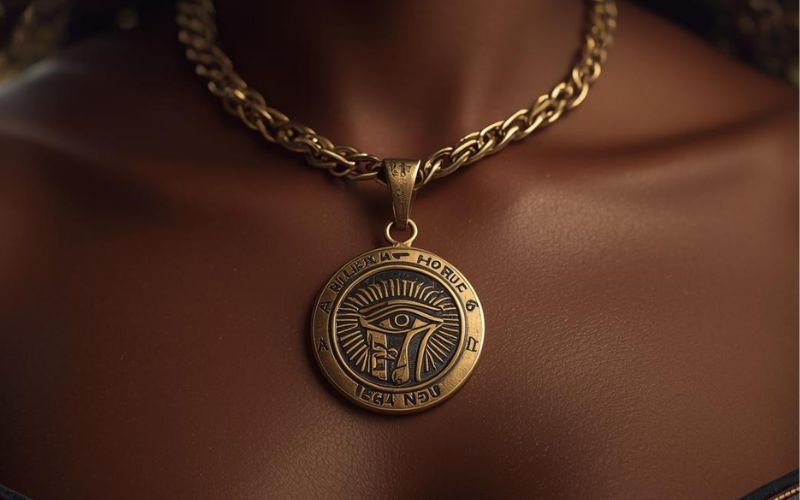
Definition and role of amulets
An amulet is an object that one wears on oneself or places in a specific location to repel negative energies and protect its bearer. Conversely, a talisman is intended more to attract a specific energy (luck, love, prosperity), often through clear intention and activation rituals.
In many traditions, the amulet is considered a symbolic support that accompanies a person in their daily life. It can represent a principle of protection, but also serve as a personal reminder, much like a reference point kept close to stay focused on what really matters. Some people view it as a spiritual object, while others wear it simply for the cultural or aesthetic value it represents.
In this guide, the goal is not to "sell mystery," but to give you a simple method for choosing an amulet that suits you, whether you are drawn to an ancient symbol (Egypt, Mediterranean, Asia) or a more minimalist style.
Keep in mind: an effective amulet is often the one you actually wear, consistently, because you like it and it has meaning for you.
Popular meanings and symbols
Choosing an amulet almost always starts with a symbol. Spiritual and cultural traditions associate varied meanings with certain motifs. The key is to understand what you are actually looking for: protection, mental clarity, courage, luck, intuition, peace, or simply a symbolic reference point in your daily life.
Since antiquity, civilizations have used graphic signs, geometric shapes, or mythological representations to convey ideas related to protection or personal balance. These symbols are not just decorative: they are often carriers of a history, tradition, or cultural heritage. Wearing one of these signs can thus create a connection to ancient symbolism while maintaining a very personal meaning.
Some people choose a symbol because it resonates with their journey or values. Others turn to a motif recognized for its cultural or spiritual dimension. In any case, it is better to favor a symbol that speaks to you personally rather than accumulating several different amulets.
In the following sections, you will discover some of the most well-known and frequently used symbols today, each having its own meaning and universe.
The Eye of Horus: protection and clairvoyance
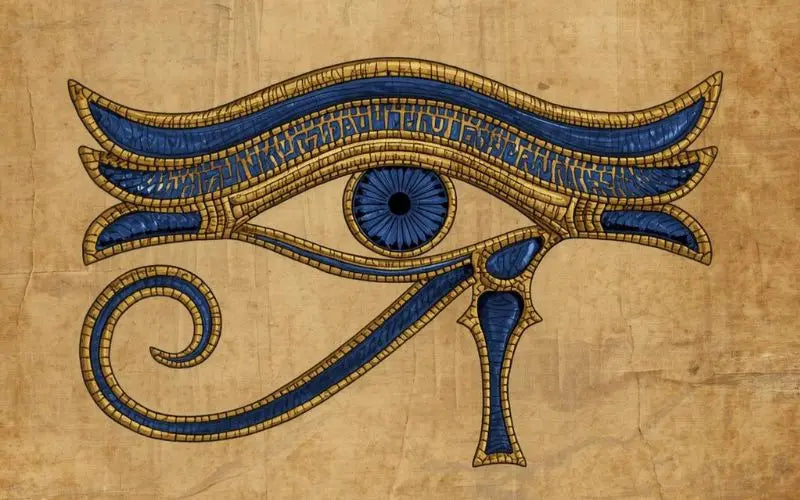
The Eye of Horus is one of the most well-known symbols of ancient Egypt. It is often associated with protection, vigilance, and clarity. In terms of an "amulet," it is a frequent choice when one wants to feel protected in daily life or keep a strong symbolic reference point.
If you are looking for a discreet but meaningful amulet, a stainless steel Eye of Horus pendant is often a good compromise: it is water-resistant, easy to wear, and maintains a modern style.
The Nazar Boncuk: protection from the evil eye
The Nazar (often blue) is traditionally associated with protection against the evil eye and negative intentions. It is a very widespread amulet around the Mediterranean and beyond, often worn as a pendant, bracelet, or hung at the entrance of a house.
If you like "visible," colorful, and immediately recognizable amulets, it is a simple and popular option.
The Sri Yantra: meditation and personal fulfillment
The Sri Yantra is a geometric symbol associated with concentration, meditation, and inner harmony. It is aimed more at those who want an "introspective" amulet, less focused on external protection than on personal alignment.
It is an interesting option if you want an amulet that accompanies a daily ritual (meditation, breathing, morning intention).
Other symbols worth knowing
Here are other symbols often chosen as amulets, depending on the intention:
-
Clover: luck, opportunities, a "little daily boost."
-
Pentagram: balance, protection, spiritual grounding.
-
Moonstone: intuition, gentleness, emotional connection.
-
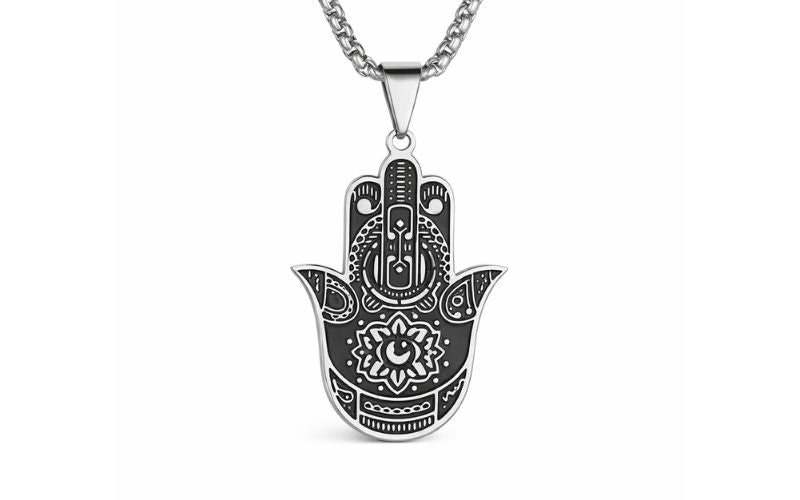
Hamsa Hand (Khamsa): protection, a symbolic barrier against negativity.
Criteria for choosing your perfect amulet
Clarify your intention
Above all, ask yourself a question: what do you expect from this protection amulet? A clear intention makes it possible to choose a symbol or style that truly suits you.
Examples of common intentions:
-
Feeling protected in a stressful environment
-
Having a symbolic reference point (grounding, confidence)
-
Strengthening a goal (discipline, success, serenity)
-
Wearing a cultural or historical symbol that speaks to me
The clearer your intention, the easier your choice becomes.
Choose the material (skin, usage, budget)
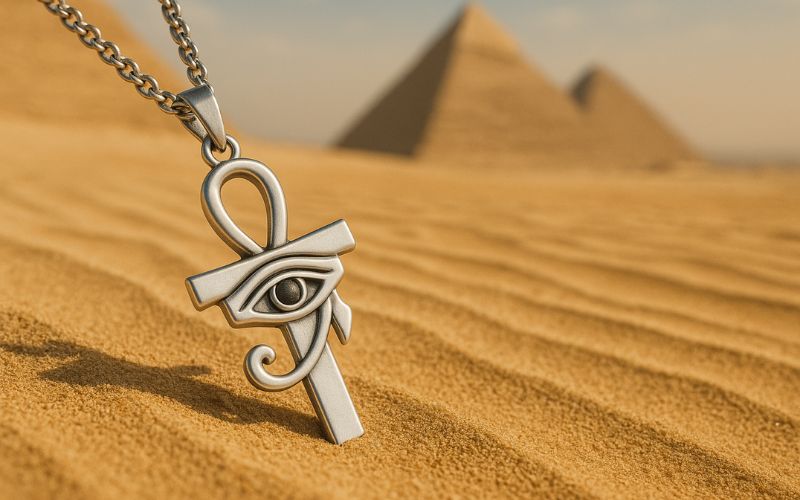
The material matters as much for comfort as it does for durability. It influences the resistance of the jewelry, its maintenance, and the sensation on the skin.
Some simple benchmarks:
-
Stainless steel: very good for daily use (water, sweat), easy maintenance, good value for money.
-
Silver: appreciated for its shine and style, but can oxidize and requires more regular maintenance.
-
Gold / gold-plated: strong aesthetic, often associated with success and radiance (according to certain traditions).
If you have sensitive skin, prioritize stable materials and avoid "mystery" alloys with no clear information.
Select the format (pendant, bracelet, ring)
An effective amulet is a protection amulet that you actually wear. Therefore, the format must fit your routine:
-
Pendant: the most classic, easy to wear, visible or discreet depending on size.
-
Bracelet: practical if you want to see it often, and if you move around a lot.
-
Ring: very personal, always on you, but more exposed to impacts.
-
Keychain / home object: useful if you don't want to wear jewelry.
Simple tip: if you are hesitant, start with a pendant (easy to adopt), then you can adjust.
Verify the quality and consistency of the description
Even when talking about an amulet, the foundation remains a classic online purchase. It is therefore important to check some concrete details before ordering:
-
Clear and realistic photos
-
Clear description (material, dimensions, chain, clasp)
-
Consistent customer reviews
-
Readable return policy
-
Clearly stated delivery times
Online Amulet Buying Guide
Choosing a reliable seller
Before buying an amulet online, it is important to check the seller's reliability. A few simple signals often make it possible to evaluate the seriousness of a shop:
-
Accessible legal notices and return policy
-
Reachable customer service
-
Varied customer reviews (not just "perfect" ones)
-
Photos of items being worn and finish details
These elements show that a seller stands by their products and information. Generally, a reputable shop prioritizes concrete and transparent information over marketing hype.
Read the dimensions (and not just the photo)
Size changes everything: an amulet that is too big can be difficult to wear every day, while a model that is too small might seem less visible than expected. Photos can sometimes deceive the eye.
Before ordering, always check:
-
Height of the pendant
-
Width
-
Chain length
-
Type of clasp
These details make it easier to imagine the actual appearance when worn. Taking a few seconds to read this information prevents the majority of disappointments.
Check the style and intended daily use
Ask yourself a very practical question: will I actually wear this amulet with my usual outfits? The style must remain compatible with your daily life.
-
Minimalist style: opt for thin and discreet symbols.
-
More assertive style: choose a visible piece with texture.
-
Active lifestyle: avoid fragile or overly open designs.
An amulet should remain pleasant to wear. If it does not match your style or your lifestyle, it risks ending up forgotten.
Daily use and care
Once the amulet is chosen, it doesn't end with the purchase. Its effectiveness and comfort also depend on how you wear it and integrate it into your daily routine. An amulet is above all a personal object that you keep close to you as a symbolic touchstone. For many people, it becomes a small reminder of an intention, protection, or simply an accessory that brings a feeling of confidence.
The way you use it can vary according to everyone's habits. Some prefer to wear it every day as a discreet piece of jewelry, while others reserve it for specific moments or situations. The most important thing is that it remains pleasant to wear and naturally integrates into your routine without becoming a constraint.
Maintenance also plays an important role in the lifespan of the amulet. Like any piece of jewelry, it can be exposed to humidity, friction, or everyday products. A few simple steps help preserve its appearance and prevent it from being damaged too quickly.
Between regular use and appropriate care, these little attentions help keep an amulet pleasant to wear and durable over time.
Purifying and "charging" your amulet
Some practices recommend purifying the object before use (for example, after transport, display, or handling). This symbolic step allows, according to some traditions, for a fresh start on a neutral basis before wearing the amulet. Examples of commonly cited methods:
-
Salt water (if the material allows it)
-
Fumigation (sage, incense)
-
Moonlight
-
Simple intention (hold the object and formulate a clear goal)
The important thing is not the "perfect" ritual, but consistency: you associate the object with a clear personal intention.

Simple care based on material
Like any piece of jewelry, an amulet requires minimal care to maintain its appearance and durability. The steps remain simple and quick:
-
Stainless steel: soft cloth, lukewarm water + mild soap if needed, dry well.
-
Silver: special silver cloth, occasional cleaning, avoid prolonged humidity.
-
Gold-plated: avoid abrasive products and direct perfume, wipe after use.
A useful tip: remove your jewelry before swimming or going to the beach to preserve its shine in the long term.
FAQ: frequently asked questions about amulets
Amulets often raise many questions, especially when one discovers this universe for the first time. Between the different traditions, well-known symbols, and personal uses, it is normal to want to better understand how an amulet works and how to choose one. Many people also wonder about the meaning of these objects, their daily utility, or the simplest way to wear them.
Some questions come up regularly: the difference between an amulet and a talisman, choosing a suitable symbol, or the criteria for identifying quality jewelry. Others concern practical use, such as whether it is okay to wear an amulet every day or the ideal length for a chain.
This section answers the most frequent questions to help you better understand amulets and make a more informed choice based on your preferences.
What is the difference between an amulet and a talisman?
An amulet is primarily designed for protection (repelling negative things), while a talisman is more about attracting a specific energy (luck, love, prosperity). The difference is mainly a matter of intention and usage.
Do you have to "believe" in an amulet for it to work?
You are not obliged to believe in it "in a magical sense." Many people wear it as a symbolic touchstone, an anchor, or a reminder of an intention. If it helps you feel better, it is already useful.
Which symbol should I choose for protection?
Classic choices are the Eye of Horus, the Nazar, the Hand of Fatima (Hamsa), or certain geometric symbols depending on the traditions. The best symbol remains the one that resonates with you and that you will actually wear.
Which amulet should I give as a gift?
For a gift, prioritize a "universal" symbol (protection, luck, serenity) and a durable material (stainless steel, silver). Also take into account the person's style: discreet or visible.
How do I know if an amulet is of good quality?
Look at the concrete criteria: clearly stated material, clean finishes, specified dimensions, realistic photos, customer reviews, and a clear return policy. A transparent product page is a good indicator.
Can I wear an amulet every day?
Yes, especially if the material is suitable for daily wear (stainless steel, quality silver). The essential thing is to maintain it simply and remove it in certain situations if you want to preserve its finish (sea, swimming pool, chemicals).
What chain length should I choose for an amulet pendant?
In general, a "standard" length suits many styles. If you want a look close to the neck, choose shorter. If you want a "long necklace" style, choose longer. Always check the announced centimeters.
Does the amulet have to touch the skin?
It is not mandatory. Some people prefer to wear it against the skin, others over their clothes. The most important thing is comfort and consistency.