
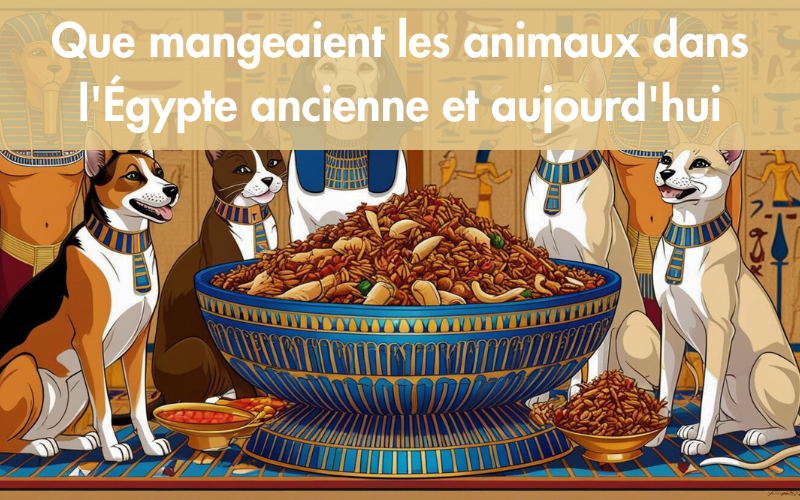
The question of what animals ate in ancient Egypt provides insight into the evolution of the relationship between humans and their domestic companions. In antiquity, animals such as cats and dogs were essential to daily life and religion.
Their diet depended on hunting, local resources, and sometimes offerings from temples. Today, their food is primarily based on industrial products and carefully studied nutritional diets.

The place of animals in Egyptian civilization
Animals occupied a central position in ancient Egyptian society. They were simultaneously domestic companions, useful helpers, and powerful religious symbols. Cats protected grain stores against rodents, while dogs assisted in hunting and guarding homes. Their presence was therefore essential in both villages and the large cities located along the Nile.
The Egyptians also maintained a spiritual relationship with several animal species. Certain animals were associated with important deities and received great attention. The cat was linked to Bastet, the protective goddess of the home, while the dog evoked Anubis, the god of the underworld. This religious dimension influenced their status and sometimes their diet.
Animals could live in family homes or be raised in temples. In these sacred places, they often received special care and food derived from offerings. Animal diets therefore depended on both their practical roles and their spiritual significance.
Animals in Egyptian households
In Egyptian homes, domestic animals often lived in direct contact with humans. Cats were highly valued for their ability to hunt the mice and rats that threatened food reserves. Their role as hunters helped protect harvests and granaries.
Dogs were mainly used to guard homes and accompany hunters. They generally received some leftovers from human meals, such as meat, bread, or fish, sometimes supplementing their diet through hunting.
Sacred animals in temples
Some animals were raised in temples and received special treatment. Priests took care of these animals, which were considered sacred because they represented deities in the Egyptian religion. Cats linked to Bastet and dogs associated with Anubis were particularly respected.
In these religious places, they often received food from offerings made to the gods, such as dried fish or meat from sacrifices. After their death, some of these animals were mummified and buried in necropolises, a testament to their spiritual importance.

Cat diet in ancient Egypt
Cats were among the most valued animals in ancient Egypt. Their presence in homes helped protect harvests and grain stores from rodents. Thanks to their natural predatory instinct, they played an essential role in the daily lives of Egyptians and contributed directly to preserving food resources.
However, cats did not rely solely on hunting for food. Humans also gave them part of their own food. Resources available around the Nile strongly influenced their diet, particularly fish, which was abundant in the region and constituted an important source of protein for these domestic animals.
Archaeological excavations and wall paintings show that cats were often fed with human meal scraps. This included pieces of fish, meat, and sometimes bread soaked in milk. This practice helped supplement their natural diet.
In noble families, cats could receive a richer diet and be treated with special attention. Their symbolic and religious status further reinforced their importance in Egyptian society.
Food consumed by cats
The diet of cats in ancient Egypt was primarily based on animal proteins. Their carnivorous nature required a diet rich in meat or fish. The natural resources of the Nile made it easy to meet these needs.
Cats could consume various foods:
-
fresh or dried fish
-
meat scraps
-
bread soaked in milk
-
captured small rodents
Hunting remained an important part of their diet. Even when they received food from humans, cats continued to catch prey.
This combination of offered food and natural hunting ensured a nutritional balance relatively well-suited to their biological needs.
Sacred cats and their diet
In temples dedicated to the goddess Bastet, some cats enjoyed a special status. These animals were considered representatives of the goddess and received particular attention. Their diet reflected this important religious status.
Priests could feed these cats dried fish, meat from sacrifices, or other foods used during religious rituals. This food was often of better quality than that of ordinary domestic cats.
These sacred cats lived in temples and were protected by priests. After their death, they were sometimes mummified and buried in animal necropolises. Their diet and treatment testify to the deep respect the Egyptians held for these animals.

Dog diet in ancient Egypt
Cats were among the most valued animals in ancient Egypt. Their presence in homes helped protect harvests and grain stores from rodents. Thanks to their natural predatory instinct, they played an essential role in the daily lives of Egyptians and contributed directly to preserving food resources.
However, cats did not rely solely on hunting for food. Humans also gave them part of their own food. The resources available around the Nile strongly influenced their diet, particularly fish, which was abundant in the region and constituted an important source of protein for these domestic animals.
Archaeological excavations and wall paintings show that cats were often fed with human meal scraps. This included pieces of fish, meat, and sometimes bread soaked in milk. This practice helped supplement their natural diet.
In noble families, cats could receive a richer diet and be treated with special attention. Their symbolic and religious status further reinforced their importance in Egyptian society.

Daily meals for dogs
The diet of domestic dogs in ancient Egypt often relied on scraps from human meals. Egyptians used available resources to feed their animals in a simple yet effective way.
Dogs could consume various foods:
-
meat scraps
-
pieces of bread
-
vegetables
-
offal or hunting leftovers
This diet varied according to the family's social status. Dogs belonging to wealthy classes often received more meat than those living in modest households.
Dogs could also supplement their diet by hunting small animals in their environment.
Dogs associated with the god Anubis
In Egyptian religion, the dog was often associated with the god Anubis, depicted with a jackal's head. This deity was linked to funerary rites and the protection of the dead. Dogs therefore possessed an important symbolic dimension.
In some temples, dogs were raised to represent this god. These animals sometimes received food offerings derived from religious rituals. Meat from sacrifices could be used to feed them.
Like sacred cats, some of these dogs were mummified after their death. Their diet and status reflected the spiritual importance accorded to these animals in Egyptian culture.

The evolution of animal diet to the present day
The diet of domestic animals has evolved considerably since the time of ancient Egypt. Social, agricultural, and industrial transformations have profoundly changed the way humans feed their animals. Today, cats and dogs depend almost entirely on their owners for their food, unlike in ancient times when hunting largely supplemented their diet.
In modern societies, pets rarely hunt for food. Their diet is primarily based on products specially designed to meet their nutritional needs. Scientific advances in the field of animal nutrition have led to a better understanding of the protein, vitamin, and mineral requirements necessary for the health of cats and dogs.
The industrialization of pet food has also fostered the emergence of numerous ranges adapted to different animal profiles. Dry kibble and wet food are now the most common types of food, as they offer a nutritional balance that is practical and easy to store.
At the same time, concerns regarding ingredient quality and animal welfare are encouraging the development of new, more natural, and transparent dietary approaches.

The rise of industrial pet food
During the 20th century, the pet food industry developed significantly. Manufacturers created products that were easy to store and distribute. Dry kibble became particularly popular due to its convenience.
The most common industrial pet foods include:
-
dry kibble
-
wet food
-
moist food
-
nutritional supplements
These products are formulated to provide the necessary nutrients for pets. They also allow owners to feed their animals simply and consistently.
Industrial food now dominates the pet nutrition market.
The return to natural diets
For several years, some owners have been seeking to return to a more natural diet for their pets. This trend is based on the idea that domestic carnivores should consume food similar to what they would find in the wild.
Several dietary approaches have developed:
-
BARF diet
-
dehydrated food
-
animal protein-rich diets
These methods seek to replicate the animals' natural feeding habits. They are sometimes inspired by ancient diets observed in traditional human societies.
However, veterinarians often recommend adapting these practices to the specific needs of each animal.

FAQ on what animals ate in Ancient Egypt and today
The question of what animals ate in Ancient Egypt and today often sparks the curiosity of history enthusiasts, pet owners, and internet users interested in animal nutrition. Understanding the diets of cats and dogs in antiquity allows for a better grasp of the unique relationship the Egyptians had with these animals. In Egyptian civilization, animals were not just daily companions; they also held an important place in religion, the protection of harvests, and certain activities like hunting.
Their diet therefore depended on their role in society, available resources, and the cultural practices of the time. Today, pet food has evolved considerably with the appearance of industrial foods and new nutritional approaches. Yet, some modern practices are still inspired by the natural habits observed in animals in antiquity.
In this FAQ on what animals ate in Ancient Egypt and today, you will find answers to the most frequently asked questions from internet users on this fascinating subject.

What did cats eat in Ancient Egypt?
Cats mainly ate fish, meat scraps, and bread soaked in milk. They also hunted rodents and birds around homes. This combination of food provided by humans and natural hunting helped meet their nutritional needs.
What did dogs eat in Ancient Egypt?
Dogs were fed with leftovers from human meals. Their diet often included meat, bread, and sometimes vegetables. Hunting dogs or those belonging to noble families might receive more meat.
Were animals really sacred in Egypt?
Yes, several animals were associated with important deities. Cats were linked to Bastet and dogs to Anubis. Some sacred animals lived in temples and received food from religious offerings.
Did cats hunt for food?
Yes, hunting was part of their natural behavior. Cats captured rodents and birds. This activity supplemented the food provided by humans.
How has animal diet evolved today?
Today, the majority of domestic dogs and cats are fed with industrial kibble and wet food. These products are designed to provide the necessary nutrients for their health.
Are there diets inspired by natural food?
Yes, some people choose diets such as BARF or dehydrated food. These approaches seek to replicate a diet closer to what carnivores would find in nature.
Conclusion on what animals ate in Ancient Egypt and today
The diet of animals in Ancient Egypt reveals a close relationship between humans and pets. Cats and dogs occupied an important place in society, both for their practical functions and their religious significance. Their food depended on available resources, their ability to hunt, and the social status of their owners.
Cats mainly ate fish, meat, and captured prey. Dogs often received human leftovers and could supplement their diet by hunting. In temples, some sacred animals received food from religious offerings.
Today, pet food has become more scientific and industrialized. Kibble and wet food widely dominate the pet nutrition market. These products help meet animals' nutritional needs in a balanced way.
However, some modern trends seek to move closer to the natural diets observed in ancient societies. Understanding what animals ate in Ancient Egypt therefore helps to shed light on the evolution of dietary practices and better adapt the nutrition of modern pets.